
Explore Obstructing Justice Topics
Click any topic below to learn about specific charges, penalties, and defense strategies.
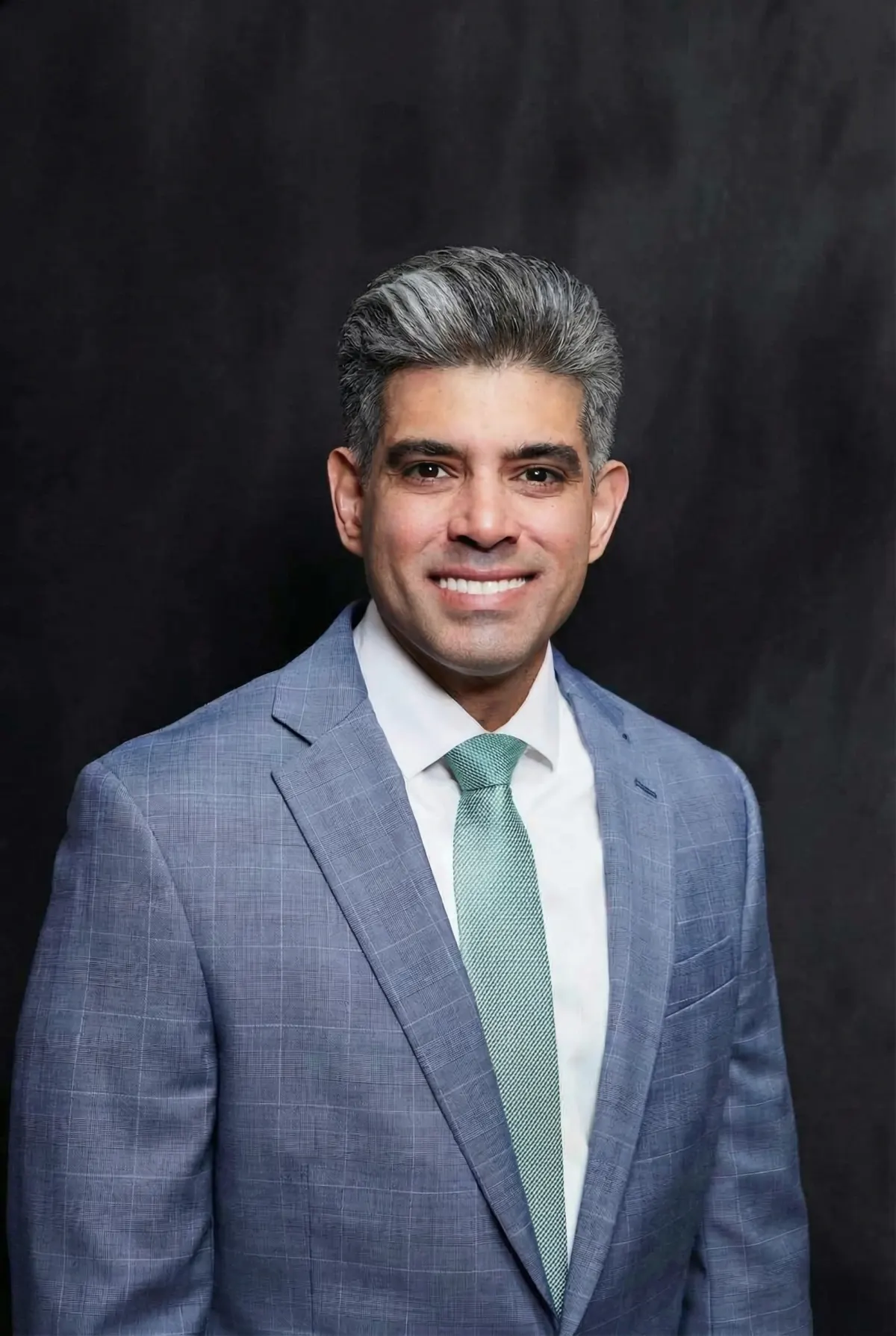
Legally reviewed by Tonmiel Rodriguez, Board Certified Criminal Trial Lawyer — last reviewed June 2026.
Obstructing justice in Florida covers a family of related felony and misdemeanor offenses that can be charged alongside or independently of any underlying criminal case. If you or someone you know has been charged with any obstruction-related offense, understanding exactly what you face — and acting quickly — is critical to your defense.
Facing obstruction charges in Polk, Highlands, or Hardee County?
Board Certified · Reach Us 24/7 · Hablamos Español
What Is Obstructing Justice Under Florida Law?
Florida does not have a single “obstruction of justice” statute. Instead, the Florida Statutes contain more than a dozen separate provisions targeting conduct that interferes with law enforcement, judicial proceedings, or the administration of justice. Prosecutors and law enforcement are trained to identify and charge these offenses aggressively — often adding them to primary charges to increase pressure on defendants during plea negotiations or to establish “consciousness of guilt” evidence at trial.
The key obstruction-related statutes in Florida include:
- § 843.01 — Resisting arrest with violence (third-degree felony, up to 5 years)
- § 843.02 — Resisting arrest without violence (first-degree misdemeanor, up to 1 year)
- § 817.49 — Filing a false police report (first-degree misdemeanor, up to 1 year)
- § 837.05 — Giving false information to law enforcement (first-degree misdemeanor to third-degree felony)
- § 901.36 — Giving a false name or ID to police (first-degree misdemeanor to third-degree felony)
- § 914.22 — Witness tampering / victim intimidation (third-degree felony up to life felony, tiered to the underlying proceeding)
- § 777.03 — Accessory after the fact (first-degree misdemeanor up to first-degree felony, tracking the principal’s offense)
- § 843.23 — Tampering with an electronic monitoring device (third-degree up to first-degree felony, tiered to the underlying charge)
- § 843.08 — Impersonating a law enforcement officer (third-degree felony)
- § 843.025 — Depriving an officer of means of protection (third-degree felony)
- § 918.13 — Tampering with physical evidence (third-degree felony)
Each of these offenses carries its own elements, penalties, and defenses. What they share is that they are all prosecuted seriously in the 10th Judicial Circuit, and all of them can follow you on your record if not handled properly.
What Are the Penalties for Obstruction Offenses in Polk County, Florida?
Penalties for Florida obstruction offenses range from up to 1 year in county jail for first-degree misdemeanors to up to 30 years in state prison for first-degree felonies, depending on the charge and your prior criminal history.
Under Florida’s Criminal Punishment Code (FCPC), obstruction charges generate scoresheet points that can push your sentencing range higher even when combined with other low-level offenses. Here is a quick-reference penalty guide for the most common obstruction charges:
| Statute | Offense | Level | Max Penalty |
|---|---|---|---|
| § 843.01 | Resisting with violence | 3rd-degree felony | 5 years / $5,000 fine |
| § 843.02 | Resisting without violence | 1st-degree misdemeanor | 1 year / $1,000 fine |
| § 817.49 | False police report | 1st-degree misdemeanor | 1 year / $1,000 fine |
| § 837.05 | False info to officer | 1st-degree misdemeanor | 1 year / $1,000 fine |
| § 837.02 | Perjury (under oath) | 3rd-degree felony | 5 years / $5,000 fine |
| § 901.36 | False name/ID | 1st-degree misdemeanor | 1 year / $1,000 fine |
| § 914.22 | Witness tampering | 3rd-degree felony up to life felony | 5 years–life |
| § 777.03 | Accessory after fact | 1st-degree misdemeanor up to 1st-degree felony | 1–30 years |
| § 843.23 | Electronic monitor tampering | 3rd–1st-degree felony | 5–30 years |
| § 843.08 | Impersonating officer | 3rd-degree felony | 5 years / $5,000 fine |
| § 843.025 | Depriving officer of protection | 3rd-degree felony | 5 years / $5,000 fine |
| § 918.13 | Tampering with evidence | 3rd-degree felony | 5 years / $5,000 fine |
Why Are Obstruction Charges So Dangerous Even When Charged as Add-Ons?
Many clients come to me after being charged with an obstruction offense alongside something else — a DUI, a drug case, a domestic violence charge. They think the obstruction charge is minor compared to the primary offense. Treating it that way is a mistake, for the reasons below.
Here is why obstruction add-ons matter:
- Scoresheet impact: Every felony conviction, including third-degree felonies for obstruction, adds points to your FCPC scoresheet. Enough points and a judge cannot legally sentence you below a minimum — even on the primary charge.
- Plea leverage: Prosecutors use stacked charges to pressure defendants into plea deals on the primary offense. Knowing how to counter that strategy is essential.
- Consciousness of guilt: At trial, the State will argue that you resisted, lied, or tampered because you knew you were guilty. This narrative is damaging and must be confronted head-on.
- Collateral consequences: Felony obstruction convictions can affect professional licenses, firearm rights, immigration status, and housing. Even misdemeanor obstruction convictions show up on background checks.
- Independent standing: Even if the underlying charge is dismissed or you are acquitted, the obstruction charge stands independently. Florida courts have been clear on this.
What Defenses Work Against Florida Obstruction Charges?
Effective obstruction defenses depend entirely on the specific statute charged, the facts of the case, and what the State can actually prove at trial. I do not believe in cookie-cutter defenses. In my 75+ jury trials, I have learned that the best defense is built from the ground up on the actual evidence — not a template.
That said, the most common and effective defenses I use in obstruction cases include:
- Lawful duty requirement: Most obstruction statutes require that the officer be engaged in the lawful execution of a legal duty. If the officer’s conduct was unlawful — unconstitutional stop, excessive force, acting outside their authority — the obstruction charge may not stand.
- Knowledge element: Many statutes require proof that the defendant knew the person was a law enforcement officer. Undercover operations, plain-clothes officers, and off-duty situations create genuine issues here.
- Intent and materiality: For false statement and evidence-tampering charges, the statement must be material and the defendant must have had the specific intent required. Spontaneous statements made under stress are treated differently than calculated deceptions.
- No active resistance: Florida courts have drawn a meaningful distinction between mere fleeing (which can be obstruction) and passive non-compliance (which may not be). The details matter enormously.
- Constitutional challenges: Fourth Amendment (unlawful search/seizure leading to the encounter), Fifth Amendment (compelled self-incrimination), and Sixth Amendment issues arise frequently in obstruction cases.
How Does Obstruction Law Operate Differently Across Polk, Highlands, and Hardee Counties?
The statutes are the same statewide, but how obstruction cases are charged and prosecuted varies significantly across the three counties in the 10th Judicial Circuit. I handle cases in all three counties every week and I know the differences in how each State Attorney’s Office approaches these charges, what factors affect plea offers, and how the local bench responds to particular legal arguments.
Polk County — by volume, the largest county in the circuit — sees the most obstruction add-on charges, particularly in conjunction with DUI, battery on law enforcement, and drug trafficking arrests. Highlands County and Hardee County, while smaller, have their own prosecutorial cultures and I understand both well.
Charged in Polk, Highlands, or Hardee County?
Board Certified · Reach Us 24/7 · Hablamos Español
What Are the Specific Florida Obstruction Offenses I Handle?
Every obstruction offense below has its own dedicated page with full statute analysis, penalty breakdown, defenses, and case strategy. Click through for the full breakdown on any charge you are facing.
- Resisting Arrest With Violence (§ 843.01) — Third-degree felony. Up to 5 years. Charged when a defendant physically fights, strikes, or threatens an officer during an arrest.
- Resisting Arrest Without Violence (§ 843.02) — First-degree misdemeanor. Up to 1 year. One of the most commonly charged offenses in the circuit.
- Filing a False Police Report (§ 817.49) — First-degree misdemeanor. Up to 1 year. Includes false reports of emergencies, crimes that did not occur, and fraudulent incident reports.
- Giving False Information to Law Enforcement (§ 837.05 / § 837.02) — Misdemeanor to felony depending on context (sworn vs. unsworn).
- Giving a False Name or ID to Police (§ 901.36) — Misdemeanor or felony depending on whether another person’s ID is used.
- Witness Tampering (§ 914.22) — Third-degree felony minimum. Second-degree felony when force or threats are involved.
- Accessory After the Fact (§ 777.03) — Ranges from third-degree felony to first-degree felony depending on the principal offense.
- Tampering With an Electronic Monitoring Device (§ 843.23) — Felony tiered from third degree up to first degree, based on the charge that required the monitor. Charged when a person on bond, probation, or house arrest interferes with GPS or monitoring equipment.
- Impersonating a Law Enforcement Officer (§ 843.08) — Third-degree felony. Carrying a badge, false ID, or falsely claiming to be an officer.
- Depriving an Officer of Means of Protection (§ 843.025) — Third-degree felony. Removing, disabling, or interfering with an officer’s firearm, radio, body camera, or other protective equipment.
- Tampering With Physical Evidence (§ 918.13) — Third-degree felony. Destroying, altering, or concealing evidence in connection with an official proceeding.
What Should I Do Immediately After Being Charged With an Obstruction Offense in Florida?
The first 48 to 72 hours after an obstruction arrest are the most critical for your defense. Evidence is fresh, witnesses have not scattered, video has not been overwritten, and you have not made any statements to law enforcement that can be used against you — yet.
Here is what I tell every client who contacts me after an obstruction arrest:
- Stop talking to police. Full stop. No explanations, no “setting the record straight,” no “just tell them your side.” Everything you say is evidence. Invoke your right to remain silent and ask for an attorney.
- Do not contact witnesses, victims, or co-defendants. Every contact — especially by phone, text, or social media — after an arrest creates risk of a witness tampering charge or a violation of bond conditions.
- Preserve evidence. If there is video, audio, or any documentation that supports your version of events, tell your attorney immediately. Evidence disappears fast.
- Call a Board Certified criminal defense lawyer immediately. The sooner I get involved, the more options we have. Pre-filing intervention — before charges are formally filed — is often possible in Florida and can dramatically change the outcome.
Why Does Board Certification Matter in Obstruction Defense?
“This is the highest level of recognition by The Florida Bar for the competency and experience of a lawyer practicing criminal trial law.”
— The Florida Bar
The Florida Bar Board Certification in Criminal Trial Law requires substantial criminal trial experience, peer review, and passage of a rigorous written examination. Less than 1 percent of Florida attorneys are Board Certified in this area. It is not a marketing credential — it is a verified measure of trial skill and criminal law expertise.
I have tried over 75 jury trials across the 10th Judicial Circuit. I know how Polk County prosecutors think, how Highlands County judges approach pretrial motions, and how Hardee County cases unfold differently than urban circuit courts. That experience matters when your liberty is on the line.
How Do Florida Prosecutors Build Obstruction Cases?
Understanding how the State builds its case is the first step to dismantling it. In my experience handling hundreds of obstruction-related charges across Polk, Highlands, and Hardee Counties, prosecutors typically construct these cases in one of three ways.
First, officer testimony. The vast majority of resisting, false name, and obstruction charges hinge almost entirely on the arresting officer’s account. Body camera footage is now required in most Florida jurisdictions, and reviewing that footage carefully — frame by frame, if necessary — often reveals gaps between the officer’s written report and what actually happened on camera. Those discrepancies are among the most useful material a defense has.
Second, electronic evidence. For witness tampering, false reporting, and accessory charges, prosecutors rely heavily on phone records, text messages, social media posts, and surveillance video. People make the mistake of thinking a deleted message cannot be recovered. Forensic extraction can retrieve deleted texts. Assume everything digital is available to the prosecution.
Third, witness statements. Particularly in witness tampering and accessory cases, the State builds its case around statements from co-defendants, alleged victims, and cooperating witnesses — all of whom may have incentives to exaggerate, misremember, or lie. Cross-examining these witnesses effectively at trial requires preparation, experience, and a detailed understanding of the full case file.
I start preparing to cross-examine witnesses the moment I receive discovery. If the case is going to trial, the prosecution knows they will be facing a lawyer with over 75 jury trials and Board Certification in criminal trial law. That changes the calculus for everyone in the courtroom — including the jury.
What Happens to Obstruction Charges When the Underlying Case Is Dismissed?
This question comes up constantly, and the answer surprises most people. In Florida, an obstruction charge is legally independent of the underlying offense. Even if the primary charge is dismissed by the State Attorney, dropped at a nolle prosequi, or results in acquittal at trial, the obstruction charge survives on its own.
Florida courts have repeatedly upheld this principle. In cases involving false statements to officers, resisting arrest, and tampering with evidence, appellate courts have confirmed that the validity of the underlying investigation or the guilt of the defendant on the primary charge is irrelevant to the obstruction conviction. The only question is whether the defendant’s specific conduct — the resistance, the false statement, the interference — satisfies the elements of the obstruction statute.
This is not academic. I have seen clients whose primary charges were dismissed outright face prosecution solely on the obstruction add-on. If you were arrested and charged with both an underlying offense and an obstruction count, you need a defense strategy for each charge treated independently.
Can Obstruction Charges Affect Your Probation, Bond, or House Arrest?
Absolutely — and in serious ways. For clients on pretrial release, probation, or community control, a new obstruction arrest is typically treated as a violation. That means:
- Bond revocation: A new felony or misdemeanor arrest during pretrial release can result in the judge revoking bond entirely and ordering you held without bond until trial on the original case.
- Probation violation: If you are on probation for any prior offense, a new arrest — including misdemeanor obstruction — can trigger a violation of probation (VOP) hearing. VOP hearings have a lower burden of proof (preponderance of the evidence) than trial. The judge has broad discretion to impose the maximum sentence on the original offense.
- Electronic monitor tampering escalation: For clients on house arrest, any interference with GPS equipment under § 843.23 is charged as a felony — tiered from third degree up to first degree based on the underlying charge — and almost always results in immediate custody pending resolution of all pending charges.
This is why I treat obstruction add-on charges with full seriousness from day one. A “minor” resisting charge can detonate an entire pending case or probationary period.
What Is the Role of Pre-Filing Intervention in Florida Obstruction Cases?
In Florida, charges are not always filed immediately. Law enforcement makes an arrest, but the State Attorney’s Office makes the filing decision — sometimes days or weeks later. This window is an opportunity for an experienced defense lawyer to intervene before charges are formally filed.
Pre-filing intervention can take several forms: presenting exculpatory evidence to the prosecutor before a charging decision is made; identifying legal deficiencies in the probable cause affidavit; demonstrating that the officer’s conduct was unlawful; or negotiating a diversion or civil citation resolution for low-level obstruction charges, particularly first-time misdemeanor arrests.
Not every case qualifies for pre-filing intervention — but many more qualify than defendants realize, especially first-time misdemeanor obstruction arrests. The earlier you contact me after an arrest, the more options we have. I have had obstruction charges resolved before they were ever formally filed. That outcome is impossible if you wait until after arraignment to find a lawyer.
Frequently Asked Questions About Obstruction of Justice in Florida
What counts as obstructing justice in Florida?
Florida’s obstruction statutes cover a wide range of conduct: physically resisting or fighting an officer (§ 843.01), nonviolent resistance (§ 843.02), giving a false name (§ 901.36), making false reports (§ 817.49), lying to law enforcement (§ 837.05), tampering with evidence (§ 918.13), witness tampering (§ 914.22), accessory after the fact (§ 777.03), impersonating an officer (§ 843.08), tampering with an electronic monitor (§ 843.23), and depriving an officer of protection (§ 843.025).
Can I be charged with obstruction even if I was innocent of the underlying crime?
Yes. Florida courts have held that obstruction charges can stand independently. You can be acquitted of the crime being investigated but still convicted of resisting, lying to police, or tampering with evidence. This is one of the most dangerous aspects of obstruction law and one that many defendants do not understand until it is too late.
What is the difference between resisting with violence and without violence?
Resisting with violence under § 843.01 is a third-degree felony carrying up to 5 years in prison. Resisting without violence under § 843.02 is a first-degree misdemeanor carrying up to 1 year. The distinction turns on whether the defendant physically struck, shoved, or threatened the officer during the resistance. Even minor physical contact can trigger the felony charge.
Is witness tampering a felony in Florida?
Yes. Witness tampering under § 914.22 is at minimum a third-degree felony (up to 5 years). If force, threats, or corrupt persuasion is used, it elevates to a second-degree felony carrying up to 15 years in prison. Even seemingly minor conduct — sending a text message asking someone “not to say anything” — can be charged as witness tampering.
What are common defenses to obstruction charges in Florida?
Common defenses include: the officer was not lawfully executing a legal duty; the defendant did not know the person was an officer; lack of intent; the statement or information was not material; the arrest was unlawful; or the evidence allegedly tampered with was not connected to an official proceeding. The defense must be tailored to the specific statute charged and the actual evidence in your case.
Do obstruction charges enhance other pending felony charges?
They can. When obstruction offenses stack with primary charges, prosecutors use them to increase leverage in plea negotiations, argue consciousness of guilt at trial, or trigger sentencing scoresheet points that push the minimum sentence above what the judge could otherwise impose. Multiple charges also affect your score under Florida’s Criminal Punishment Code.
How does a Board Certified lawyer help with obstruction charges?
Board Certification in Criminal Trial Law is the Florida Bar’s highest credential in this practice area — less than 1 percent of Florida attorneys hold it. I have tried over 75 jury trials and know how prosecutors build obstruction cases and how to dismantle them. Early intervention, motion practice, and trial experience matter enormously in these cases. Contact my office as soon as possible after any arrest.
Ready to fight your obstruction charge?
Board Certified · Reach Us 24/7 · Hablamos Español