
Explore Weapons Charge Topics
Click any topic below to learn about specific charges, penalties, and defense strategies.
Weapons charges in Florida carry consequences that most people do not fully appreciate until they are sitting in a courtroom facing mandatory prison time, permanent loss of firearm rights, and a felony record that cannot be undone. If you have been arrested for a weapons offense in Polk County or anywhere in the 10th Judicial Circuit, the choices made in the first days after arrest shape everything that follows. I have represented people charged with every type of weapons offense under Chapter 790, from misdemeanor improper exhibition to second-degree felony felon in possession to cases carrying 10-20-Life mandatory minimums. I know how these cases are investigated, charged, and tried in Polk County courts.
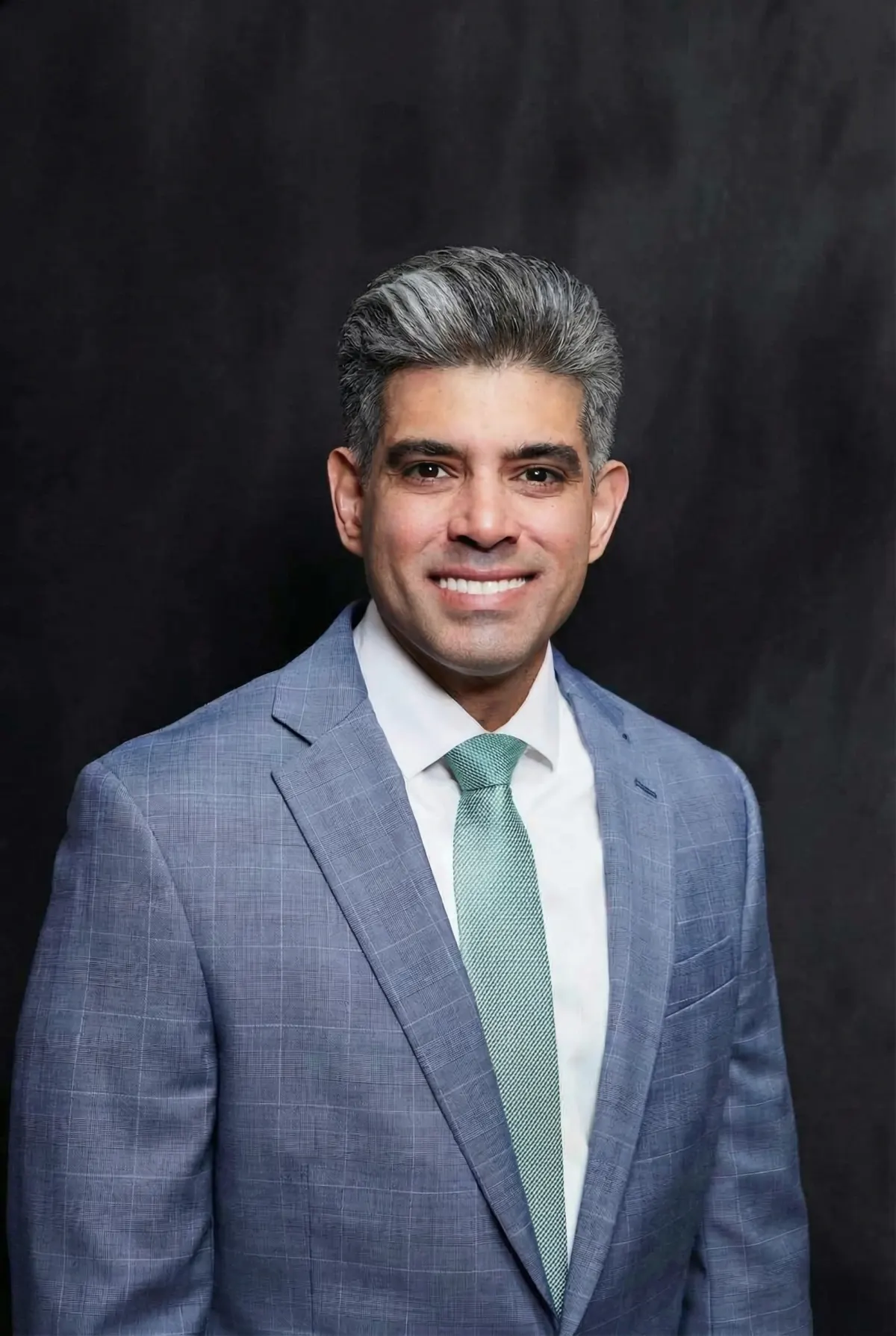
Legally reviewed by Tonmiel Rodriguez, Board Certified Criminal Trial Lawyer — last reviewed June 2026.
Speak With a Board Certified Criminal Defense Lawyer
Arrested for a weapons charge in Polk County? The first call matters.
Board Certified in Criminal Trial Law by The Florida Bar · Reach Us 24/7 · Hablamos Español
What Weapons Charges Are Most Commonly Filed in Polk County?
The State Attorney’s Office for the 10th Judicial Circuit in Bartow files weapons charges under Florida Chapter 790 aggressively, often alongside charges for drug offenses, assault, robbery, or domestic violence. Traffic stops, domestic calls, neighborhood disputes, and search warrant executions are the most common triggering events in Polk County. The weapons offenses I handle most frequently in this circuit are:
- Carrying a concealed firearm without a license (§ 790.01(2)) — third-degree felony, up to 5 years in prison and permanent loss of firearm rights upon conviction
- Felon in possession of a firearm (§ 790.23) — second-degree felony, up to 15 years in prison, triggered by any prior felony regardless of age or state of conviction
- Improper exhibition of a firearm (§ 790.10) — first-degree misdemeanor, up to 1 year in jail, with self-defense exception written directly into the statute
- Shooting into an occupied building or vehicle (§ 790.19) — second-degree felony, up to 15 years, routinely stacked with aggravated assault and attempted murder charges
- 10-20-Life firearm enhancement (§ 775.087) — mandatory minimums of 10 years, 20 years, or 25-to-life depending on the firearm conduct during a qualifying felony
What every one of these charges shares is that the constitutional and factual questions surrounding how police found the weapon, who actually possessed it, and what the defendant’s mental state was are almost always the critical issues. A Board Certified criminal defense lawyer knows how to find those issues and use them.
What Is Florida Chapter 790 and How Does It Define Weapons Offenses?
Florida Chapter 790 is the state’s primary weapons statute — a broad body of law covering the definition, possession, carrying, exhibition, and use of firearms and other weapons. The chapter defines “firearm” under § 790.001(6) as a weapon that will, is designed to, or may readily be converted to expel a projectile by the action of an explosive. That definition matters because it excludes air guns, BB guns, and spring-powered weapons from many firearms-specific offenses, including the 10-20-Life mandatory minimum scheme under § 775.087.
Within Chapter 790, the law draws important distinctions. Carrying a concealed weapon that is not a firearm — a dirk, metallic knuckles, billie, or similar item — is a first-degree misdemeanor under § 790.01(1). Carrying a concealed firearm without a license is a third-degree felony under § 790.01(2). The licensed carry exception under § 790.06 exempts valid concealed carry license holders from § 790.01 in permitted locations. The vehicle exception under § 790.25(5) protects lawful self-defense possession of a securely encased firearm in a car. These exceptions and distinctions create real defense opportunities that an experienced trial lawyer knows how to identify and develop from the facts of a specific case.
What Are the Defenses to a Concealed Carry Charge Under § 790.01?
Carrying a concealed firearm without a valid license is a third-degree felony in Florida. The State must prove the object was a firearm, that it was concealed from ordinary observation, that the defendant was carrying it, and that no valid license or exception applied. A valid Florida concealed carry license or a license from a reciprocity state under § 790.015 is a complete defense. Whether the firearm was actually concealed is frequently the most contested factual issue — a partially visible weapon, a firearm in a vehicle glove box, or a gun in a bag that was not hidden may not meet the statutory definition. The Fourth Amendment issues surrounding how the weapon was discovered are equally critical — an unlawful stop or frisk produces suppressible evidence that can eliminate the entire case.
Full concealed carry defense page →
What Makes Felon in Possession Cases Different From Other Weapons Charges?
Under § 790.23, any person with a prior felony conviction who possesses a firearm commits a second-degree felony. The prior conviction is an element the State must prove beyond a reasonable doubt — and it is contestable. A withhold of adjudication is not a conviction under Florida law and does not trigger § 790.23. A vacated conviction, a misdemeanor equivalent from another state, or a conviction for which civil rights have been restored may not qualify as a predicate felony. Beyond challenging the prior conviction, many of these cases turn entirely on constructive possession: the firearm was in a shared vehicle or home, not on the defendant’s person. Constructive possession requires proof of both knowledge and dominion and control — proximity alone is not enough to establish the State’s case beyond a reasonable doubt.
Full felon in possession defense page →
How Does the Self-Defense Exception Work in an Improper Exhibition Case?
Under § 790.10, displaying a firearm in a rude, careless, angry, or threatening manner in the presence of another person is a first-degree misdemeanor. What makes this statute distinctive is that the self-defense exception is written directly into the text: the State must prove the display was “not in necessary self-defense.” In road rage incidents, neighborhood disputes, and domestic confrontations, a defendant who drew a weapon in response to a genuine, perceived threat has a textbook statutory self-defense argument that the prosecution must affirmatively disprove. Florida’s Stand Your Ground law (§ 776.012) also applies in these scenarios — a successful immunity hearing results in dismissal of the entire charge before trial.
Full improper exhibition defense page →
Why Does the “Occupied” Element Matter So Much in a Shooting Into Building Case?
Under § 790.19, shooting at, within, or into any building or vehicle — occupied or unoccupied — is a second-degree felony with a 15-year maximum. The charge applies regardless of occupancy. But whether the building was occupied is the fact that drives every other charging decision in these cases: an unoccupied building produces a pure property-damage weapons charge; an occupied building produces aggravated assault charges for each occupant, potential attempted murder allegations, and 10-20-Life mandatory minimums under § 775.087. Challenging the “occupied” element — through witness testimony, surveillance footage, call records, and physical evidence — can eliminate the most serious additional charges and dramatically reduce sentencing exposure.
Full shooting into building defense page →
What Are the 10-20-Life Mandatory Minimums and How Do They Apply?
Florida § 775.087 — known as 10-20-Life — imposes mandatory minimum prison sentences when a firearm is present during the commission of certain enumerated qualifying felonies. The structure is rigid and non-negotiable:
| Firearm Conduct During Qualifying Felony | Mandatory Minimum |
|---|---|
| Possession of firearm during qualifying felony | 10 years — no exceptions |
| Discharge of firearm during qualifying felony | 20 years — no exceptions |
| Discharge causing death or great bodily harm | 25 years to life — no exceptions |
A judge has no authority to depart below these floors after conviction. The only paths to avoiding a 10-20-Life mandatory minimum are winning the underlying felony, defeating the firearm element at trial or on a suppression motion, negotiating a plea that eliminates the enhancement (which requires the State Attorney to agree), or — in limited cases — a substantial assistance motion. Because the mandatory minimum often far exceeds what the underlying charge would carry, the firearm element is frequently the most important strategic battleground in the entire case.
Full 10-20-Life defense page →
Speak With a Board Certified Criminal Defense Lawyer
Facing 10-20-Life or a weapons felony in Polk County? Do not wait.
Board Certified · Reach Us 24/7 · Hablamos Español
How Are Weapons Cases Investigated and Charged in the 10th Judicial Circuit?
Weapons cases in Polk County begin with one of several triggering events: a traffic stop where a weapon is spotted or discovered during a frisk or search; a response to a 911 call involving a weapon, a domestic dispute, or a shooting; or execution of a search warrant in a drug or robbery investigation where a weapon is found on the premises. The Polk County Sheriff’s Office, the Lakeland Police Department, the Winter Haven Police Department, and the Bartow Police Department are the primary arresting agencies. Each department has its own policies and practices around firearms encounters, and those practices matter in suppression litigation before the circuit court.
After arrest, the State Attorney’s Office reviews the arrest report and makes the charging decision. In the 10th Circuit, the SAO files weapons charges based on the evidence documented at arrest. The information — the formal charging document — controls exactly what the State must prove. If the information is deficient, if the evidence is constitutionally tainted, or if the factual basis for a key element is absent or weak, those are the leverage points a defense lawyer uses to negotiate or litigate the case to a favorable outcome.
What Fourth Amendment Challenges Apply to Weapons Cases in Florida?
The Fourth Amendment prohibits unreasonable searches and seizures. In the context of weapons charges, this protection is decisive: a weapon discovered through an unlawful stop, frisk, or search can be suppressed, and without the weapon, the charge collapses. Here are the suppression arguments I evaluate in every weapons case:
- Unlawful traffic stop: A stop without reasonable articulable suspicion of a traffic violation or criminal activity is unconstitutional. Everything discovered after an illegal stop is subject to suppression under the exclusionary rule.
- Unlawful pat-down: A frisk requires reasonable articulable suspicion that the person is armed and dangerous. A frisk based solely on presence in a high-crime area, officer nervousness, or generalized suspicion is constitutionally deficient.
- Invalid consent: Consent to search must be freely and voluntarily given. Consent produced by coercion, deception, or overwhelming police presence may be invalid under the totality of circumstances.
- Unlawful vehicle search: A vehicle search requires probable cause, valid consent, or a recognized exception. Searches without a recognized legal basis are unlawful.
- Warrantless home search: A search of a residence requires a warrant absent recognized exigent circumstances or valid consent. Firearms found during an unlawful home search are suppressible.
I file suppression motions in weapons cases whenever the facts present a viable constitutional argument. Suppression hearings are won and lost on the specific details of the encounter, and those details are in the police reports, body camera footage, and dash camera recordings — all of which I obtain and review in every case.
Why Does Board Certification Matter in a Weapons Case?
“This is the highest level of recognition by The Florida Bar for the competency and experience of a lawyer practicing criminal trial law.”
— The Florida Bar
Florida Bar Board Certification in Criminal Trial Law is awarded to less than 1 percent of Florida attorneys. The certification requires demonstrated jury trial experience, a rigorous written examination on criminal law and procedure, and peer review by other attorneys. It matters in weapons cases because these cases — especially those involving mandatory minimums, constructive possession disputes, and Fourth Amendment suppression issues — often end up at trial. An attorney who has tried over 75 jury cases in Polk, Highlands, Hardee, Osceola, and Hillsborough Counties knows how PCSO officers testify about traffic stops, how State prosecutors handle the firearm element of a 10-20-Life case, and what arguments resonate with Polk County juries. That knowledge is not available from a textbook or a weekend seminar.
Board Certification also signals to the State Attorney’s Office that the lawyer across the table is not going to be pushed around in plea negotiations. Cases with legitimate defense issues are resolved more favorably when the State knows the attorney is capable and willing to take the case to trial and compete at that level.
What Should You Do Immediately After a Weapons Arrest in Polk County?
The first 24 to 48 hours after a weapons arrest are critical. The decisions made in that window — whether to speak to police, whether to consent to additional searches, what to say on the jail phone — can either preserve your defenses or compromise them. Here is what I tell every client:
- Do not speak to law enforcement about the case. Exercise your right to remain silent immediately and clearly. Statements made at the scene or at the jail are routinely used against defendants at trial. Nothing you say in the immediate aftermath will help the situation.
- Do not consent to additional searches. If officers ask to search your home, vehicle, or belongings following an arrest, say clearly: “I do not consent to a search.” This preserves Fourth Amendment challenges that might not otherwise be available.
- Retain a criminal defense lawyer before your first court appearance. A lawyer at first appearance can address the bond amount set and begin reviewing body camera footage and police reports before evidence is lost or memories fade.
- Do not discuss the case on the jail phone. All jail calls are recorded and are routinely provided to the prosecution. Statements about the facts, the weapon, or any witness can be used at trial.
- Document your own account immediately. Write down everything you remember about the circumstances of the arrest — location, sequence of events, what was said by whom, who was present — and provide that account only to your attorney.
Weapons Defense by City in Polk County
City-specific pages for the Polk County communities where these Chapter 790 cases most often begin:
- Weapons Charges Lawyer in Lakeland — LPD, PCSO, and FHP stops
- Weapons Charges Lawyer in Bartow — Courthouse docket & BPD/PCSO files
- Weapons Charges Lawyer in Winter Haven — WHPD and PCSO contacts
Frequently Asked Questions About Weapons Charges in Florida
What is the most serious weapons charge under Florida Chapter 790?
Under Chapter 790 alone, shooting into an occupied building or vehicle under § 790.19 is a second-degree felony with a 15-year maximum. But the most serious sentencing exposure in any weapons case comes from the 10-20-Life mandatory minimum law under § 775.087, which imposes 25 years to life when a firearm is discharged and causes death or great bodily harm during an enumerated qualifying felony. That floor is non-negotiable — no judge can depart below it after the firearm element is established at trial.
Can a weapons charge be dismissed if the gun was found during an illegal search?
Yes. If a firearm was discovered through an unlawful traffic stop, an unlawful frisk, or a search conducted without valid consent or legal justification, a motion to suppress can result in the weapon being excluded from evidence. Once the weapon is suppressed, the charge typically cannot survive. Suppression motions succeed when the specific facts of the encounter show a constitutional violation — and I look for those facts in every weapons case before evaluating any other strategy.
What is the difference between actual and constructive possession of a weapon?
Actual possession means the weapon was on the defendant’s person — in their hand, in their waistband, or in their pocket. Constructive possession means the weapon was in a location where the defendant had dominion and control, such as a vehicle they drove or a room they occupied. To establish constructive possession, the State must prove both that the defendant knew the weapon was there and that they had actual control over it. In shared vehicles or shared residences with multiple occupants, constructive possession is genuinely contested and often cannot be proven beyond a reasonable doubt.
Does a Florida weapons felony affect my federal gun rights?
Yes. A Florida felony conviction for any weapons offense under Chapter 790 triggers the federal firearms prohibition under 18 U.S.C. § 922(g)(1), which permanently prohibits any person convicted of a crime punishable by more than one year in prison from possessing any firearm or ammunition anywhere in the United States. This prohibition is nationwide and permanent. Additionally, certain weapons convictions constitute aggravated felonies under federal immigration law and can result in mandatory deportation for non-citizens.
Does Florida’s Stand Your Ground law apply to weapons charges?
Yes. Florida’s Stand Your Ground statute (§ 776.012) permits a person who is not engaged in criminal activity and who is in a place where they have a right to be to use or threaten to use force without a duty to retreat when they reasonably believe it is necessary to prevent death, great bodily harm, or commission of a forcible felony. Stand Your Ground applies in improper exhibition cases where the display was in response to a genuine threat, and in shooting cases where the shot was fired in lawful self-defense. A successful immunity hearing under Stand Your Ground results in dismissal before trial.
How does a weapons charge affect immigration status?
Firearms offenses carry some of the most severe immigration consequences in the criminal system. A conviction for carrying a concealed firearm, felon in possession, or any offense with a firearm as an element can constitute an aggravated felony under immigration law, subjecting a non-citizen to mandatory detention, removal proceedings, and permanent inadmissibility. Even a misdemeanor weapons conviction can trigger deportability in certain circumstances. Non-citizen defendants facing any weapons charge should consult with both a criminal defense attorney and an immigration attorney before entering any plea.
Can weapons charges be expunged in Florida?
A final felony conviction for a weapons offense cannot be expunged or sealed in Florida. However, if a weapons charge is dropped, nolle prossed, or results in a withhold of adjudication rather than a conviction, expungement or sealing may be available subject to Florida’s eligibility requirements. Whether a particular outcome qualifies for sealing or expungement depends on the specific charge, the disposition, and whether the defendant has any prior record. I advise every client about post-resolution options as part of the representation.
Speak With a Board Certified Criminal Defense Lawyer
Weapons charges in Polk, Highlands, or Hardee County — call for a same-day consultation.
Board Certified · Reach Us 24/7 · Hablamos Español
What Should You Do If Police Find a Weapon During a Traffic Stop?
Traffic stops are one of the most common scenarios leading to weapons charges in Polk County. If law enforcement discovers a firearm or weapon during a vehicle search, your response in those first moments matters. Do not make any statements about the weapon — whether it belongs to you, whether you knew it was there, or whether you have a permit. Invoke your right to remain silent and your right to an attorney immediately.
Under Florida law, officers need probable cause or your consent to search a vehicle beyond the passenger compartment. If the search was unlawful, any weapon found may be suppressed through a motion to suppress evidence under the Fourth Amendment and Article I, Section 12 of the Florida Constitution. Attorney Tonmiel Rodriguez has filed dozens of successful suppression motions in weapons cases across the 10th Judicial Circuit, challenging illegal searches in Polk, Highlands, Hardee, Osceola, and Hillsborough Counties. The difference between a conviction carrying mandatory prison time and a dismissal often comes down to whether the search was legal.
Facing a Weapons Charge in Polk County? Call Now
Board Certified · Reach Us 24/7 · Hablamos Español