
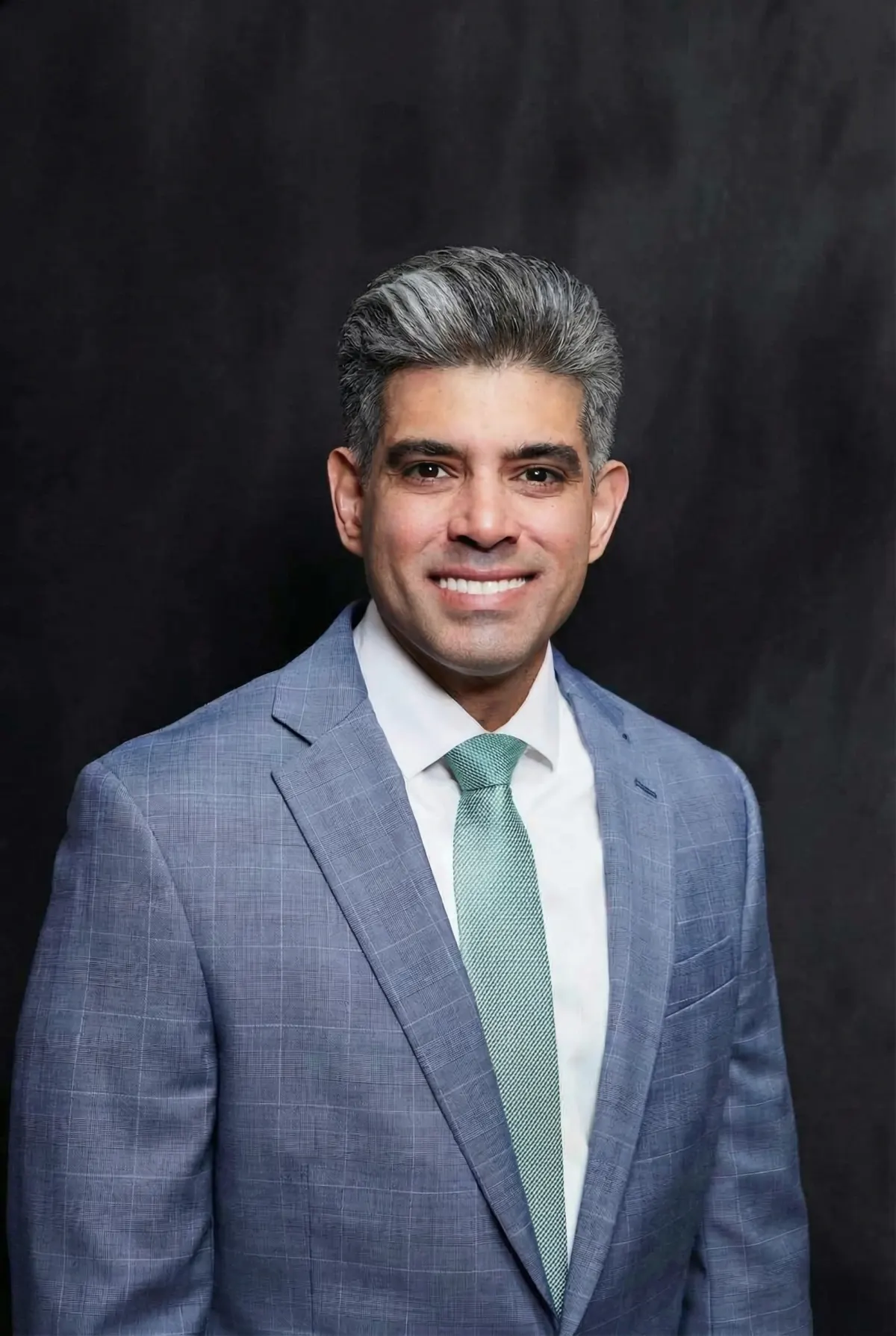
Auburndale sits where US-92 meets I-4 — a geographic fact that shapes its law enforcement environment as much as anything else about the city. If you have been arrested here, whether by Auburndale PD, PCSO during a highway stop, or FHP on I-4, your case will be heard at the Polk County Courthouse in Bartow. Attorney Tonmiel Rodriguez is a Board Certified criminal trial lawyer based in Bartow — about 15 miles from Auburndale — who appears in that courthouse regularly.
Legally reviewed by Tonmiel Rodriguez, Board Certified Criminal Trial Lawyer — last reviewed June 2026.
Auburndale’s position in the middle of Polk County — between Lakeland and Winter Haven, at a major interstate junction — means it sees enforcement from multiple agencies operating under different jurisdictional frameworks. Understanding which agency made the arrest, what procedures were followed, and where any constitutional vulnerabilities lie is the starting point of every defense in this corridor. A conviction here carries the same permanent consequences as a conviction anywhere else in Florida. You need a lawyer who treats it that way.
Arrested in Auburndale? Call Now — Reach Us 24/7
Attorney Tonmiel Rodriguez is a Board Certified Criminal Trial Lawyer with over 75 jury trials. He defends clients in Auburndale and throughout the 10th Judicial Circuit. Hablamos Español. US-92 and I-4. Central Polk County.
Board Certified in Criminal Trial Law by The Florida Bar · Reach Us 24/7 · Hablamos Español
Where Are Auburndale Criminal Cases Tried?
Felony cases from Auburndale are assigned to circuit court criminal divisions at the Polk County Courthouse, 255 N Broadway Ave, Bartow, FL 33830 — approximately 15 miles southwest via US-92. All felony arraignments, pretrial conferences, motion hearings, and jury trials take place at this facility. Misdemeanor and county court proceedings for Auburndale cases may be conducted at the Northeast Polk Government Center at 200 Government Center Blvd, Lake Alfred, about 5 miles northeast of Auburndale.
Who Enforces the Law in Auburndale?
The Auburndale Police Department (APD) operates within city boundaries, handling patrol, traffic enforcement, and detective follow-up. APD officers frequently patrol US-92 through the city and the commercial areas near I-4 interchanges. How they write reports, what they record about consent, and how they document field sobriety tests are all directly relevant to the defense analysis.
The Polk County Sheriff’s Office (PCSO) covers unincorporated areas around Auburndale and is active on I-4 in this part of the county. PCSO drug interdiction units use traffic stops on I-4 and US-92 as a gateway to searches for drugs and weapons. Extended stops with K-9 deployment are common in this zone. The lawfulness of the stop, the extension, and any consent obtained are the first questions in every drug case from this corridor.
The Florida Highway Patrol (FHP) enforces traffic law on I-4, which passes immediately north of Auburndale, and on US-92. FHP troopers conduct DUI enforcement and commercial vehicle inspections. FHP’s DUI protocols — field sobriety tests, breath testing, and blood draws — are subject to the same legal challenges as any other agency’s.
What Criminal Charges Are Most Common in Auburndale?
Drug possession and trafficking cases from I-4 and US-92 stops make up a significant share of Auburndale-area filings. PCSO and FHP interdiction operations on I-4 generate trafficking arrests involving quantities that trigger Florida’s mandatory minimum sentencing laws. The Fourth Amendment challenge to the stop and search is the first line of defense in every drug case from this corridor. A successful suppression motion can result in dismissal regardless of what the evidence shows.
DUI arrests occur on US-92 through downtown Auburndale and on I-4. APD handles DUI arrests within city limits; FHP handles interstate stops. Every DUI arrest involves a traffic stop, field sobriety tests, and a breath test or blood draw — each step must comply with strict procedural requirements, and failure to comply creates suppression and trial arguments that an experienced defense attorney knows how to make.
Domestic battery charges arise throughout Auburndale’s residential areas. APD responds to domestic disturbance calls under Florida’s mandatory arrest statute. Once an arrest is made, the State Attorney’s Office makes the charging decision regardless of what the alleged victim requests. Domestic battery cases require immediate attention to protect against both the criminal charge and any protective injunction that may follow.
Theft crimes in Auburndale’s commercial zones generate petit and grand theft charges. The retail corridor on US-92 — including major chain retailers — produces documented shoplifting cases. The $750 threshold between misdemeanor and felony theft means merchandise valuation is a contested factual issue in many cases.
Battery on law enforcement charges arise from confrontations during stops and arrests in Auburndale. This is a third-degree felony under § 784.07. The definition of battery, the reasonableness of the officer’s use of force, and whether the defendant was resisting a lawful arrest are all relevant to the defense.
Arrested in Auburndale? Call Now — Reach Us 24/7
Attorney Tonmiel Rodriguez is a Board Certified Criminal Trial Lawyer with over 75 jury trials. He defends clients in Auburndale and throughout the 10th Judicial Circuit. Hablamos Español.
Board Certified · Reach Us 24/7 · Hablamos Español
What Practice Areas Does Attorney Rodriguez Handle for Auburndale Clients?
- DUI Defense — APD and FHP I-4/US-92 stops
- Drug Possession
- Drug Trafficking — Mandatory minimum defense
- Domestic Battery
- Theft Crimes
- Weapons Charges
- Robbery and Burglary
- Violent Crimes
- Sex Crimes
- Federal Charges
- Record Sealing and Expungement
What Should You Do After an Arrest in Auburndale?
Invoke your right to remain silent. Say: “I am invoking my right to remain silent. I want an attorney.” Do not continue speaking. Do not answer questions about where you came from, where you were going, or who owns the vehicle. Wait for your attorney.
Do not consent to searches. If APD or PCSO asks to search your vehicle, home, or phone, decline. Officers are permitted to search if they have a warrant or legal exception, but consent waives constitutional protections that could otherwise be the basis for suppression.
Call (863) 774-4556 as soon as you are able. Attorney Rodriguez’s office is available 24/7. Early contact allows intervention at the bond hearing stage and communication with the State Attorney’s Office before the charging window closes.
Frequently Asked Questions — Auburndale Criminal Defense
Where do Auburndale criminal cases go to court?
All felony cases from Auburndale are prosecuted at the Polk County Courthouse, 255 N Broadway Ave, Bartow, FL 33830 — approximately 15 miles southwest via US-92. Misdemeanor cases may be heard at the Northeast Polk Government Center at 200 Government Center Blvd in nearby Lake Alfred.
Which law enforcement agencies operate in Auburndale?
The Auburndale Police Department handles incidents within city limits. The Polk County Sheriff’s Office covers unincorporated areas and operates on I-4 through the area. The Florida Highway Patrol enforces traffic law on I-4 and US-92, which pass through or border Auburndale.
What makes Auburndale different for criminal defense purposes?
Auburndale sits at the intersection of US-92 and I-4, creating a convergence of enforcement agencies. Cases may be generated by Auburndale PD, PCSO, or FHP depending on where the arrest occurred on the road network. Each agency’s documentation practices and legal compliance issues differ — knowing which agency made the arrest affects the suppression analysis.
Does Attorney Rodriguez handle misdemeanor charges in Auburndale?
Yes. Misdemeanor cases including DUI, domestic battery, petit theft, possession of cannabis under 20 grams, and disorderly conduct are handled by Attorney Rodriguez in county court at the Northeast Polk Government Center in Lake Alfred or the Bartow courthouse.
What diversion options exist for Auburndale first-time offenders?
The 10th Circuit’s State Attorney’s Office offers pretrial diversion for eligible first-time, non-violent offenders. Completion results in dismissal of charges. Eligibility is case-specific and should be evaluated by defense counsel before any charging decisions are finalized.
Does Auburndale’s I-4 position affect the type of charges filed?
Yes. Auburndale’s location at the I-4 and US-92 interchange means a significant portion of drug and weapons charges arise from traffic interdiction stops. Drug trafficking cases from this corridor carry Florida mandatory minimum sentences that require aggressive defense strategy from the first day of representation.
Arrested in Auburndale? Call Now — Reach Us 24/7
Attorney Tonmiel Rodriguez is a Board Certified Criminal Trial Lawyer with over 75 jury trials. He defends clients in Auburndale and throughout the 10th Judicial Circuit. Hablamos Español. 15 miles from Bartow.
Board Certified · Reach Us 24/7 · Hablamos Español
How Does Attorney Rodriguez Approach Auburndale Defense Cases?
Defense work in Auburndale begins with understanding which agency made the arrest and what legal framework governs that agency’s conduct. APD arrests within city limits involve a different documentation standard than FHP stops on I-4. PCSO drug interdiction cases involve the agency’s specific protocols for K-9 deployment and consent documentation. These distinctions matter legally. The Fourth Amendment applies to every stop — but the analysis of whether a stop was lawful depends entirely on the specific facts that the agency recorded at the scene.
Attorney Rodriguez requests all body camera footage, dispatch records, probable cause affidavits, and witness statements within the first days of representation. In drug cases from the I-4 corridor, he specifically examines the stated reason for the traffic stop, the timeline of the encounter from stop to K-9 deployment, and the specifics of any consent given. Consent obtained by persistent questioning, during an unlawfully extended stop, or under coercive circumstances may not be legally valid. An unconstitutional search means suppressed evidence — and suppressed evidence often means dismissed charges.
For DUI cases from APD and FHP, the defense analysis covers the traffic stop’s legal basis, the officer’s field sobriety test certification, the specific tests administered and the conditions under which they were given, and the breath testing equipment’s calibration and maintenance history. Each element of the DUI prosecution is subject to legal and scientific challenge. An experienced criminal defense attorney knows where those challenges lie and how to make them in court.
What Are the Collateral Consequences of a Florida Criminal Conviction?
A Florida criminal conviction carries consequences that extend far beyond any sentence the court imposes. These collateral consequences are permanent features of a criminal record and are not automatically eliminated when a sentence is completed.
Employment. Florida employers routinely conduct background checks. A felony conviction is disclosed on most applications. Professional licensing boards — for nursing, real estate, teaching, contracting, and many others — require disclosure and may deny licensure based on a criminal conviction.
Housing. Landlords use background screening services that flag criminal convictions. Federally subsidized housing programs carry automatic restrictions for many felony convictions.
Civil rights. A Florida felony conviction results in automatic loss of the right to vote and the right to possess a firearm under both state and federal law. Restoration of rights requires a separate formal process and is not guaranteed.
Immigration. Non-citizen defendants face deportation, removal, or bars on future legal status as a direct result of certain convictions. The specific charge matters — some charges trigger mandatory immigration consequences under federal law regardless of the sentence received. Attorney Rodriguez identifies immigration consequences at the outset of representation and coordinates with immigration counsel when the client’s status is at risk.
Professional licenses and security clearances. Many federal contractors, law enforcement applicants, and licensed professionals face denial or revocation of credentials based on criminal records. Even a misdemeanor can disqualify a defendant from certain positions.
The only way to avoid these consequences is to avoid a conviction. That means fighting the charges — from suppression motions through trial if necessary — or securing a dismissal through diversion. Attorney Rodriguez evaluates every available option for every Auburndale client. Call (863) 774-4556 for a consultation. Learn about record sealing and expungement here.
What Happens After Arraignment for an Auburndale Case?
After arraignment at the Polk County Courthouse, the case enters the pretrial phase. The State Attorney’s Office provides formal discovery — police reports, witness statements, lab reports, video evidence. The defense reviews everything and identifies suppression issues, factual disputes, and legal arguments. Pretrial conferences occur in the assigned division at the Bartow courthouse. Motion hearings on suppression and other issues take place before the assigned judge. The case proceeds toward trial or toward a negotiated resolution, depending on the evidence and the defense strategy. Attorney Rodriguez handles this entire process for Auburndale clients from his Bartow office, 15 miles from where they were arrested.
What Happens if You Face Drug Trafficking Charges in Auburndale?
Drug trafficking under Florida Statute § 893.135 is triggered by the possession, sale, purchase, or delivery of a controlled substance at or above a specified weight threshold — not by evidence of dealing activity. These thresholds are: 28 grams for cocaine, 4 grams for heroin or fentanyl, and 25 pounds for cannabis, among others. Reaching the threshold weight activates a mandatory minimum sentence that the sentencing judge has no discretion to reduce absent a substantial assistance motion from the State.
For Auburndale cases from the I-4 and US-92 corridor, drug trafficking charges frequently arise from traffic stop searches where the weight of the contraband in the vehicle exceeds the statutory threshold. The defense analysis starts with the search: was it constitutional? If not, a successful suppression motion eliminates the evidence — and without the contraband, there is no trafficking charge, regardless of the weight.
Even when suppression is not available, trafficking defense involves challenging the weight and composition of the substance through independent laboratory testing, evaluating whether the defendant had knowledge of the substance and its quantity, and assessing whether any safety valve or substantial assistance provisions apply to the specific facts. Attorney Rodriguez has handled drug trafficking cases from the I-4 and US-92 corridor in Polk County circuit court. Call (863) 774-4556 for a confidential consultation. Hablamos Español. Learn more about drug trafficking defense here.
The I-4/US-92 Interchange: Florida’s Busiest Drug Interdiction Zone
The intersection of I-4 and US-92 in Auburndale is one of the most heavily patrolled interchange zones in Polk County. This is where two major travel corridors converge: I-4, which carries traffic between Tampa and Orlando, and US-92, which runs through the heart of Polk County from Lakeland through Auburndale to Winter Haven. Both PCSO interdiction units and FHP Troop C treat this interchange as a priority enforcement zone.
Commercial trucks, rental vehicles, and passenger cars moving contraband between the Tampa and Orlando markets both use this interchange. Law enforcement agencies know this. PCSO interdiction deputies park at interchange ramps and use minor traffic violations as the initial basis for stops — most often following too closely or an improper lane change. FHP troopers enforce on the interstate itself. The result is a volume of traffic stop-based arrests from this specific interchange that is disproportionate to the size of Auburndale as a city.
For defense purposes, the documentation of these stops is critical. Every PCSO deputy and FHP trooper who works the I-4/US-92 zone has a camera running during stops. The dashcam and body camera footage tells the story of the stop: the initial reason given, the timeline from stop to consent request or K-9 call, the specific words used in the consent exchange, and the conditions under which any field sobriety test was administered. Attorney Rodriguez requests all of this footage within the first days of representation — because footage that contradicts the written report is the defense’s most powerful tool in suppression litigation.
Defending Commercial Traffic Stops on I-4 Near Auburndale
Commercial vehicles — semi-trucks, box trucks, and other large transport vehicles — operate under a different regulatory framework than passenger vehicles on I-4. Florida Department of Transportation enforcement officers and FHP commercial vehicle inspectors have authority to stop commercial vehicles for safety inspections under state law. These inspections can escalate to criminal investigations if contraband or evidence of drug activity is found.
For commercial drivers arrested in the Auburndale I-4 corridor, the stakes are higher than for most defendants: a drug conviction triggers automatic CDL disqualification under federal regulations, ending a commercial driver’s career. An HGV or CDL license holder who is arrested for drug trafficking from an I-4 stop faces not only the criminal mandatory minimum sentence but also the permanent loss of the only livelihood they have built. Attorney Rodriguez understands the CDL implications of drug charges and takes them into account when building the defense strategy and evaluating any plea offers.
The search of a commercial vehicle is subject to the same Fourth Amendment protections as a passenger vehicle for criminal contraband — a regulatory inspection authority does not transform into a criminal search authority. If a DOT inspection turns up contraband that was the real target of the stop, the constitutional validity of that conversion from regulatory to criminal search is subject to challenge. This is a nuanced Fourth Amendment question that requires a lawyer who has actually litigated these issues in Florida courts.
Understanding Mandatory Minimums: What § 893.135 Actually Requires
If you have been arrested in the Auburndale corridor on drug trafficking charges, the most important thing to understand immediately is that the sentence is set by statute, not by the judge’s discretion. Florida Statute § 893.135 establishes mandatory minimum prison sentences for drug trafficking that apply from the moment of conviction — and the sentencing judge has no power to impose a lesser sentence absent a substantial assistance motion filed by the State Attorney’s Office.
The threshold amounts for the most commonly trafficked substances: cocaine — 28 grams (3-year minimum), 200 grams (7-year minimum), 400 grams (15-year minimum); methamphetamine — 14 grams (3-year minimum), 28 grams (7-year minimum); heroin — 4 grams (3-year minimum), 14 grams (15-year minimum); fentanyl — 4 grams (3-year minimum). These thresholds are low enough that a single traffic stop can produce a trafficking charge on amounts that fit in a sandwich bag. The difference between possession (5-year maximum, no mandatory minimum) and trafficking (mandatory minimum from 3 to 25 years) is entirely a question of weight.
The defense strategy in a trafficking case from the Auburndale corridor must address: (1) the constitutional validity of the stop and search — if the search was unlawful, suppression eliminates the State’s evidence entirely; (2) the laboratory testing of the weight and composition of the substance — independent analysis is available and sometimes reveals testing errors or chain of custody issues; (3) knowledge — the State must prove the defendant knew the substance was a controlled substance and knew its quantity met the trafficking threshold; and (4) the availability of substantial assistance to the State, which is the only mechanism for a sentence below the mandatory minimum. Learn more about drug trafficking defense in Florida. Call (863) 774-4556 for a confidential consultation. Hablamos Español.
Additional Frequently Asked Questions — Auburndale Criminal Defense
What is reasonable articulable suspicion and why does it matter for Auburndale traffic stops?
Reasonable articulable suspicion (RAS) is the constitutional standard for initiating a traffic stop under the Fourth Amendment, as interpreted by Terry v. Ohio and its progeny. An officer must be able to point to specific, articulable facts that give rise to a reasonable suspicion that a traffic violation or criminal activity is occurring. A hunch, a gut feeling, or the appearance of a driver is not sufficient. In I-4 and US-92 stops near Auburndale, law enforcement agencies frequently document pretextual violations — minor traffic infractions used as a pretext to stop vehicles they already intend to search. If the stated reason for the stop is contradicted by the dashcam footage or is legally insufficient on its face, the stop fails constitutional scrutiny and the evidence is suppressible.
How long can a traffic stop legally last in Florida?
Under Rodriguez v. United States, 575 U.S. 348 (2015), a traffic stop may last only as long as is necessary to complete the purpose of the stop — checking the driver’s license, registration, and insurance; running a warrant check; and issuing a citation or warning. Any extension of the stop beyond that purpose requires either the driver’s voluntary consent or independent reasonable suspicion of criminal activity. Waiting for a K-9 unit to arrive — even for a few minutes — is an unlawful extension of the stop unless there is independent reasonable suspicion. In Auburndale I-4 stops where the K-9 was called while the paperwork was being completed, this is a live constitutional issue that Attorney Rodriguez litigates in suppression hearings.
Collateral Consequences of an Auburndale Criminal Conviction
A conviction from an Auburndale arrest — whether from APD, PCSO, or FHP — carries the same permanent collateral consequences as a conviction from any other Florida county. Employment background checks flag felony convictions indefinitely. Professional licensing boards in healthcare, real estate, law, contracting, and finance require disclosure of criminal convictions and may deny or revoke licensure based on them. A domestic battery conviction — even a first-degree misdemeanor — creates a permanent federal firearms disability under 18 U.S.C. § 922(g)(9) and cannot be sealed or expunged under Florida law. For commercial drivers operating in the I-4 industrial corridor, a DUI or drug conviction triggers federal CDL disqualification that ends a career. Immigration consequences for non-citizen defendants in Auburndale include mandatory removal for drug convictions and crimes of moral turpitude under federal immigration law — consequences that follow a conviction regardless of the sentence imposed. The goal of the defense is to avoid the conviction entirely. Attorney Rodriguez evaluates every available legal strategy for Auburndale clients — suppression, diversion, mitigation, and trial — before any plea is considered. Call (863) 774-4556 for a free consultation. Hablamos Español. Learn about sealing and expunging Florida criminal records.
Auburndale Enforcement & Crime Trends
Auburndale operates its own police department — the Auburndale Police Department (APD) — separate from the Polk County Sheriff’s Office. This distinction matters to anyone facing charges here. APD handles arrests within city limits. PCSO covers unincorporated areas surrounding Auburndale. The Florida Highway Patrol and specialized task forces operate along the I-4 and US-92 corridors that intersect in Auburndale.
According to third-party crime data aggregators, Auburndale’s overall crime rate is approximately 31.95 per 1,000 residents — slightly below the national average of 33.37. The violent crime rate is 3.65 per 1,000 residents, well below the national average. Even with rates near or below the national average, enforcement here is concentrated where the agencies expect to find cases — the retail corridor on US-92 and the I-4 interchange — rather than spread evenly across the city.
Crime is a serious local concern in Auburndale. In recent years, the Auburndale City Commission terminated the city manager partly over what commissioners described as the “budgeted shrinking of the police department amid a violent crime increase” and a perceived “lack of action and accountability on violent crime.” That political pressure has translated into increased enforcement visibility, more aggressive patrol strategies, and heightened prosecution coordination between APD and the State Attorney’s Office.
That enforcement intensity is amplified by geography. As the I-4/US-92 interchange section above explains, a large share of Auburndale drug and weapons charges begin as a corridor traffic stop — and agencies as far up as the federal DEA work these routes alongside APD, PCSO, and FHP.
For defendants facing charges in Auburndale, the jurisdictional landscape matters. APD arrests are processed at the Polk County Jail and prosecuted at the Polk County Courthouse in Bartow. Whether your case originated from a city patrol stop, a corridor interdiction, or an investigation by a specialized unit, the Tenth Judicial Circuit’s felony divisions in Bartow handle all serious criminal matters. County-wide, the Polk County Sheriff’s Office reported a 24.6% decrease in crime across all seven UCR categories in the first half of 2025 compared to the same period in 2024, according to PCSO’s semi-annual Uniform Crime Report. Declining crime rates often coincide with more targeted enforcement — meaning the cases that are prosecuted receive concentrated attention from law enforcement and the SAO.
Understanding Auburndale’s enforcement dynamics — the independent APD, the I-4 interdiction corridor, the political pressure for visible crime response, and the multi-agency presence — is foundational to building an effective defense. Each stop, search, and arrest still has to satisfy the Fourth Amendment, and on the I-4/US-92 corridor that is where these cases are won or lost: the basis for the stop, how long it lasted, when the K-9 was called, and whether any consent to search was truly voluntary.