
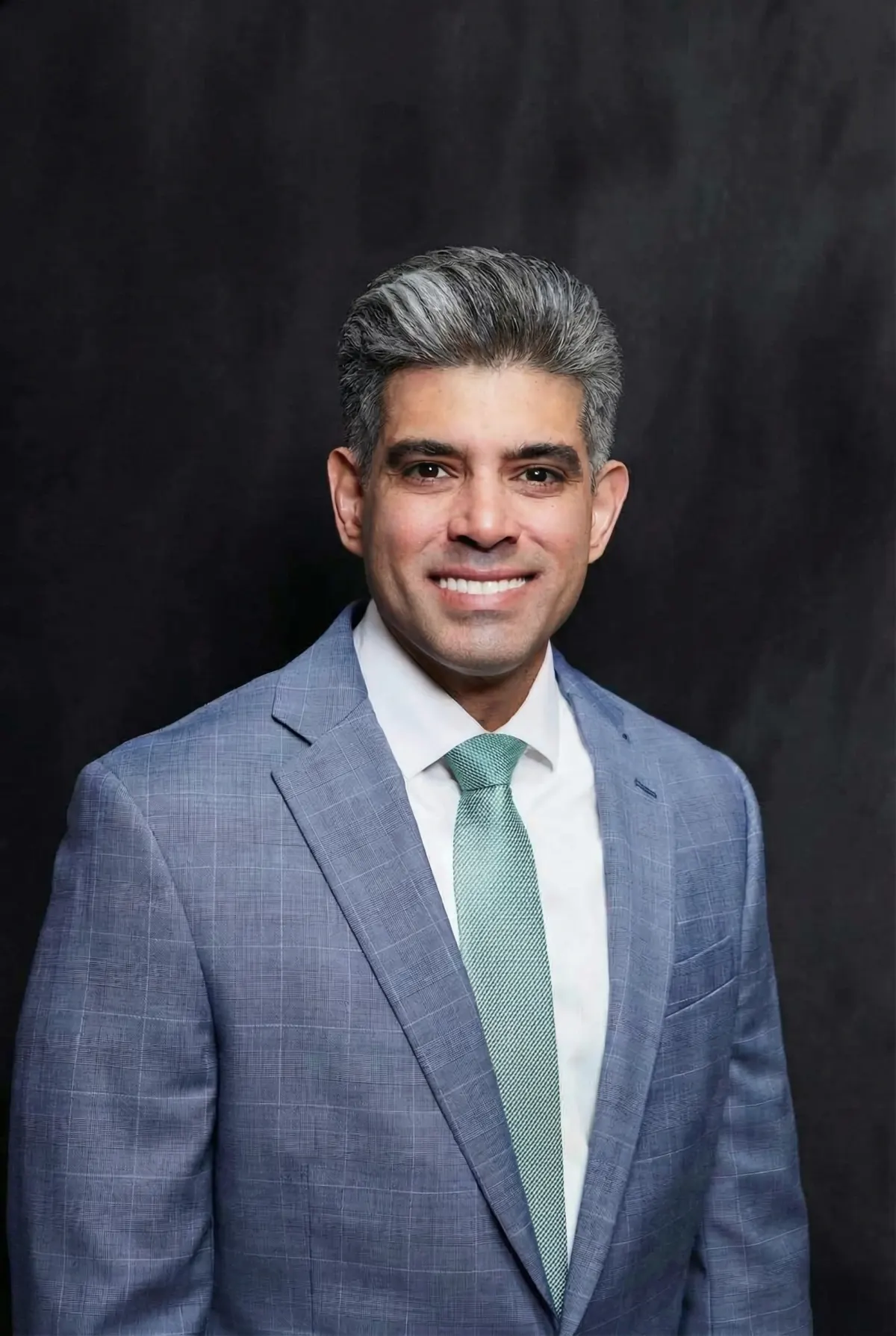
Federal sex crimes defense attorney Tonmiel Rodriguez — Board Certified Criminal Trial Lawyer in Bartow, Florida — defends clients charged with federal child sexual abuse material (CSAM) offenses under 18 U.S.C. §§ 2251 and 2252, sex trafficking under 18 U.S.C. § 1591, and related federal sex crime charges in the Middle District of Florida. These are among the most serious charges in the federal criminal justice system — carrying mandatory minimums from 5 to 15 years, long maximum sentences, and lifetime sex offender registration requirements. Call (863) 774-4556 — 24/7 availability, Hablamos Español.
Legally reviewed by Tonmiel Rodriguez, Board Certified Criminal Trial Lawyer — last reviewed June 2026.
Federal sex crime investigations are thorough, long-running, and technically complex. By the time federal agents execute a search warrant on a home, months of investigation have already occurred — IP address identification, subscriber record subpoenas, and digital evidence analysis. Having experienced federal defense counsel who understands digital forensics, constitutional search and seizure law, and the specific practices of the U.S. Attorney’s Office for the Middle District of Florida is essential.
Facing Federal Charges? Call Now — Board Certified Criminal Trial Lawyer
Attorney Tonmiel Rodriguez represents clients in the Middle District of Florida.
Board Certified in Criminal Trial Law by The Florida Bar · Reach Us 24/7 · Hablamos Español
What Federal Statutes Cover Child Sexual Abuse Material?
Two primary statutes govern federal CSAM charges. Their scope, mandatory minimums, and required elements differ significantly:
What Is 18 U.S.C. § 2252 — Distribution, Receipt, and Possession?
18 U.S.C. § 2252 covers the transportation, distribution, receipt, and possession of visual depictions involving the sexual exploitation of minors that have traveled in or were produced using materials that traveled in interstate or foreign commerce. The specific charged subsection determines the applicable penalties:
- § 2252(a)(1) — Transportation: 5-year mandatory minimum, up to 20 years per count
- § 2252(a)(2) — Distribution or Receipt: 5-year mandatory minimum, up to 20 years per count
- § 2252(a)(3) — Sale: Up to 20 years
- § 2252(a)(4) — Possession: Up to 10 years (no mandatory minimum for first offense)
The distribution/receipt mandatory minimum means a person charged under § 2252(a)(2) cannot receive less than 5 years regardless of circumstances, personal history, or mitigation — unless a specific statutory exception applies.
What Is 18 U.S.C. § 2251 — Production of CSAM?
18 U.S.C. § 2251 covers the production of child sexual abuse material — using, persuading, inducing, enticing, or coercing a minor to engage in sexually explicit conduct for the purpose of producing a visual depiction. Production is the most seriously penalized tier of federal CSAM offenses:
- First offense: Mandatory minimum 15 years, maximum 30 years per count
- Second offense: Mandatory minimum 25 years, maximum 50 years per count
- Third or subsequent offense: Mandatory minimum 35 years, maximum life
A single count of production can produce a sentence longer than most violent offenses. Cases involving multiple victims or multiple incidents generate multiple counts, and § 2251 sentences can run consecutively.
Facing Federal Charges? Call Now — Board Certified Criminal Trial Lawyer
Attorney Tonmiel Rodriguez represents clients in the Middle District of Florida.
Board Certified · Reach Us 24/7 · Hablamos Español
How Do Federal CSAM Investigations Work?
What Triggers a Federal Investigation?
The vast majority of federal CSAM investigations originate from CyberTips filed by electronic service providers — Google, Facebook/Meta, Apple, Microsoft, and file-sharing platforms — with the National Center for Missing and Exploited Children (NCMEC) when CSAM is detected on their platforms. NCMEC processes these tips and refers them to the appropriate law enforcement agency based on the subscriber’s IP address and location. FBI and Homeland Security Investigations (HSI) are the primary federal investigative agencies for CSAM cases in the Middle District of Florida.
What Does a Federal CSAM Search Warrant Look For?
After identifying the subscriber associated with the IP address, agents obtain a federal search warrant for the residence. The warrant authorizes seizure and forensic examination of all electronic devices — computers, laptops, phones, tablets, external drives, USB drives, gaming consoles, and network equipment. Digital forensic examiners use specialized software (Cellebrite, FTK, EnCase) to conduct a complete forensic examination of every device, looking for images, videos, cached files, deleted files, browser history, and peer-to-peer file-sharing software activity.
What Are the Defenses to Federal CSAM Charges?
Was the Search Warrant Valid and the Digital Forensics Sound?
The Fourth Amendment governs the search warrant and the subsequent forensic examination. A warrant lacking probable cause, overbroad in scope, or issued based on stale information can be challenged through a motion to suppress. Beyond the warrant, the digital forensic methodology itself can be challenged — whether proper forensic protocols were followed, whether chain of custody was maintained, and whether files could have been planted by malware or accessed by another user on the same network. These are legitimate technical defenses that require careful analysis of the forensic reports.
Was the Defendant Actually the User?
An IP address identifies an internet connection — not a specific person. A household with multiple users, an open WiFi network, or a compromised router can all result in an IP address associated with CSAM activity without the registered subscriber being the actual offender. The prosecution must prove beyond a reasonable doubt that this specific defendant — not another person with access to the same internet connection — committed the charged acts.
Was There Knowledge That the Individuals Depicted Were Minors?
Federal CSAM statutes require proof that the defendant knew the content involved minors. Cases involving ambiguous ages, computer-generated content, or images found in bulk downloads raise genuine knowledge questions. The element of knowledge is contested in appropriate cases.
Does the Material Constitute CSAM Under the Statute?
The legal definition of “sexually explicit conduct” and “visual depiction” involving minors is specific. Not every image involving a minor and any level of nudity meets the statutory definition. Expert analysis of the charged material against the legal definition can be a relevant defense in borderline cases.
Sex Offender Registration and Collateral Consequences
A federal conviction for any CSAM or sex trafficking offense requires registration under the Sex Offender Registration and Notification Act (SORNA). SORNA requirements include:
- Registration in every jurisdiction where the defendant lives, works, or attends school
- Regular in-person verification (quarterly for tier III offenders)
- Reporting of all residences, employment, and vehicles
- Internet identifier and social media disclosure
- Travel notification requirements
Failure to register as required is a separate federal felony under 18 U.S.C. § 2250, carrying up to 10 years. The registration and its associated restrictions are in addition to, not part of, the prison sentence — they last for decades or for life depending on the tier of offense.
Related: Federal Crimes | Federal Cybercrimes | Federal Drug Charges
Frequently Asked Questions About Federal Sex Crimes
What are the federal child pornography statutes?
18 U.S.C. § 2252 covers distribution, receipt, and possession of CSAM with mandatory minimums from 5 to 10 years per count. 18 U.S.C. § 2251 covers production, with a 15-year mandatory minimum per count and a 30-year maximum.
How do federal CSAM investigations work?
Most begin with CyberTips from internet service providers to NCMEC, which routes them to FBI or HSI. Agents identify the IP address, subpoena subscriber records, obtain a search warrant, and execute a search. Digital forensics examine all devices seized. The process can take months before any arrest.
What defenses apply to federal CSAM charges?
Key defenses include Fourth Amendment challenges to the search warrant and forensic methodology, user identification challenges (IP address ≠ specific person), knowledge challenges, and definitional challenges to whether specific material meets the statutory definition of CSAM.
What is the Sex Offender Registration and Notification Act?
SORNA requires registration in every jurisdiction where the defendant lives, works, or attends school. Requirements include in-person verification, residence and employment reporting, internet identifier disclosure, and travel notification. Failure to register is a separate federal felony under 18 U.S.C. § 2250.
What is federal sex trafficking?
18 U.S.C. § 1591 makes it a federal crime to recruit, entice, transport, or obtain a person for a commercial sex act through force, fraud, or coercion — or when the victim is under 18, regardless of coercion. Sex trafficking of a minor carries a mandatory minimum of 10 years and up to life.
Facing Federal Charges? Call Now — Board Certified Criminal Trial Lawyer
Attorney Tonmiel Rodriguez represents clients in the Middle District of Florida.
Board Certified · Reach Us 24/7 · Hablamos Español
What Is the Federal CSAM Sentencing Guideline Calculation?
Federal CSAM sentences are calculated under U.S.S.G. section 2G2.2 (for distribution, receipt, and transportation) and section 2G2.1 (for production). The Guidelines for CSAM offenses are complex and routinely result in offense levels significantly above what many defense attorneys expect:
Under section 2G2.2, the base offense level starts at 22 for receipt or distribution, with the following specific offense characteristic adjustments:
- +2 if the material involved a minor under 12
- +7 if the offense involved distribution (including peer-to-peer file sharing)
- +4 if the material involved sadistic or masochistic conduct or a minor under 12
- +4 if the offense involved use of a computer or interactive computer service for the offense
- +2 if the offense involved 10-149 images; +3 for 150-299; +4 for 300-599; +5 for 600+
These adjustments stack. A defendant who used BitTorrent to download and share 500 images involving children under 12 would have a base offense level of 22, plus +7 for distribution, plus +2 for age under 12, plus +4 for the nature of the images, plus +4 for computer use, plus +4 for image count — an adjusted offense level of 43 before any criminal history points. Level 43 under the Guidelines corresponds to life imprisonment. Even with a two-level reduction for acceptance of responsibility, the Guidelines range for this hypothetical first-time offender would be significantly above the statutory maximum of 20 years, meaning the statutory cap governs.
Understanding why the Guidelines produce such extreme results in CSAM cases — and whether any adjustments were improperly applied — is critical to sentencing advocacy.
What Is the Role of Expert Witnesses in Federal CSAM Defense?
Expert testimony is often essential in federal CSAM cases because the technical and forensic issues exceed the knowledge of laypersons on a jury. Defense experts can include:
- Digital forensics experts: To analyze whether the government’s forensic methodology was sound, whether proper chain of custody was maintained, and whether alternative explanations for the presence of files on a device are consistent with the evidence. Government forensic examiners are not infallible — errors in file attribution, metadata interpretation, and image classification occur.
- Network security experts: To analyze whether malware, open WiFi access, or unauthorized network access by others could explain CSAM found on a device or associated with an IP address.
- Psychological experts: To address sentencing issues — the defendant’s risk of recidivism, the appropriateness of treatment as an alternative to lengthy incarceration, and the impact of the sentence on the defendant’s prospects for rehabilitation. Psychological mitigation is a critical component of CSAM sentencing advocacy, particularly in cases where the statutory maximum prevents the Guidelines range from fully applying.
What Are the Special Conditions of Supervised Release in Federal Sex Crime Cases?
Federal courts routinely impose extensive special conditions of supervised release on defendants convicted of CSAM and other federal sex offenses. These conditions can include:
- Total prohibition on internet use or computer possession without probation officer approval
- Prohibition on possessing or using devices with camera capability
- Restriction on contact with minors — including family members — without prior approval
- Mandatory participation in sex offender treatment programs
- Periodic polygraph examinations
- Prohibition on employment or volunteering in positions with access to children
- Home search conditions allowing warrantless searches of devices and residence by the probation officer
- Registration under SORNA in every jurisdiction where the defendant lives, works, or attends school
These supervised release conditions can effectively make it impossible for the defendant to maintain employment, use the internet (which is required for virtually all modern employment), or have meaningful family relationships for the duration of supervision — which in serious CSAM cases is typically lifetime supervision. Challenging overly broad supervised release conditions at sentencing — and arguing for conditions narrowly tailored to the specific risk factors presented — is a legitimate and important part of federal sex crime sentencing advocacy.
What Is the Adam Walsh Act and How Does It Affect CSAM Defendants?
The Adam Walsh Child Protection and Safety Act of 2006 significantly expanded federal sex offender registration requirements and created a tiered classification system — Tier I, II, and III — based on the offense of conviction. CSAM offenses under sections 2251 and 2252 are classified as Tier II and Tier III offenses requiring lengthy or lifetime registration under SORNA. The Act also expanded the federal criminal prohibition on failure to register under 18 U.S.C. section 2250, making it a federal felony to travel in interstate commerce and fail to update registration in any jurisdiction.
Post-conviction, SORNA compliance is enforced by the U.S. Probation Office as a condition of supervised release and by local law enforcement agencies as a matter of state law. The technical requirements of SORNA — exactly when registration must occur after each move, what constitutes a residence versus a temporary stay, what online identifiers must be disclosed, and how travel abroad must be reported — are detailed and unforgiving. Violations are prosecuted as federal felonies. Having competent post-conviction counsel who understands SORNA obligations is essential to avoiding a second federal case arising from registration non-compliance.
Charged in Polk County? Board Certified Criminal Trial Lawyer — Call Now
Attorney Tonmiel Rodriguez represents clients in state and federal court throughout the 10th Judicial Circuit and the Middle District of Florida.
Board Certified · Reach Us 24/7 · Hablamos Español