
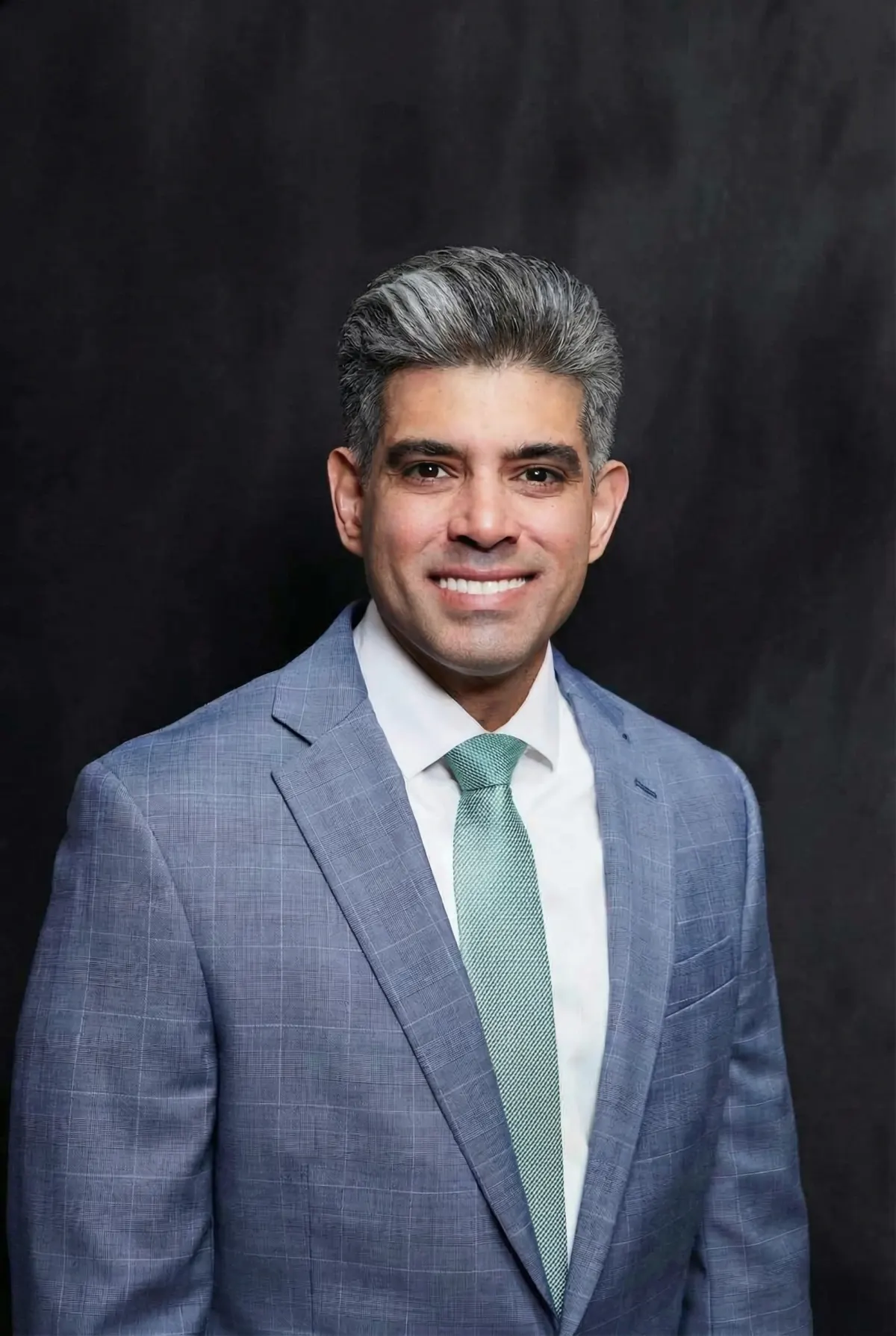
Federal fraud defense attorney Tonmiel Rodriguez — Board Certified Criminal Trial Lawyer in Bartow, Florida — defends clients charged with federal fraud offenses including wire fraud (18 U.S.C. section 1343), mail fraud (18 U.S.C. section 1341), bank fraud (18 U.S.C. section 1344), and healthcare fraud (18 U.S.C. section 1347) in the Middle District of Florida. Federal fraud charges carry up to 20 or 30 years per count, and federal prosecutors routinely charge each individual wire transmission or mailing as a separate count — creating massive theoretical exposure from a single fraud scheme. Call (863) 774-4556 — 24/7, Hablamos Español.
Legally reviewed by Tonmiel Rodriguez, Board Certified Criminal Trial Lawyer — last reviewed June 2026.
Charged in Polk, Highlands, Hardee, Osceola, or Hillsborough County? Board Certified Criminal Trial Lawyer — Call Now
Attorney Tonmiel Rodriguez defends clients throughout the 10th Judicial Circuit and the Middle District of Florida.
Board Certified in Criminal Trial Law by The Florida Bar · Reach Us 24/7 · Hablamos Español
What Are the Federal Fraud Statutes?
What Is Wire Fraud Under 18 U.S.C. Section 1343?
Wire fraud under section 1343 requires proof that the defendant: (1) devised or intended to devise a scheme to defraud another of money, property, or honest services; and (2) knowingly used or caused to be used wire communications in interstate or foreign commerce in furtherance of the scheme. Wire communications includes telephone calls, emails, text messages, internet transactions, wire transfers, and virtually any electronic transmission. The wire communication does not need to be the core of the fraud — it only needs to be used in furtherance of the scheme. Each qualifying communication is a potential separate count carrying up to 20 years.
What Is Mail Fraud Under 18 U.S.C. Section 1341?
Mail fraud under section 1341 has the same scheme-to-defraud element as wire fraud, but requires use of the U.S. Postal Service or a private or commercial interstate carrier in furtherance of the scheme. A mailing that is merely incidental to the fraud — even a routine billing statement or business communication — can qualify if the mailing was used to execute the scheme. Each mailing is a separate count with a maximum of 20 years.
What Is Bank Fraud Under 18 U.S.C. Section 1344?
Bank fraud under section 1344 makes it a crime to execute a scheme to: (1) defraud a federally insured financial institution; or (2) obtain money from such an institution by false or fraudulent pretenses. It carries up to 30 years — the highest federal fraud maximum — plus forfeiture and restitution.
Charged in Polk, Highlands, Hardee, Osceola, or Hillsborough County? Board Certified Criminal Trial Lawyer — Call Now
Attorney Tonmiel Rodriguez defends clients throughout the 10th Judicial Circuit and the Middle District of Florida.
Board Certified · Reach Us 24/7 · Hablamos Español
How Do Federal Fraud Sentences Work?
How Does the Loss Amount Affect the Sentence?
Federal fraud sentences are primarily driven by loss amount under U.S.S.G. section 2B1.1. A $100,000 fraud adds 10 levels, a $1,000,000 fraud adds 16 levels, and a $10,000,000 fraud adds 20 levels. Each level increase translates to a longer Guidelines range. The loss calculation is not always straightforward. Intended loss counts even if it was never fully realized, the defendant’s gain can serve as a proxy for loss, and the aggregation methodology used all affect the final figure. Defense experts can challenge loss calculations, which directly affects the sentence.
What Is the Sophisticated Means Enhancement?
U.S.S.G. section 2B1.1(b)(10) adds 2 offense levels when the offense involved sophisticated means — a complex scheme, concealment, shell companies, false identities, or other methods demonstrating planning beyond simple fraud. Contesting whether the scheme was truly sophisticated under the Guidelines can be a viable sentencing argument.
What Are the Defenses to Federal Fraud Charges?
Was There Actual Intent to Defraud?
Federal fraud requires specific intent. An honest but mistaken belief, a good-faith business disagreement, reliance on bad professional advice, or a negligent failure to disclose does not satisfy the intent element. Attacking intent is the most powerful defense in fraud cases where the underlying conduct is documented but the purpose is disputed.
Was There a Scheme to Defraud, or Just a Breach of Contract?
Not every broken promise or business failure is federal fraud. The scheme-to-defraud element requires more than a civil wrong — the prosecution must prove a deliberate scheme to obtain money or property by false pretenses. This distinction between civil and criminal conduct is a critical defense argument in fraud cases arising from business relationships.
Were the Wire Transmissions Actually in Furtherance of the Scheme?
Wire and mail fraud require that the communication was used in furtherance of the scheme. Routine business communications that happened to occur during a period when fraud was also occurring may not satisfy this element. Contesting whether specific charged communications actually furthered the fraud can knock out individual counts and reduce sentencing exposure.
Were Digital Records Obtained Lawfully?
Email records, financial records, and electronic communications must be obtained consistent with the Fourth Amendment and the Stored Communications Act, 18 U.S.C. section 2703. An improperly obtained warrant — overbroad, lacking probable cause, or issued without satisfying statutory prerequisites — can result in suppression of evidence that forms the foundation of the fraud case.
Related: Federal Crimes | White Collar Crimes | Money Laundering | Embezzlement
Frequently Asked Questions About Federal Fraud Charges
What is federal wire fraud?
18 U.S.C. section 1343 is a scheme to defraud using wire communications including email, telephone, internet, or wire transfers. Each qualifying communication can be a separate count carrying up to 20 years.
How many counts can be charged for a fraud scheme?
Each individual use of the mail or wires in furtherance of the scheme can be a separate count. A scheme involving dozens of emails can generate dozens of wire fraud counts each carrying up to 20 years.
What are the defenses to federal fraud charges?
Key defenses include lack of specific intent to defraud, good faith reliance on counsel or accountants, the scheme-to-defraud element (breach of contract is not fraud), and constitutional challenges to how digital evidence was obtained.
What is federal bank fraud?
18 U.S.C. section 1344 makes it a crime to execute a scheme to defraud a federally insured financial institution or obtain money from it by false pretenses. Bank fraud carries up to 30 years — the highest maximum federal fraud statute.
Charged in Polk, Highlands, Hardee, Osceola, or Hillsborough County? Board Certified Criminal Trial Lawyer — Call Now
Attorney Tonmiel Rodriguez defends clients throughout the 10th Judicial Circuit and the Middle District of Florida.
Board Certified · Reach Us 24/7 · Hablamos Español
What Is the False Claims Act in the Context of Federal Fraud?
The False Claims Act (FCA), 31 U.S.C. sections 3729-3733, imposes civil liability — and in some contexts criminal referral — on persons who knowingly submit false claims to the federal government. While the FCA is primarily a civil statute, false claims cases frequently run alongside criminal federal fraud charges under section 1341 (mail fraud) or section 1347 (healthcare fraud). In the healthcare context, a provider who submits false claims to Medicare or Medicaid can face both FCA civil liability (treble damages plus per-claim penalties) and criminal prosecution under section 1347 with a 10-year maximum per count.
The FCA’s qui tam provision allows private individuals — called “relators” — to file a civil lawsuit on behalf of the government and receive a share of any recovery. These qui tam lawsuits are filed under seal, meaning the defendant does not know the case has been filed until the government decides whether to intervene. When the government intervenes and simultaneously pursues a criminal investigation, the defendant often faces both civil FCA liability and criminal exposure simultaneously. Coordinating the defense of a civil FCA case and a criminal fraud investigation requires careful strategy to avoid civil discovery being used to build the criminal case.
What Is the Responsible Corporate Officer Doctrine in Federal Fraud Cases?
In regulatory and fraud prosecutions involving corporations, the Responsible Corporate Officer (RCO) doctrine — established in United States v. Park (1975) — can impose criminal liability on corporate officers and executives who had authority to prevent the violation, even if they did not personally participate in the fraud. In healthcare fraud and food safety cases in particular, the government has charged executives as RCOs without proof that they had actual knowledge of the specific violations, based solely on their position and authority within the organization.
If you are a corporate officer or executive in a regulated industry — healthcare, financial services, environmental compliance — and your company is under federal investigation, your personal exposure needs to be assessed independently of the corporate defense. What the company’s lawyers do may not protect you individually, and in some cases the corporate defense strategy may directly conflict with your personal interests.
What Are the Most Heavily Prosecuted Federal Fraud Offenses in the Middle District of Florida?
In the MDFL, these are the federal fraud offenses I see most frequently:
COVID-19 Relief Fraud
Federal prosecution of fraudulent Paycheck Protection Program (PPP) loan applications and Economic Injury Disaster Loan (EIDL) fraud has been a major enforcement priority since 2021. These cases typically involve wire fraud under section 1343 (the electronic application constitutes a wire) and bank fraud under section 1344 (the lender is a federally insured institution). Federal prosecutors maintain a database of business payroll and tax records that enables rapid comparison of submitted payroll figures against IRS records — fraudulent applications are often detectable algorithmically, and the prosecution starts with documentary evidence already assembled before the defendant is ever contacted.
Medicare and Medicaid Fraud
The MDFL has a dedicated Healthcare Fraud Strike Force unit that coordinates prosecution of Medicare and Medicaid billing fraud. Common schemes include billing for services not rendered, upcoding (billing for more complex services than performed), unbundling (breaking up bundled services to bill each component separately), and kickback arrangements with referring providers under the Anti-Kickback Statute, 42 U.S.C. section 1320a-7b. The combination of wire fraud, healthcare fraud, and Anti-Kickback Statute charges in a single case can generate enormous sentencing exposure.
Mortgage Fraud
Mortgage fraud prosecutions in the MDFL typically involve inflated appraisals, straw buyer schemes, false income documentation, and undisclosed second mortgages. These cases are often prosecuted under section 1344 (bank fraud) because the lender is a federally insured institution, and they frequently involve multiple transactions and multiple defendants. The loss amount in mortgage fraud cases drives significant Guidelines enhancements — a scheme involving ten properties each inflated by $100,000 generates a $1,000,000 loss for Guidelines purposes, adding 16 offense levels to the base level.
What Happens at a Federal Sentencing Hearing?
Federal sentencing hearings are more substantive proceedings than the sentencing hearings in most Florida state court cases. The procedure typically involves:
- Objections to the PSR: Both parties argue any unresolved objections to the Presentence Investigation Report’s factual findings and Guidelines calculations. The judge makes findings on each disputed issue, which become the factual basis for the sentence.
- Section 3553(a) factors argument: Both parties address the factors courts must consider under 18 U.S.C. section 3553(a) including the nature of the offense, the history and characteristics of the defendant, the need for the sentence to reflect the seriousness of the offense, deterrence, and protection of the public. These factors can support a sentence below the Guidelines range (a downward variance) when compelling arguments are made.
- Allocution: The defendant has the right to speak directly to the court before sentencing. An effective allocution — prepared with counsel, sincere, and appropriately brief — can affect the sentence.
- Sentence imposition: The judge imposes the sentence, including the prison term, supervised release term, fine, restitution, and any conditions of supervision.
Federal sentencing advocacy is a distinct skill. An attorney who prepared aggressively for trial but has not invested equivalent effort in sentencing advocacy — including the PSR objections, the section 3553(a) presentation, and the allocution preparation — is leaving significant mitigation on the table at the most consequential moment of the case.
Charged in Polk County? Board Certified Criminal Trial Lawyer — Call Now
Attorney Tonmiel Rodriguez represents clients in state and federal court throughout the 10th Judicial Circuit and the Middle District of Florida.
Board Certified · Reach Us 24/7 · Hablamos Español
What Is the Connection Between Federal Fraud and Tax Charges?
Federal fraud prosecutions frequently accompany federal tax charges because many fraud schemes also involve income that was not reported to the IRS. Wire fraud proceeds, embezzled funds, and fraudulent gains are taxable income — and when they are not reported, tax evasion under 26 U.S.C. section 7201 or filing a false return under section 7206 can be charged alongside the underlying fraud. The IRS Criminal Investigation Division (IRS-CI) coordinates with the FBI and U.S. Attorney’s Office on these investigations, and the combination of fraud and tax charges significantly increases sentencing exposure.
From a sentencing perspective, the loss amount for tax fraud is calculated separately from the loss for the underlying fraud offense — but both can drive the Guidelines calculation upward simultaneously. A defendant whose fraud scheme generated $500,000 in unreported income may face both a wire fraud count (with a $500,000 loss enhancement) and a tax evasion count (with a separate tax loss calculation). The stacking of loss amounts from related offenses is governed by U.S.S.G. section 3D1.2’s grouping rules, which combine or separate offenses for purposes of the Guidelines calculation in ways that are not always intuitive. Understanding how grouping applies is essential to an accurate sentencing assessment.
What Is the Statute of Limitations for Federal Fraud?
The general federal statute of limitations for non-capital offenses is five years under 18 U.S.C. section 3282. However, several federal fraud statutes carry longer limitations periods: bank fraud (section 1344) has a 10-year limitations period under section 3293 when it involves a federally insured financial institution; wire fraud affecting a financial institution also benefits from the extended period. Healthcare fraud under section 1347 has the standard five-year period unless it involves a federally insured financial institution. False statements in financial institution matters under section 1014 carry a 10-year period.
Federal fraud investigations frequently span years before charges are filed, and the government often charges conduct that occurred at the beginning of a long-running scheme. Whether the statute of limitations has run — and whether any tolling applies — is a defense issue that must be analyzed at the earliest stage of the case. A valid statute of limitations defense is a complete bar to prosecution and can result in dismissal of one or more counts even if the underlying conduct is established.
What Is the Honest Services Fraud Provision?
Wire and mail fraud under sections 1343 and 1341 extend to “schemes to deprive another of the intangible right of honest services.” Honest services fraud — codified at 18 U.S.C. section 1346 — is used to prosecute public officials, corporate executives, and professionals who deprive their principals of the faithful performance of their duties, typically through bribery or kickback schemes. The Supreme Court in Skilling v. United States (2010) significantly narrowed the scope of honest services fraud, holding it covers only bribery and kickback schemes — not undisclosed self-dealing or other conflicts of interest. Post-Skilling challenges to whether the charged conduct actually constitutes bribery or kickbacks within the meaning of the statute are viable in appropriate cases.
What Is the Constructive Amendment Issue in Federal Fraud Indictments?
A federal indictment defines the charges the defendant must defend against at trial. The prosecution is not permitted to constructively amend the indictment at trial by presenting a theory of liability that is different from — or broader than — the theory charged in the indictment. In fraud cases, this limitation matters when the prosecution attempts to prove a fraudulent scheme with different victims, different transactions, or a different mechanism than what the indictment charged. A constructive amendment — or a variance between the indictment and the proof at trial — can be raised as grounds for dismissal or for a new trial. Identifying whether the prosecution’s trial evidence stays within the four corners of the indictment is a critical trial defense function that must be monitored throughout the evidence.