
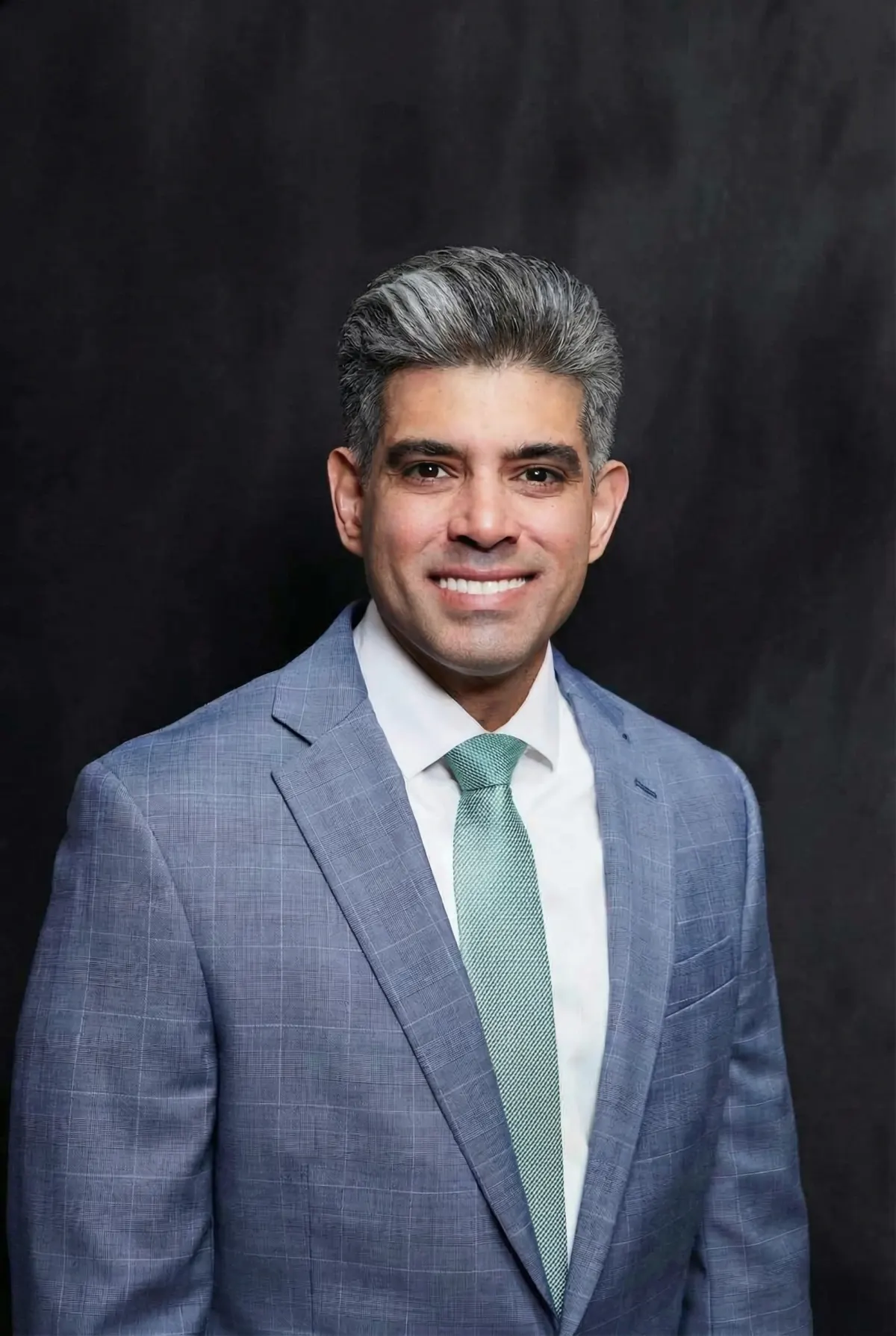
Money laundering is one of the most serious financial crime charges in Florida. For transactions involving $100,000 or more, it is a first-degree felony carrying up to thirty years in prison. Tonmiel Rodriguez, a Board Certified Criminal Trial Lawyer in Bartow, defends clients charged under Florida Statute section 896.101 throughout Polk, Highlands, Hardee, Osceola, and Hillsborough Counties in the 10th Judicial Circuit. If you are facing money laundering charges or a related investigation, call (863) 774-4556 now. We are available 24/7, Hablamos Español.
Legally reviewed by Tonmiel Rodriguez, Board Certified Criminal Trial Lawyer — last reviewed June 2026.
Money laundering charges are often filed alongside other serious offenses — drug trafficking, fraud, or organized crime charges — making them part of a complex, multi-count prosecution. These cases are document-intensive, frequently involve financial forensics, and can be prosecuted in state court, federal court, or both. The earlier you have experienced defense counsel, the more tools are available to you.
Charged in Polk, Highlands, Hardee, Osceola, or Hillsborough County? Board Certified Criminal Trial Lawyer — Call Now
Attorney Tonmiel Rodriguez defends clients throughout the 10th Judicial Circuit and the Middle District of Florida.
Board Certified in Criminal Trial Law by The Florida Bar · Reach Us 24/7 · Hablamos Español
What Is Money Laundering Under Florida Statute Section 896.101?
Florida’s Money Laundering Act, codified at section 896.101, makes it a crime to knowingly engage in a financial transaction involving the proceeds of specified unlawful activity when the defendant acts with one of three intents: (1) to promote the underlying unlawful activity; (2) to conceal or disguise the nature, location, source, ownership, or control of the proceeds; or (3) to avoid a transaction reporting requirement. Three elements must be proven: the defendant engaged in a financial transaction, the transaction involved proceeds of specified unlawful activity, and the defendant knew the proceeds came from unlawful activity and acted with one of the prohibited intents.
What Transactions Does Section 896.101 Cover?
- Cash deposits, withdrawals, and currency exchanges
- Wire transfers and electronic funds transfers
- Check deposits and check cashing
- Real estate purchases using criminal proceeds
- Business acquisitions and investment transactions
- Cryptocurrency transactions including Bitcoin and Ethereum
- Structured transactions designed to avoid Currency Transaction Report filing requirements
What Are the Penalties for Money Laundering in Florida?
- More than $300 but less than $20,000 (in a 12-month period) — Third-degree felony (up to 5 years)
- $20,000 to $99,999 — Second-degree felony (up to 15 years)
- $100,000 or more — First-degree felony (up to 30 years)
Each transaction can be charged as a separate offense. The stacking of counts creates substantial leverage for prosecutors and significant sentencing exposure for defendants.
Charged in Polk, Highlands, Hardee, Osceola, or Hillsborough County? Board Certified Criminal Trial Lawyer — Call Now
Attorney Tonmiel Rodriguez defends clients throughout the 10th Judicial Circuit and the Middle District of Florida.
Board Certified · Reach Us 24/7 · Hablamos Español
How Does Florida Investigate Money Laundering?
What Agencies Are Involved in Money Laundering Investigations in Florida?
Money laundering investigations in Florida frequently involve cooperation between multiple agencies: the Polk County Sheriff’s Office or local law enforcement, FDLE, the Florida Office of Financial Regulation, and at the federal level the IRS Criminal Investigation Division, FBI, or DEA when drug proceeds are involved. These investigations are typically long-running and document-intensive before any arrest occurs.
What Financial Records Do Investigators Obtain in Money Laundering Cases?
Bank records are the cornerstone of money laundering prosecutions. Investigators subpoena account records, wire transfer records, Currency Transaction Reports filed by banks for transactions over $10,000, and Suspicious Activity Reports filed when banks report unusual transaction patterns. Business records, tax returns, real estate closing documents, and corporate filings are also obtained. In cryptocurrency cases, blockchain analysis firms are engaged to trace wallet addresses and transactions.
What Are the Defenses to Money Laundering Charges?
Did the Defendant Know the Funds Were Criminal Proceeds?
Knowledge is the most contested element in money laundering cases. The prosecution must prove the defendant knew the money came from unlawful activity. A business owner who processed payments from clients without knowing those clients were generating proceeds from unlawful activity lacks the required knowledge. The critical question is what the defendant actually knew and when.
Were These Actually Proceeds Under the Statute?
The term “proceeds” has a specific legal meaning. Not every transaction associated with a criminal enterprise involves proceeds in the statutory sense. Funds used to operate a criminal enterprise — rather than profits derived from it — raise distinct legal questions. This distinction matters both at the charging stage and at trial.
Was There Intent to Conceal or Promote?
If the defendant processed transactions in the normal course of a legitimate business without any intent to conceal the source of funds or promote further criminal activity, the intent element may fail. Commercial banking activity, real estate transactions, and business operations that happen to involve funds with unclear origins are not automatically money laundering if the requisite intent is absent.
Related: White Collar Crimes | Embezzlement | Florida RICO | Federal Crimes
Frequently Asked Questions About Money Laundering in Florida
What is money laundering under Florida law?
Section 896.101 makes it a crime to knowingly engage in a financial transaction involving proceeds of specified unlawful activity with intent to promote that activity, conceal its source, or avoid a reporting requirement. It covers cash, checks, wire transfers, real estate, and cryptocurrency.
What are the penalties for money laundering in Florida?
$300-$20,000 is third-degree felony (up to 5 years); $20,000-$100,000 is second-degree felony (up to 15 years); $100,000+ is first-degree felony (up to 30 years). Each transaction can be charged separately.
Can I be charged with money laundering if I did not commit the underlying crime?
Yes. If you knowingly engaged in a financial transaction with proceeds you knew came from unlawful activity — even if you did not commit the original crime — you can be charged under section 896.101.
What defenses apply to money laundering charges?
Key defenses include lack of knowledge that the funds came from unlawful activity, lack of intent to conceal, and challenges to whether the transaction involved proceeds as defined by the statute.
Charged in Polk, Highlands, Hardee, Osceola, or Hillsborough County? Board Certified Criminal Trial Lawyer — Call Now
Attorney Tonmiel Rodriguez defends clients throughout the 10th Judicial Circuit and the Middle District of Florida.
Board Certified · Reach Us 24/7 · Hablamos Español
How Does Money Laundering Interact With Drug Trafficking Charges in Florida?
Money laundering charges most frequently arise alongside drug trafficking cases. When law enforcement intercepts a drug trafficking operation, the financial side of the operation — the bank accounts, businesses, and financial transactions used to move and conceal the drug proceeds — is prosecuted under section 896.101. A single drug trafficking prosecution can generate both trafficking charges under Chapter 893 and multiple money laundering counts under Chapter 896 for each financial transaction associated with the proceeds.
The sentencing exposure compounds: a defendant convicted of drug trafficking and money laundering faces consecutive sentencing possibilities on each count. When the drug trafficking involves mandatory minimum sentences and the money laundering involves first-degree felony exposure for transactions over $100,000, the combined recommended range under Florida’s Criminal Punishment Code can be substantial even for a first-time offender.
What Is Transaction Structuring and Why Does It Create Additional Legal Risk?
Transaction structuring — the practice of breaking up deposits or financial transactions into smaller amounts to avoid the $10,000 Currency Transaction Report (CTR) threshold — creates both state and federal legal exposure. Federally, structuring is a separate crime under 31 U.S.C. section 5324, carrying up to five years per count. Under Florida law, structuring transactions specifically to avoid a reporting requirement is an element of money laundering under section 896.101(3)(c). A defendant who ran $200,000 through a bank account in $9,500 increments over several months faces both state money laundering charges and federal structuring charges — regardless of whether the underlying funds were actually from criminal activity.
Banks are trained to identify structuring patterns and are legally required to file Suspicious Activity Reports (SARs) with FinCEN when they detect unusual transaction patterns. SARs are not public documents and the filing institution is prohibited from notifying the customer, but they trigger law enforcement investigations that often result in the very charges structuring was intended to avoid.
What Is the Role of Civil Asset Forfeiture in Money Laundering Cases?
Florida’s civil asset forfeiture law under Chapter 932 allows law enforcement to seize property connected to criminal activity — including money laundering — in a civil proceeding separate from the criminal case. This means that your bank accounts, vehicle, real estate, and business assets can be seized and forfeited even if you are never convicted of a crime, and even if criminal charges are never filed. The standard in a civil forfeiture proceeding is lower than in a criminal prosecution — preponderance of the evidence rather than beyond a reasonable doubt.
In practice, civil forfeiture in money laundering cases can be devastating to individuals and businesses even before the criminal case is resolved. Bank accounts are frozen, business operations are disrupted, and assets needed to fund the defense are seized. Challenging both the criminal charges and the civil forfeiture simultaneously requires experienced counsel who understands both proceedings and can coordinate the defense strategy across both tracks.
What Is the Florida Contraband Forfeiture Act?
The Florida Contraband Forfeiture Act, section 932.701 et seq., provides law enforcement agencies with authority to seize and forfeit property that constitutes or is derived from proceeds obtained from criminal activity — including money laundering under section 896.101. Florida’s forfeiture law is more protective of property owners than federal forfeiture law in some respects — for example, Florida requires a probable cause hearing within ten days of seizure in most cases — but civil forfeiture remains a powerful tool that can result in permanent loss of assets before the criminal case is resolved.
Challenging a Florida Contraband Forfeiture Act seizure requires filing a claim within the statutory period (typically 30 days of the notice of seizure), attending the probable cause hearing, and litigating the civil forfeiture case through the county circuit court. Missing the filing deadline results in a default forfeiture. Coordinating this timeline with the criminal defense is essential.
What Are the Federal Money Laundering Charges That Can Be Filed Alongside Florida State Charges?
When a Florida money laundering case involves federally insured financial institutions, interstate wire transfers, or drug trafficking with federal nexus, federal money laundering charges under 18 U.S.C. section 1956 can be filed alongside state charges. Section 1956 covers the same core conduct as the Florida statute — financial transactions involving proceeds of specified unlawful activity with intent to conceal, promote, or avoid reporting — but under the Federal Sentencing Guidelines, sentencing is driven by the dollar value of the transactions rather than just the tier level. Large transaction volumes can produce very high offense levels and corresponding Guidelines ranges. Federal money laundering charges are not subject to Florida’s parole considerations — defendants serve at least 85% of federal sentences. If your money laundering investigation has a federal component, counsel in both state and federal court is essential.
Charged in Polk County? Board Certified Criminal Trial Lawyer — Call Now
Attorney Tonmiel Rodriguez represents clients in state and federal court throughout the 10th Judicial Circuit and the Middle District of Florida.
Board Certified · Reach Us 24/7 · Hablamos Español
What Is the Difference Between Money Laundering and Theft of Financial Institution Funds?
Money laundering under section 896.101 is frequently confused with theft of financial institution funds under section 812.014 or fraud under Chapter 817. The key distinctions are: money laundering requires that the funds come from a prior criminal activity and that the transaction is designed to conceal, promote, or avoid reporting; ordinary theft involves taking funds directly; fraud involves obtaining property through deception in the underlying transaction. In practice, these charges are often filed together — a fraudster who then moves the fraud proceeds through multiple accounts to conceal their origin faces both fraud charges (for obtaining the funds) and money laundering charges (for the subsequent financial transactions).
What Are “Unlawful Debt” Provisions in Florida RICO Law?
Florida’s RICO statute, section 895.03, covers not only patterns of racketeering activity but also the collection of unlawful debt. Unlawful debt under section 895.02(4) includes debt incurred in gambling activities in violation of Florida law and debt that was incurred at usurious interest rates. When money laundering charges are filed in connection with loan shark operations, illegal gambling enterprises, or organized crime financial schemes, they frequently accompany RICO charges based on the collection of unlawful debt. The interplay between money laundering (section 896.101) and RICO (section 895.03) in these cases requires careful analysis because the two statutes overlap in significant ways. See: Florida RICO Defense.
Defending Against Money Laundering Charges — A Summary
Money laundering cases require a defense attorney who understands both the legal elements of the statute and the financial forensics used to prove them. The most effective defenses attack the prosecution’s evidence at its weakest points: the knowledge element (did the defendant know the funds were criminal proceeds?), the intent element (was there intent to conceal or promote the underlying activity?), the “proceeds” element (did the transaction involve proceeds of a specified unlawful activity?), and the constitutional foundation of the evidence (was the financial record subpoena or search warrant valid?). A thorough defense tests each of these elements rather than accepting the prosecution’s factual narrative at face value. I am Tonmiel Rodriguez — Board Certified Criminal Trial Lawyer in Bartow, Florida — and I defend money laundering charges throughout the 10th Judicial Circuit and the Middle District of Florida. Call (863) 774-4556, reach us 24/7, Hablamos Español.