
Under Florida Statute § 806.01(1), arson of a dwelling is a first-degree felony carrying up to 30 years in prison. Arson of any other structure under § 806.01(2) is a second-degree felony with up to 15 years. Arson to defraud an insurer is a second-degree felony regardless of what was burned. If the fire was set in a structure where a person was present and someone was injured, the charge may escalate to attempted murder. These prosecutions are built heavily on expert fire investigation testimony, and that testimony is frequently wrong. Much of it rests on junk science that courts are increasingly skeptical of.
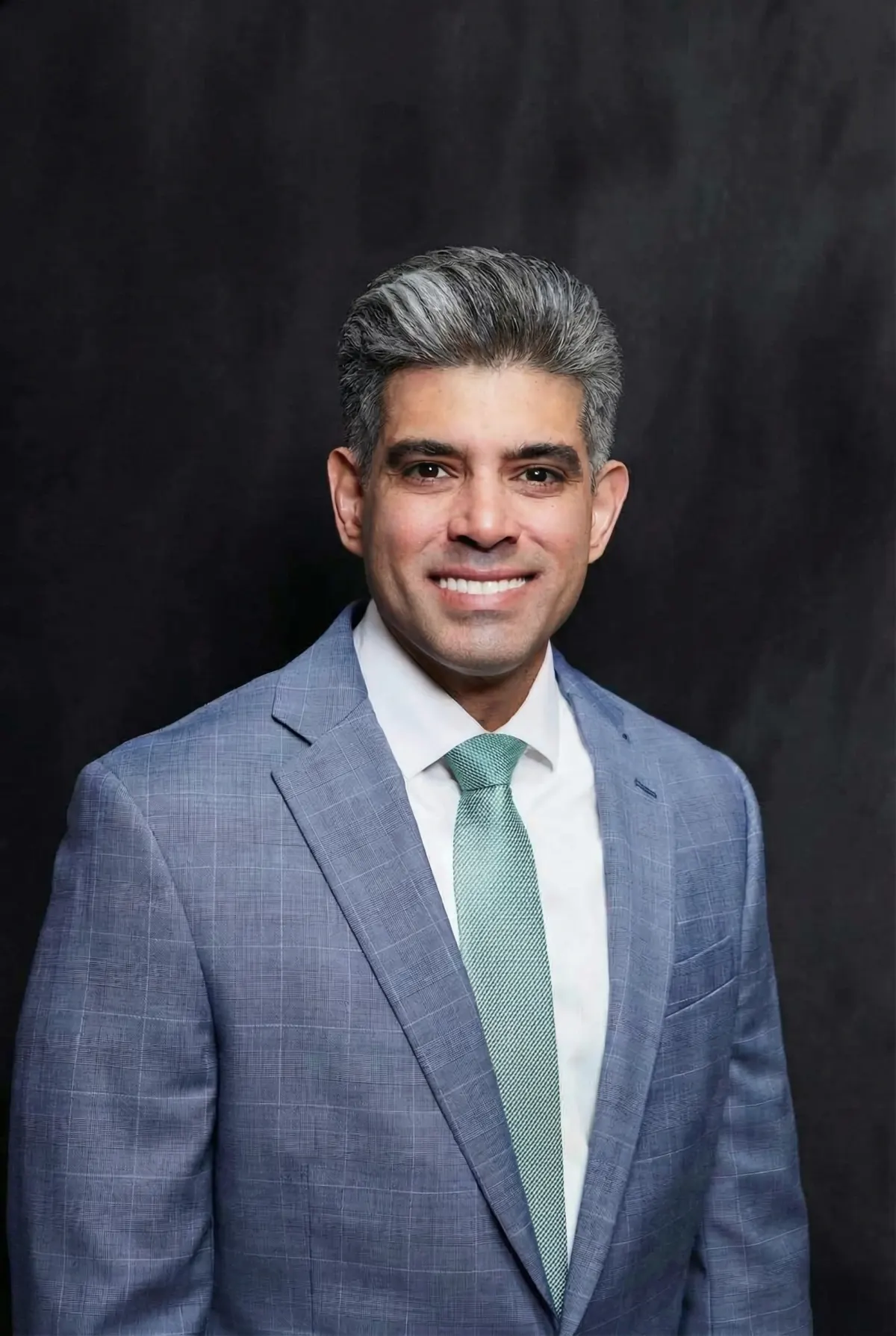
Legally reviewed by Tonmiel Rodriguez, Board Certified Criminal Trial Lawyer — last reviewed June 2026.
What Is Arson Under Florida Law?
Florida § 806.01 defines arson as willfully and unlawfully, or while in the commission of any felony, by fire or explosion, damaging or causing to be damaged any dwelling, structure, or the contents of a dwelling or structure. The statute distinguishes between dwellings (homes, residences, structures designed for lodging) and other structures (commercial buildings, vehicles, outbuildings). The key elements are: (1) a willful and unlawful act (or act committed during a felony), (2) using fire or explosion, and (3) damage to a protected structure or its contents.
What Are the Degrees and Penalties for Arson in Florida?
| Charge | Statute | Degree | Max Prison |
|---|---|---|---|
| Arson of a dwelling (structure designed for lodging) | § 806.01(1) | 1st Degree Felony | 30 years |
| Arson of any other structure | § 806.01(2) | 2nd Degree Felony | 15 years |
| Arson to defraud insurer | § 806.01(2) | 2nd Degree Felony | 15 years |
| Arson resulting in bodily harm (§ 806.031) | § 806.031 | 1st Degree Misdemeanor (2nd Degree Felony if great bodily harm) | 1 year / $1,000 |
| Arson with person present and injury resulting | § 806.01 + § 782 | Attempted Murder potential | Life |
First-degree arson under § 806.01(1) scores 56 points on Florida’s Criminal Punishment Code as a first-degree felony. When occupation of the structure and injury enhancements are added, the scoresheet total can approach or exceed mandatory prison thresholds well above the guidelines minimum. A conviction for arson of an occupied dwelling carries the weight of a life-altering felony on every background check, professional license review, and future sentencing proceeding.
What Is Arson of an Occupied Structure or Dwelling in Florida?
Under § 806.01(1), arson of a structure where a person is present — regardless of whether the defendant knew someone was there — qualifies as first-degree felony arson. The statute does not require that the defendant know the structure was occupied at the time of the fire. Knowledge of occupancy is not an element; the presence of a person in the burning structure makes it first-degree arson by operation of the statute. If someone inside suffers serious bodily injury or is killed, the State will layer attempted murder (§ 782.04) or felony murder charges on top of the arson charge — creating the potential for life imprisonment.
Is Arson to Defraud an Insurer a Separate Crime in Florida?
Yes — under § 806.01(2), setting fire to any dwelling or structure with intent to defraud an insurer is a second-degree felony regardless of the type of structure burned. Insurance fraud arson (or “fraud fire”) does not require that a dwelling be involved — burning a commercial building, vehicle, or outbuilding with intent to collect an insurance claim qualifies. These cases typically involve parallel investigations by both law enforcement and the insurer’s special investigation unit (SIU), and prosecutors often file both arson charges and insurance fraud charges (§ 817.234) simultaneously.
How Is Arson Investigated and What Are the Problems With Fire Investigation Science?
Arson investigations in Florida are conducted by the State Fire Marshal’s Office, local fire investigators, and law enforcement agencies. The investigator’s role is to determine the origin and cause of the fire — and when the cause is determined to be “incendiary” (intentionally set), that finding becomes the foundation of the criminal case. The problem is that fire investigation science has a significant history of error.
The National Academy of Sciences’ landmark 2009 report “Strengthening Forensic Science in the United States” identified fire investigation as an area where much of the claimed scientific basis for identifying arson was unsupported by peer-reviewed research. Indicators that investigators historically called “proof of arson” — pour patterns, alligator char, crazed glass, low burn points — have been shown by controlled burn studies to occur in accidental fires as well. The Innocence Project has documented dozens of arson convictions based on junk science. I retain independent fire investigators and fire science experts in arson cases and aggressively challenge the reliability of the State’s investigation methodology under Daubert.
What Are the Best Defenses to Arson Charges in Florida?
Was the Fire Accidental Rather Than Intentionally Set?
Accidental fire is the most fundamental defense in any arson case. Electrical faults, appliance malfunctions, smoking materials, unattended candles, and children playing with fire are all documented causes of residential and commercial fires that are sometimes misclassified as arson. The State’s arson determination is only as reliable as its investigation — and when the investigation used outdated methodology or failed to consider accidental causes, the science behind the arson determination can be challenged under Daubert or Frye. A qualified independent fire investigation expert can identify investigative errors that the prosecution’s expert overlooked or ignored.
Was the Fire Investigation Methodology Reliable?
Under Florida’s Frye/Daubert standards, expert testimony on fire cause and origin must be based on sufficient facts and data, reliable methodology, and proper application of that methodology to the facts of the case. When a fire investigator relies on “indicators” that modern burn science has discredited — low burn points, pour patterns, irregular fire patterns — a Daubert motion can challenge the admissibility of the arson opinion entirely. Without the expert opinion that the fire was intentionally set, the State has no arson case. I scrutinize the investigative methodology in every arson case and retain independent fire scientists to evaluate the State’s conclusions.
Did the Defendant Actually Set the Fire?
Identification and proximity evidence are critical in arson cases where the defendant disputes involvement. Physical evidence placing the defendant at the scene, accelerant detection on clothing or hands, cell phone location data, surveillance footage, and witness testimony are all used to establish the defendant’s connection to the fire. Each of these evidence types has vulnerabilities. Accelerant evidence must be collected and preserved properly — chain of custody failures can render it inadmissible. Cell phone data shows location within a range, not at a specific address. Witness credibility in arson cases (often involving co-conspirators, former partners, or business rivals) is frequently impeachable.
Was the Intent to Defraud an Insurer Provable?
In insurance fraud arson cases, the State must prove intent to defraud — not just that an insurance claim was filed after a fire. Proving intent typically involves evidence of financial distress, recent policy increases, prior suspicious fires, contradictory statements to investigators, or incriminating communications. When the defendant was not in financial distress, the fire’s cause was genuinely ambiguous, and no direct evidence of planning or preparation exists, the intent-to-defraud element is genuinely contestable. I evaluate all financial records and communications in insurance arson cases to determine what the State actually has — versus what they claim.
Frequently Asked Questions — Arson Defense in Florida
What is the penalty for arson in Florida?
Arson of a dwelling under § 806.01(1) is a first-degree felony with up to 30 years in prison. Arson of any other structure or arson to defraud an insurer under § 806.01(2) is a second-degree felony with up to 15 years. If someone is present in the burning structure and is injured, the State may layer attempted murder charges, which carry life imprisonment exposure.
Is burning your own property arson in Florida?
Yes — under § 806.01, burning your own dwelling or structure is arson if it is done willfully and unlawfully (such as with intent to defraud an insurer) or while committing another felony. The fact that you own the property does not provide a defense when the fire is set to collect an insurance payment or to harm another person. Insurance fraud arson is one of the most common arson charges in Florida.
How reliable is fire investigation evidence in arson cases?
Fire investigation evidence has a documented history of unreliability. The 2009 National Academy of Sciences report identified fire investigation as an area where claimed scientific indicators of arson were often unsupported by controlled research. Indicators historically cited as proof of arson — burn patterns, char depth, glass crazing — have been shown to occur in accidental fires. Arson convictions based on these indicators have been overturned. An independent fire science expert is essential in any case where the State’s arson determination is the key evidence.
Can arson charges be filed if no one was hurt and the building was empty?
Yes. Under § 806.01, the presence of people in the structure affects the degree of the charge — but arson can be charged regardless of injury or occupancy. An empty, unoccupied commercial building is arson of a structure under § 806.01(2) — a second-degree felony with up to 15 years. No injury is required, and the structure does not need to be totally destroyed — any damage caused by the fire satisfies the damage element.
What is the difference between arson and attempted murder in Florida when someone is injured in a fire?
When a person is present in a burning structure and suffers serious bodily injury or is killed, the State will typically charge both arson and attempted murder (§ 782.04) or felony murder. Felony murder under § 782.04(1)(a)2 applies when a person dies during the commission of arson — making the arsonist responsible for first-degree murder regardless of intent to kill. This combination — arson plus felony murder — is one of the most serious charging patterns in Florida and can result in mandatory life imprisonment.
Facing Arson Charges in Polk County?
Fire investigation science has put innocent people in prison. You need a lawyer who will challenge the methodology.
Board Certified in Criminal Trial Law by The Florida Bar · Reach Us 24/7 · Hablamos Español
Fire Investigation Expert Testimony: Challenging the Science
Arson prosecutions rest almost entirely on expert testimony from fire investigators — typically sheriff’s office fire marshals or state fire investigators employed by the Florida State Fire Marshal’s Office. These investigators use methodology developed by the National Fire Protection Association (NFPA 921) to determine the origin and cause of a fire. But NFPA 921 methodology is often applied inconsistently, and many fire investigators rely on discredited “indicators” of arson — V-patterns, pour patterns, low burn marks, concrete spalling — that modern fire science has shown can also result from accidental fires. I retain independent fire investigation experts certified by the International Association of Arson Investigators (IAAI) who can scrutinize the State’s methodology, challenge negative corpus reasoning (the fire must have been set because we ruled out all accidental causes), and present an alternative origin and cause theory to the jury. Without a defense expert in an arson case, you are letting the State’s expert testify unchallenged — that is not a defense strategy.
Insurance Fraud Arson: The Paper Trail Defense
Arson to defraud an insurer under § 806.01(1)(b) is a second-degree felony carrying up to 15 years, regardless of whether the structure was occupied. The State typically proves insurance fraud arson through: the insurance policy and recent increases in coverage, financial hardship records (mortgage defaults, credit card delinquency, business debt), statements made to insurance adjusters, and cell phone location data placing the defendant at or near the scene. I attack all of it. Insurance claim paperwork can be challenged for authentication and hearsay. Financial records can be contextualized — a struggling business does not mean arson. Cell phone location data from towers is notoriously imprecise at short distances. And the fire investigation itself remains subject to the same expert challenge described above. These cases are winnable with the right preparation.
Occupied vs. Unoccupied Structures: Why the Distinction Matters
Under § 806.01, Florida draws a sharp penalty distinction based on whether the structure was occupied at the time of the fire. Arson of any structure or contents when any person is in the structure is a first-degree felony carrying up to 30 years. Arson of an unoccupied structure is a second-degree felony with up to 15 years. The State must prove beyond a reasonable doubt that a person was actually present in the structure at the time the fire was set. In cases involving commercial buildings, rental properties, or fires set during nighttime hours, the “occupied” element is genuinely contestable. If the State cannot prove a person was present, the charge is second-degree, not first — a difference of 15 years in sentencing exposure.
Attempted Arson
Under § 806.01 combined with Florida’s attempt statute at § 777.04, attempted arson is charged when the fire was set but did not ignite the structure, or when law enforcement intercepted the attempt before completion. Attempted arson of an occupied structure is attempted first-degree felony arson — still a second-degree felony carrying up to 15 years. The attempt charge requires proof of a specific intent to set fire to the structure and an overt act in furtherance of that intent. Cases involving accelerants found near a structure but no actual fire are frequently charged as attempted arson, and those cases often turn on whether the defendant’s presence and possession of accelerants proves specific intent beyond a reasonable doubt — which is a fact question for a jury.
Accelerant Evidence: Chain of Custody and Laboratory Issues
In most arson prosecutions, the State’s physical evidence centers on accelerant detection — samples taken from the fire scene, analyzed at a laboratory using gas chromatography-mass spectrometry (GC-MS), and compared against a library of known accelerants. Accelerant evidence is subject to multiple defense challenges: (1) chain of custody — who collected the sample, how it was packaged, stored, and transported to the lab; (2) contamination — many accelerants occur naturally in building materials, furniture, and flooring, and a positive result for petroleum distillates does not necessarily mean arson; (3) laboratory methodology — the comparison database and analytical technique must meet Daubert/Frye reliability standards; (4) sample degradation — exposure to water, heat, and weathering can alter or destroy accelerant residue, making the absence of evidence inconclusive in either direction. I have successfully challenged accelerant evidence at the Daubert hearing level in Florida courts — excluding the evidence before it ever reached the jury.
Related Practice Areas
- Violent Crimes Defense — Overview
- Robbery Defense — § 812.13
- Burglary Defense — § 810.02
- Home Invasion Robbery — § 812.135
- Fraud & White Collar Defense
Board Certified. 75+ Jury Trials. Available Now.
The Rodriguez Law Office defends arson charges throughout the 10th Judicial Circuit — Polk, Highlands, and Hardee Counties.
Board Certified · Reach Us 24/7 · Hablamos Español