
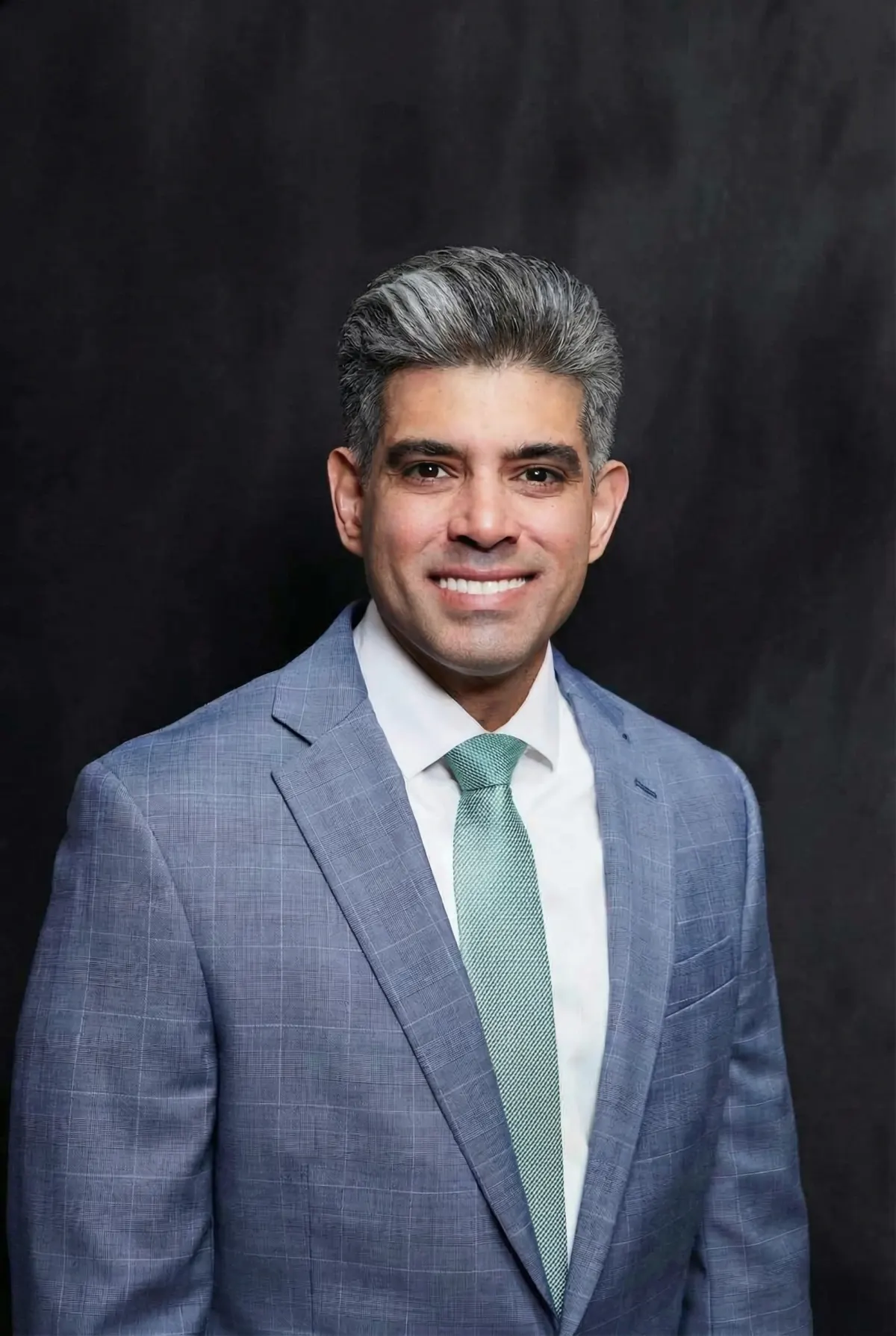
Criminal Defense Lawyer Serving Lakeland, Florida
If you have been arrested or charged with a crime in Lakeland, the case will be prosecuted in the Tenth Judicial Circuit. Depending on the charge, your case may be filed in the Polk County Courthouse in Bartow — the county seat — or heard at the Lakeland branch court, the Lakeland Government Center (930 E. Parker St.). Attorney Rodriguez represents clients charged with crimes throughout Polk County, including Lakeland and surrounding communities. With 75+ jury trials and years of experience in Polk County courtrooms, he understands how the local courts operate, which judges handle which divisions, and how the State Attorney’s Office prosecutes cases originating from Lakeland law enforcement agencies.
Legally reviewed by Tonmiel Rodriguez, Board Certified Criminal Trial Lawyer — last reviewed June 2026.
Arrested in Lakeland? Call Now — Reach Us 24/7
Attorney Tonmiel Rodriguez is a Board Certified Criminal Trial Lawyer with over 75 jury trials defending Lakeland clients throughout the 10th Judicial Circuit. Hablamos Español. LPD. PCSO. I-4.
Board Certified in Criminal Trial Law by The Florida Bar · Reach Us 24/7 · Hablamos Español
Lakeland Criminal Cases: What You Need to Know
Lakeland is the largest city in Polk County, and it is policed primarily by the Lakeland Police Department (LPD) and the Polk County Sheriff’s Office (PCSO). Arrests made by either agency follow the same path: booking at the Polk County Jail in Bartow, a first appearance hearing within 24 hours before a county judge, and — for felonies — prosecution by the State Attorney’s Office for the Tenth Judicial Circuit.
This is so because all felony cases in Polk County are tried at the Polk County Courthouse, 255 N. Broadway Ave., Bartow, FL 33830. Misdemeanor and other county-court cases from Lakeland may instead be heard at the city’s branch court — the Lakeland Government Center (930 E. Parker St.). Regardless of where the arrest occurred in Lakeland — whether on South Florida Avenue, near Lakeland Regional Health, along Memorial Boulevard, or at a traffic stop on I-4 — the case ends up in a Polk County courtroom.
Who Are the Law Enforcement Agencies in Lakeland?
The Lakeland Police Department (LPD) is Lakeland’s primary municipal law enforcement agency. LPD operates patrol divisions covering north, south, east, and central Lakeland; a specialized Criminal Investigations Unit; a DUI enforcement unit; and a community crimes unit that focuses on high-activity areas. LPD officers patrol South Florida Avenue, Memorial Boulevard, the Lakeland Square Mall corridor, and the residential neighborhoods throughout the city. LPD’s documentation practices, body camera policies, and arrest procedures are directly relevant to the defense analysis in every case the agency generates.
The Polk County Sheriff’s Office (PCSO) operates in Lakeland’s unincorporated areas and on major corridors including I-4. PCSO’s specialized interdiction units use I-4 stops near Lakeland as a platform for drug and weapons searches. PCSO also handles calls in areas where Lakeland city limits meet unincorporated county land — a jurisdictional boundary that sometimes creates evidentiary issues in cases where multiple agencies were involved.
The Florida Highway Patrol (FHP) operates on I-4 through the Lakeland corridor, one of the most heavily patrolled stretches of interstate in Florida between Tampa and Orlando. FHP conducts DUI enforcement, commercial vehicle inspections, and generates drug interdiction cases from I-4 traffic stops daily.
What Criminal Charges Are Most Common in Lakeland?
DUI charges from LPD, PCSO, and FHP represent a high volume of Lakeland criminal filings. I-4 through Lakeland, South Florida Avenue, and the Memorial Boulevard corridor are active enforcement zones. Attorney Rodriguez handles DUI cases from pre-arrest investigation through jury trial, challenging the traffic stop, the field sobriety test administration, and the Intoxilyzer results.
Drug possession and trafficking cases from Lakeland include arrests at traffic stops, at residences following warrant service, and from undercover LPD operations in the city’s commercial corridors. Drug trafficking under § 893.135 carries mandatory minimum prison sentences — 3, 7, or 15 years depending on substance and weight — that a judge cannot reduce without a substantial assistance motion. The validity of the search is the threshold issue in every drug case.
Domestic battery and domestic violence charges are filed throughout Lakeland by LPD and PCSO under Florida’s mandatory arrest statute. Once a domestic battery arrest is made, the State Attorney’s Office makes the charging decision — independent of what the alleged victim later wants. These cases require defense counsel who understands both the criminal proceedings and any parallel injunction proceedings that may affect the client’s living situation, custody arrangements, and employment.
Theft and fraud charges from Lakeland’s retail corridors — the Lakeland Square Mall area, South Florida Avenue, and US-98 — generate both misdemeanor and felony filings. The $750 threshold between petit theft and grand theft is a contested factual question in many shoplifting cases. Attorney Rodriguez handles the full range of theft and fraud charges filed by LPD and referred by retail loss prevention operations.
Battery, aggravated battery, and assault charges arising from incidents in Lakeland’s commercial and entertainment zones generate both misdemeanor and felony filings. The use of a deadly weapon — including a vehicle — elevates assault charges to felony level. Attorney Rodriguez handles the full spectrum of Lakeland battery and assault cases.
Facing Criminal Charges in Lakeland? Talk to a Board Certified Lawyer Now
Attorney Tonmiel Rodriguez has defended Lakeland clients across 75+ jury trials in the 10th Judicial Circuit. Board Certified. Reach Us 24/7. Hablamos Español.
Board Certified · Reach Us 24/7 · Hablamos Español
Practice Areas for Lakeland Clients
Attorney Rodriguez handles the full range of criminal charges filed against Lakeland residents and visitors, including:
- DUI Lawyer in Lakeland — LPD, PCSO, and I-4/FHP arrests · see also Polk County DUI Defense
- Battery Lawyer in Lakeland — simple & aggravated · see also Battery Defense / Aggravated Battery
- Domestic Violence Lawyer in Lakeland — LPD & PCSO arrests · see also Domestic Violence Defense
- Theft / Shoplifting Lawyer in Lakeland — petit & grand theft · see also Theft Crimes / Petit Theft
- VOP Lawyer in Lakeland — probation violations · see also Violation of Probation
- Drug Crimes Lawyer in Lakeland — possession & trafficking · see also Drug Crimes
- Suspended License / DWLSR Lawyer in Lakeland — § 322.34 · see also DWLSR hub
- Reckless Driving
- Weapons Charges Lawyer in Lakeland — Chapter 790, concealed weapon, felon in possession, 10-20-Life
- Record Sealing and Expungement
- Felony and Misdemeanor offenses of all types
How Does Attorney Rodriguez Defend Lakeland Criminal Cases?
Defense work begins with the evidence — and in Lakeland, that means requesting LPD body camera footage (the Polk County Sheriff’s Office does not use body cameras), dispatch logs, arrest reports, and any lab results within the first days of representation. For drug cases from I-4 or from LPD operations, the lawfulness of the stop and the search is the threshold question. A successful suppression motion can eliminate the State’s evidence entirely — and without evidence, the case does not proceed.
For DUI cases, Attorney Rodriguez examines the officer’s training records for standardized field sobriety tests, the Intoxilyzer 8000 calibration logs, and the conditions of the specific traffic stop. For domestic battery cases, he focuses on the probable cause affidavit, the 911 call recordings, and any body camera footage from the responding officers. For drug trafficking cases, the mandatory minimum sentencing exposure requires aggressive motion practice from day one.
Lakeland is the largest city in Polk County — the volume of cases the 10th Circuit handles from LPD and PCSO is significant. That volume means cases can move quickly. Arraignment deadlines, discovery cutoffs, and suppression motion filing windows are all time-sensitive. Retaining defense counsel early is the single most important step a defendant can take.
Lakeland to the Bartow Courthouse
The Polk County Courthouse is located at 255 N. Broadway Ave., Bartow, FL 33830 — approximately 20 minutes east of downtown Lakeland via US-98. Our office is located at 690 E. Davidson St., Bartow, FL 33830, less than a mile from the courthouse.
If you are required to appear for arraignment, pretrial conference, motion hearing, or trial, plan for the drive from Lakeland. Court sessions in Polk County typically begin at 8:30 AM, and parking at the courthouse fills early.
Why Hire a Board Certified Criminal Trial Lawyer
“This is the highest level of recognition by The Florida Bar for the competency and experience of a lawyer practicing criminal trial law.”
— The Florida Bar
Board Certification in Criminal Trial Law is the highest level of recognition by The Florida Bar for competency and experience in criminal trial practice. Less than 1 percent of Florida lawyers hold this certification. It requires passing a specialized examination, demonstrating substantial trial experience, receiving favorable peer reviews, and completing ongoing continuing legal education in criminal law.
When your freedom is at stake, the distinction matters. Attorney Rodriguez has tried over 75 jury trials across Polk, Highlands, Hardee, and surrounding counties.
Frequently Asked Questions — Lakeland Criminal Cases
Where will my Lakeland criminal case be heard?
All felony criminal cases originating in Lakeland are heard at the Polk County Courthouse in Bartow. Misdemeanor cases may be heard at the Bartow courthouse or at Lakeland’s branch court — the Lakeland Government Center on East Parker Street. The assignment depends on the division to which the case is assigned.
I was arrested by Lakeland Police. Do I need a lawyer right away?
You have the right to an attorney at every stage of a criminal case. If you have been arrested, you should consult with a criminal defense attorney before your arraignment. Early involvement allows your attorney to review the arrest circumstances, evaluate the evidence, and advise you on your legal options before critical deadlines pass.
What is the difference between a felony and a misdemeanor in Florida?
Under Florida law, a felony is any criminal offense punishable by more than one year in state prison. A misdemeanor is punishable by up to one year in county jail. Felonies carry more severe collateral consequences, including potential loss of civil rights such as the right to vote and possess firearms.
Does a Board Certified criminal trial lawyer cost more?
Attorney Rodriguez offers free initial consultations. Fees depend on the nature and complexity of the charge, not the certification. Board Certification reflects a level of proven trial competency — not a pricing tier.
What should I do after an arrest in Lakeland?
Invoke your right to remain silent. Say: “I want a lawyer.” Do not answer questions about where you came from, where you were going, or who owns the vehicle. Do not consent to searches. Call (863) 774-4556 as soon as you are able — Attorney Rodriguez is available 24/7 and will provide a free initial consultation.
Can a Lakeland charge be dismissed through pretrial diversion?
The 10th Circuit State Attorney’s Office operates pretrial diversion and intervention programs for eligible first-time, non-violent offenders. Successful completion results in dismissal of charges and no conviction on the defendant’s record. Eligibility is charge- and history-specific and must be evaluated by defense counsel before a plea is entered — not after.
Does LPD use body cameras?
Yes. Lakeland Police Department officers are equipped with body cameras. The footage from the moment of approach through arrest is discoverable and may contain evidence favorable to the defense — inconsistencies with the written report, evidence of unlawful searches, or documentation of the conditions during field sobriety tests. Attorney Rodriguez requests all body camera footage in every case as part of standard discovery.
Lakeland Criminal Defense — Reach Us 24/7 — Hablamos Español
Board Certified criminal trial lawyer Tonmiel Rodriguez defends clients arrested in Lakeland by LPD, PCSO, and FHP.
Board Certified · Reach Us 24/7 · Hablamos Español
What Happens After a Lakeland Arrest: Step by Step
Understanding the post-arrest process is one of the first things Attorney Rodriguez explains to Lakeland clients. Here is what happens:
Booking. After an LPD or PCSO arrest, the defendant is transported to the Polk County Jail, 1891 Jim Keene Blvd, Winter Haven, FL 33880. The booking process includes fingerprinting, photographing, and property inventory. A probable cause affidavit is completed by the arresting officer. This document becomes the foundation of the prosecution’s early case.
First Appearance. Within 24 hours of booking, the defendant appears before a county judge via video or in person. The judge reviews the probable cause affidavit, determines whether probable cause exists for the arrest, and sets bond. Attorney Rodriguez can appear at first appearance hearings and argue for reasonable bond conditions. Bond amount and conditions set here determine whether the defendant goes home or stays in custody while the case proceeds.
Arraignment. The first formal court date at the Polk County Courthouse in Bartow where a plea is entered. The standard plea at arraignment is not guilty — preserving all options and beginning the formal discovery process. A defendant represented by counsel can sometimes waive arraignment, saving a trip to the courthouse.
Discovery and Pretrial. The State produces all evidence — police reports, video, lab results, witness lists. Defense counsel reviews everything and files suppression motions, deposition notices, and other pretrial motions. Pretrial conferences occur before the assigned judge. This is the phase where most cases are resolved — through negotiation, suppression, or diversion.
Trial or Resolution. If no agreement is reached, the case goes to trial before a Polk County jury. Attorney Rodriguez has tried over 75 jury trials in this circuit. Call (863) 774-4556 for a free consultation. Hablamos Español. View all areas served.
Lakeland’s High-Activity Enforcement Corridors
Lakeland is a city built around multiple distinct enforcement zones — and knowing which corridor generated an arrest shapes the defense analysis from the beginning.
South Florida Avenue (US-98) runs north-south through the commercial heart of Lakeland, connecting the Lakeland Square Mall corridor to downtown. LPD patrol officers work this road continuously. Retail theft loss prevention from major chain stores along South Florida Avenue generates a steady pipeline of theft and shoplifting referrals to the State Attorney’s Office. Traffic enforcement here produces DUI and drug stops around the clock. The concentration of commercial activity makes this corridor the highest-volume source of non-violent felony filings in the city.
Memorial Boulevard (SR-580) connects downtown Lakeland to the western residential and commercial areas. It is a nightlife and bar corridor, particularly on weekends. LPD’s DUI enforcement unit targets Memorial Boulevard and the surrounding downtown streets — the RP Funding Center event traffic, Lake Mirror area, and the bars and restaurants on Main Street generate DUI arrests after concerts, sporting events, and weekend evenings. These arrests follow a predictable pattern: traffic infraction, DUI investigation, FST administration, Intoxilyzer, arrest. Each step is subject to legal scrutiny.
I-4 through Lakeland is one of the highest-volume drug interdiction zones in Central Florida. PCSO’s specialized interdiction units and FHP Troop C both work I-4 between Tampa and Orlando with traffic stop-based drug enforcement as a primary mission. Commercial vehicles, passenger vehicles, and rental cars heading in both directions are stopped for minor traffic violations and then subjected to extended detentions, consent requests, and K-9 deployments. The weight of the contraband found in these stops frequently triggers Florida’s mandatory minimum trafficking statute — 3 years for the first threshold, 7 years for the second, 15 years for the third.
The Lakeland Square Mall corridor on US-98 near Kathleen Road generates theft, fraud, and battery charges from the retail concentration. Loss prevention officers from multiple retailers document cases that feed directly to LPD and then to the State Attorney. The $750 threshold between misdemeanor and felony theft means merchandise valuation is a contested factual issue in many of these cases — and the methodology used to establish the value of stolen merchandise is often vulnerable to challenge.
LPD’s Specialized Units: Who Makes the Arrest Matters
The Lakeland Police Department is one of the largest municipal police departments in Florida outside the major metropolitan areas. It operates with a level of specialization that smaller Polk County departments do not have — and that specialization matters to the defense analysis.
Patrol Divisions. LPD divides Lakeland into geographic patrol zones covering North, South, East, and Central Lakeland. Patrol officers handle initial response, traffic stops, and arrest authority. Their body camera footage and written reports are the primary evidence in most LPD cases. The documentation practices, report-writing habits, and field sobriety test training of individual LPD patrol officers vary in legally significant ways — and those variations are the starting point of defense analysis.
Criminal Investigations Unit (CIU). LPD’s detective bureau handles follow-up investigation on more serious crimes — robbery, aggravated battery, sexual assault, homicide, and complex fraud. When a CIU detective is the primary investigator, the evidence package is more developed than a patrol-generated case: recorded interviews, cell phone data, surveillance footage, and witness development. Defense against CIU-generated cases requires a different scope of investigation and motion practice than a patrol arrest.
Narcotics and Vice Unit. LPD’s narcotics unit conducts undercover operations in Lakeland’s drug activity zones — the southern corridors, residential neighborhoods with known dealer activity, and online platforms for controlled substance sales. Undercover buys, surveillance operations, and warrant-based entries generate cases with complex Fourth Amendment implications. Informant reliability, the scope of search warrants, and the documentation of undercover purchases are all subject to legal challenge.
DUI Enforcement Unit. LPD deploys dedicated DUI enforcement officers who are specifically trained in the administration of standardized field sobriety tests and Intoxilyzer 8000 operation. These officers run DUI patrols on Memorial Boulevard, South Florida Avenue, and the downtown entertainment district. Because they are specialists, their certifications, training records, and field sobriety test administration are directly relevant to the defense. A DUI enforcement officer who gave the wrong instructions, used the wrong surface, or worked in poor lighting has generated a procedurally defective field sobriety test result that can be challenged at trial.
Sentencing Exposure: What a Lakeland Conviction Actually Costs You
Understanding the sentencing exposure for common Lakeland charges is essential to understanding why the defense matters — and why it has to start immediately.
DUI — First Offense (§ 316.193): Fines of $500–$1,000, mandatory 50 hours of community service or $10 per hour fine, license revocation of 180 days to one year, up to six months county jail, mandatory DUI school, and twelve months probation. Enhanced penalties apply if the breath test result was 0.15 or above, or if a minor was in the vehicle. A first DUI is a second-degree misdemeanor in Florida — but the collateral consequences (insurance, license, employment) are disproportionate to the level of the offense.
Drug Trafficking (§ 893.135): The mandatory minimum sentences are: 28 grams or more of cocaine — 3 years; 200 grams or more — 7 years; 400 grams or more — 15 years; 150 kilograms or more — 25 years. For heroin, fentanyl, and carfentanil, the thresholds are much lower: 4 grams of fentanyl triggers the 3-year minimum. These sentences are not subject to judicial reduction absent a substantial assistance motion filed by the State. They cannot be mitigated by character evidence, family circumstances, or lack of criminal history. The only defense is winning on the merits — suppression, weight challenge, or trial.
Domestic Battery — First Offense (§ 784.03): First-degree misdemeanor. Up to 365 days county jail, 12 months probation with mandatory conditions including batterers’ intervention program enrollment (26 weeks), no contact order, prohibited possession of firearms. A conviction is a permanent federal firearms disability under 18 U.S.C. § 922(g)(9). It cannot be sealed or expunged under Florida law once entered. The only path to preserving the right to possess a firearm and the ability to expunge the record is fighting the charge.
Grand Theft — Third Degree Felony (§ 812.014): Applies to property valued at $750 or more. Punishable by up to 5 years in state prison and 5 years of probation. Florida’s criminal punishment code imputes scoresheet points for prior record and the severity of the current offense. A first-time felony offender with no record may score below the state prison threshold — but that scoresheet calculation, and the arguments available to keep the case in county jail or on probation, require an attorney who has actually worked these numbers before.
Defending Drug Trafficking Charges from the I-4 Corridor
Drug trafficking cases from I-4 near Lakeland are among the most consequential criminal cases in the 10th Judicial Circuit — and the most dependent on the quality of the Fourth Amendment analysis.
The typical I-4 trafficking case begins with a traffic stop for a minor violation: failure to maintain a lane, following too closely, a broken tail light. The officer issues a warning or citation and then, rather than ending the stop, asks the driver questions designed to generate indicators of drug trafficking: nervousness, inconsistent travel story, rental vehicle, prior drug history, smell of air freshener. The officer then asks for consent to search. If consent is given, the search proceeds. If consent is refused, a K-9 unit is called to the scene. The K-9 alerts. A search follows. Contraband is found. A trafficking arrest is made.
This sequence is subject to constitutional challenge at every step. The initial stop requires reasonable articulable suspicion of a traffic violation. The extension of the stop beyond the time necessary to complete the traffic enforcement purpose requires either consent or independent reasonable suspicion of criminal activity. Under Rodriguez v. United States, 575 U.S. 348 (2015), even a brief extension of a stop to wait for a K-9 unit is unconstitutional without independent reasonable suspicion. A K-9 alert does not automatically validate a search — the dog’s training, certification, and alert history are subject to challenge under Florida v. Harris, 568 U.S. 237 (2013). If the consent obtained was coerced — obtained after a prolonged detention, under color of authority, from a driver who did not understand the right to refuse — it may not be legally valid.
Attorney Rodriguez files suppression motions in I-4 drug trafficking cases when the facts support them. He has litigated these Fourth Amendment issues in the 10th Judicial Circuit. A successful suppression motion does not require the jury to acquit — it removes the State’s only evidence before trial ever begins. If the marijuana, cocaine, heroin, or fentanyl is suppressed, there is no trafficking case regardless of its weight.
Additional Frequently Asked Questions — Lakeland Criminal Defense
What is Florida’s implied consent law and how does it affect a Lakeland DUI case?
Under § 316.1932, any person who accepts a Florida driver’s license impliedly consents to submit to a breath, blood, or urine test when lawfully arrested for DUI. Refusal to submit results in an automatic one-year administrative license suspension for a first refusal and an 18-month suspension for a subsequent refusal. Since October 1, 2025, under Trenton’s Law (§ 316.1939), a first refusal is also a second-degree misdemeanor criminal charge, and a second or subsequent refusal is a first-degree misdemeanor, separate from the DUI. Many Lakeland DUI defendants are not aware of these consequences at the time of the stop. The decision to submit or refuse — and its legal consequences — is one of the first things Attorney Rodriguez addresses in every DUI consultation.
How does the DHSMV administrative hearing interact with a criminal DUI case?
After a DUI arrest in Florida, there are two separate proceedings: the criminal DUI case in circuit or county court, and the administrative license suspension proceeding before the Department of Highway Safety and Motor Vehicles. The DHSMV suspension hearing must be requested within ten days of the arrest. If not requested, the suspension becomes effective automatically. Attorney Rodriguez handles both proceedings — the DHSMV formal review and the criminal defense — for Lakeland DUI clients. Winning the formal review preserves the license while the criminal case proceeds.
What is the difference between drug possession and drug trafficking in Florida?
Under Florida Statute § 893.13, possession of a controlled substance without a prescription is a felony for most drugs — a third-degree felony carrying up to five years. Trafficking under § 893.135 is triggered not by intent to sell, but by the weight of the substance — reaching or exceeding the statutory threshold makes the offense trafficking regardless of whether the defendant intended to sell any of it. For cocaine, 28 grams. For heroin or fentanyl, 4 grams. These amounts are small enough that a single traffic stop can produce a trafficking charge without any evidence of dealing. The distinction between possession and trafficking is entirely a weight question — and the weight is established by lab testing that can be challenged through independent analysis.
Collateral Consequences of a Lakeland Criminal Conviction
A Florida criminal conviction carries consequences that outlast any sentence. Employment background checks flag felony convictions permanently. Professional licensing boards in nursing, real estate, contracting, and financial services require disclosure and may deny licensure. Federally subsidized housing carries automatic restrictions for drug and violent felony convictions. A domestic battery conviction — even a misdemeanor — creates a permanent federal firearms disability. A felony conviction results in loss of the right to vote and the right to possess a firearm. Immigration consequences for non-citizen defendants can be severe, including mandatory deportation for drug convictions and crimes involving moral turpitude regardless of the sentence received. The only path to avoiding these consequences is avoiding the conviction — through suppression, diversion, or trial. Attorney Rodriguez evaluates every available option for every Lakeland client. Call (863) 774-4556 for a free consultation. Hablamos Español. Learn about record sealing and expungement.
Lakeland Enforcement & Arrest Patterns
Lakeland’s law enforcement environment is more complex than any other city in Polk County. As the largest municipality in the county (~115,000 residents), Lakeland has the most extensive police department, the highest case volume, and the most diverse enforcement landscape. Understanding how LPD operates — and where it focuses its resources — is critical context for anyone facing charges.
LPD’s Crime Analysis and Intelligence Center
The Lakeland Police Department operates a dedicated Crime Analysis and Intelligence Center that most smaller Polk County agencies do not have. This center uses data-driven analysis to identify crime patterns, track repeat-offender activity, and direct patrol and investigative resources to specific areas and corridors. The center’s output drives where officers are deployed and what enforcement actions are prioritized. For defense purposes, this means LPD enforcement is strategic, not random — and understanding the department’s targeting criteria can be relevant to defense arguments about the basis for stops and surveillance.
High-Enforcement Corridors
South Florida Avenue (US-98) is the highest-volume source of non-violent felony filings from LPD. This north-south corridor connects the Lakeland Square Mall area to downtown and supports constant patrol presence. Retail theft referrals from chain stores along this road generate a steady pipeline of theft charges. Traffic enforcement produces DUI and drug stops throughout the day.
Memorial Boulevard (SR-580) is Lakeland’s nightlife and entertainment corridor. DUI enforcement is concentrated here on weekends and after major events at RP Funding Center. LPD’s dedicated DUI enforcement unit targets this corridor and surrounding downtown streets.
I-4 through Lakeland is one of the most active drug interdiction zones in Central Florida. PCSO and FHP conduct traffic stop-based drug enforcement targeting vehicles between Tampa and Orlando. These stops produce trafficking charges carrying mandatory minimum sentences — 3, 7, or 15 years depending on substance and weight under Florida Statute § 893.135.
The Lakeland Square Mall corridor on US-98 near Kathleen Road generates theft, fraud, and battery charges from the retail concentration. The $750 threshold between misdemeanor petit theft and felony grand theft makes merchandise valuation a contested factual issue in many cases.
School Zone Speed Camera Program
The City of Lakeland is activating a school zone speed camera program — automated enforcement targeting speeding violations in designated school zones. While these generate civil infractions rather than criminal charges, the program reflects a broader trend toward technology-assisted enforcement in Lakeland. LPD already uses surveillance cameras, license plate readers, and other tools that generate evidence used in criminal cases.
Nuisance Abatement Board
Lakeland operates an active Nuisance Abatement Board that targets properties associated with repeated criminal activity — particularly drug houses and locations generating frequent law enforcement calls. The nuisance abatement process can result in property restrictions, closures, and civil penalties. For defendants facing drug charges from properties on the nuisance abatement list, the enforcement history of that specific location is relevant to the defense — including whether surveillance or informant-based operations followed proper constitutional procedures.
County-Wide Context
Polk County generated 7,992 felony filings according to the FDLE county criminal justice profile — approximately 5% of all felony filings statewide. Drug offenses dominated at 3,300 filings, followed by property crimes (2,951) and violent crimes (2,434). As the county’s largest city, Lakeland generates a significant share of these filings. FBI Crime Data Explorer data for Polk County (2024) shows 2,851 total arrests across all agencies, with simple assault (1,475), larceny (436), DUI (204), and drug/narcotics violations (154) as the top categories (Source: FBI Crime Data Explorer, 2024; FDLE Polk County Criminal Justice Profile).
LPD Records and Public Records Requests
LPD publishes performance data through the City of Lakeland’s annual budget documents (FY2021-2026). Public records requests for LPD data — including arrest reports, incident reports, and department performance measures — can be submitted through the Lakeland Police Department. In criminal defense cases, Attorney Rodriguez obtains all evidence through formal discovery — reports, body camera footage, dispatch logs, lab results, and witness statements — as part of standard defense practice in every LPD case.
For detailed crime statistics and arrest data for Lakeland, see our Lakeland Crime Statistics & Arrest Data page.