
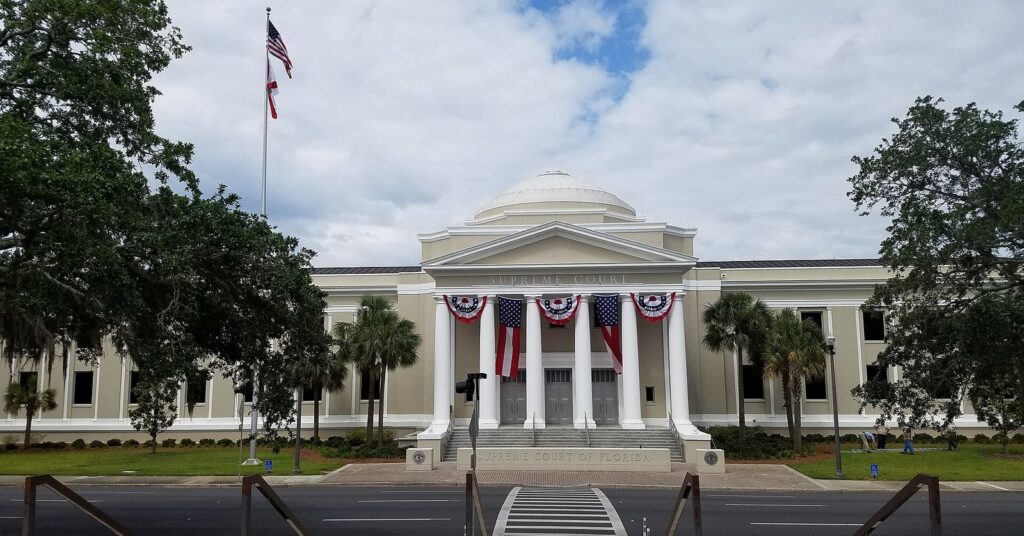
Welcome back to Florida Courts Watch, our recurring look at recent Florida appellate decisions that matter to people facing criminal charges. This edition is a first for the series: every case below comes from the Sixth District Court of Appeal — the court that hears appeals from Polk, Highlands, and Hardee Counties. Three decisions from the second half of July 2026 circle the same unglamorous theme: the written record controls. What the State types into a charging document, what a judge says out loud at sentencing, and what a plea form actually reserves can each decide a case before anyone argues the facts.
Sixth DCA — the State has to prove the drug it actually charged
Florida’s drug trafficking statute is written as a list. Section 893.135(1)(c)4., Florida Statutes, makes it a first-degree felony to possess four grams or more of any one of several substances, each identified by its own cross-reference into the drug schedules: alfentanil, carfentanil, fentanyl, sufentanil, a fentanyl derivative, an analog of any of those, or a mixture containing any of them. Because the statute lists them in the alternative, the State may charge in the alternative. What it may not do is charge one and prove another.
In Quinones Santiago v. State, No. 6D2024-1003, the defendant was a backseat passenger in an Uber that was stopped in Orange County. A K-9 alerted, a deputy patted him down, opened a satchel that felt heavy enough to hold a firearm, and found a prescription pill bottle instead. Laboratory analysis identified the contents as 6.26 grams of xylazine and para-Fluorofentanyl.
The information, however, charged trafficking in “fentanyl, or of a mixture containing fentanyl, a substance controlled by Florida Statute 893.03(2)(b)9.” That subsection is the Schedule II listing for fentanyl itself. Para-Fluorofentanyl is not fentanyl; it is a fentanyl derivative, listed separately in Schedule I. The State’s own chemist made the distinction on cross-examination, explaining that the two compounds have “two separate chemical structures” and that para-Fluorofentanyl carries an extra fluorine atom. The defense moved for a judgment of acquittal on exactly that ground. The trial court denied it, later allowed the State to amend the information mid-trial, and the jury convicted on the amended charge. The sentence was twenty years with a seven-year mandatory minimum.
On July 24, 2026, the Sixth District reversed and remanded for entry of a judgment of acquittal. The court’s reasoning rested on a rule that is more than seventy years old: “where an offense may be committed in various ways, the evidence must establish it to have been committed in the manner charged in the indictment.” Long v. State, 92 So. 2d 259, 260 (Fla. 1957). Once the State narrowed its allegation to fentanyl as described in section 893.03(2)(b)9., it had to prove that substance, and it offered no evidence of it. The court also rejected the State’s “distinction without a difference” argument, pointing out that the statutes themselves treat the two categories as separate — a Schedule II drug with accepted medical uses on one side, a Schedule I derivative on the other.
The statutory text supports that reading more strongly than the opinion needed to say. The fentanyl-derivative paragraph defines the category by chemical structure and then expressly excludes “Alfentanil, Carfentanil, Fentanyl, and Sufentanil” from it. Under the schedules, a substance cannot be both.
One citation note for anyone reading the opinion against a current copy of the statutes. The court applied the 2023 edition, in which fentanyl derivatives appeared at section 893.03(1)(a)62. In the current version of section 893.03, that paragraph has been renumbered to (1)(a)63., with para-Fluorofentanyl at subparagraph 63.g.(IX); Beta-Hydroxythiofentanyl now occupies 62. The substance of the law did not change, but the cross-reference did — which is its own quiet argument for checking the edition of the statute a charging document relies on. We write more about how these cases are built on our pages on drug trafficking charges and fentanyl charges.
Sixth DCA — what the judge says out loud usually beats what the paperwork says
Two of the most common questions after a plea in traffic court are what the costs actually are and why the written judgment does not match what was said in the courtroom. Alleyne v. State, No. 6D2024-2490, decided July 17, 2026, addresses both.
The defendant entered a global plea in two Osceola County cases, one for failing to register a vehicle and one for driving with a suspended license. From the bench, the judge imposed $274 in costs plus a $50 public defender application fee in the first case, and $273 in costs in the second while saying, “I’m waiving the application fee in this case.” The written judgment in the second case came out with $274 in costs and the $50 fee anyway.
The Sixth District confirmed the general rule: when the written sentence and the oral pronouncement conflict, the oral pronouncement controls. Williams v. State, 957 So. 2d 600, 603 (Fla. 2007). The $274 had to be corrected to $273. The court also held it could not tell from the record what authority supported each cost, and remanded for the trial court to explain the basis for each one — while declining to adopt any rigid requirement that a written cost order always recite chapter and verse, so long as the basis is evident somewhere in the record.
The $50 public defender application fee came out the other way, and this is the part worth knowing. Section 27.52(1)(b) says an applicant “shall pay a $50 application fee” for each application for court-appointed counsel, and section 938.29(1)(a) makes a convicted defendant who received the public defender’s assistance liable for it, directing that courts “shall include these fees and costs in every judgment.” Because the fee is mandatory, the judge had no authority to waive it, and the court refused to conform the written sentence down to an oral pronouncement that was itself erroneous. A defendant has no legitimate expectation of finality in a sentence that omits a nondiscretionary term. Dunbar v. State, 89 So. 3d 901, 906 (Fla. 2012).
There is a procedural lesson buried in the case as well. Both sides filed motions to correct sentencing error under Florida Rule of Criminal Procedure 3.800(b)(2), and the trial court never ruled on either. Under rule 3.800(b)(2)(B), a motion the court does not rule on within sixty days is deemed denied — which is what preserved the issues for appeal here rather than losing them.
Sixth DCA — a reserved appeal still needs the dispositiveness finding
When someone pleads no contest but wants to appeal a suppression ruling, the mechanism is Florida Rule of Appellate Procedure 9.140(b)(2)(A)(i): the defendant “may expressly reserve the right to appeal a prior dispositive order of the lower tribunal, identifying with particularity the point of law being reserved.” The word doing the work is dispositive. Ordinarily that means the State stipulates, or the trial court finds, that the suppression ruling ends the case.
In Ferreira v. State, No. 6D2023-3200, decided July 24, 2026, that step was skipped. The defendant lost a motion to suppress the traffic stop that led to a DUI arrest, pleaded no contest, and reserved the right to appeal — but the State never stipulated the order was dispositive and the trial court made no such finding. The Sixth District reached the merits anyway, reasoning that because the charge was DUI, suppression of the stop on these facts was necessarily dispositive, and citing Hawk v. State, 848 So. 2d 475, 478 (Fla. 5th DCA 2003), where the Fifth District declined to hold the same omission against an appellant. Having reached the merits, the court found no error in the denial of the motion and affirmed.
The outcome should not obscure the risk. The appellate court rescued a reservation that was incomplete on its face, and it did so on the particular facts of a DUI stop. Nothing in the opinion promises the next defendant the same treatment. The reliable course is to get the stipulation or the finding on the record at the plea, in writing, identifying the point of law with particularity. That is a five-minute step at the plea hearing and an unfixable problem afterward. Related reading: DUI defenses and search and seizure defense.
Also noted
In Baldwin v. State, No. 6D2024-1955, also decided July 24, 2026, the Sixth District affirmed the denial of a motion to correct sentence but did so without prejudice to the defendant filing a Florida Rule of Criminal Procedure 3.800(a) motion in the trial court to fix a scrivener’s error — the judgment mistakenly recited a no contest plea to one count. Clerical mistakes in a judgment are real and fixable, but they have to be raised in the right vehicle. A scrivener’s error raised for the first time on appeal is generally not preserved; a rule 3.800(a) motion in the trial court, which may be filed at any time, is the route.
Why this edition matters more than most in Polk County
Earlier editions of Florida Courts Watch have covered decisions from the Second District, which are persuasive and generally binding on our trial courts in the absence of contrary authority. This edition is different. Appeals from the Tenth Judicial Circuit — Polk, Highlands, and Hardee Counties — go to the Sixth District Court of Appeal. These four decisions are not merely instructive here; they are the controlling law that the judges in Bartow, Winter Haven, and Lakeland are required to follow.
Two of them were argued for the defendants by the Office of the Public Defender in Bartow, whose appellate work reaches across the whole Sixth District. None of these opinions is final until the time for rehearing expires.
Cases & statutes in this edition
- Quinones Santiago v. State, No. 6D2024-1003 (Fla. 6th DCA July 24, 2026) — opinion at CourtListener · opinion (PDF)
- Alleyne v. State, No. 6D2024-2490 (Fla. 6th DCA July 17, 2026) — opinion at CourtListener · opinion (PDF)
- Ferreira v. State, No. 6D2023-3200 (Fla. 6th DCA July 24, 2026) — opinion at CourtListener · opinion (PDF)
- Baldwin v. State, No. 6D2024-1955 (Fla. 6th DCA July 24, 2026) — opinion at CourtListener · opinion (PDF)
- Long v. State, 92 So. 2d 259 (Fla. 1957) — proof must match the manner charged · opinion at CourtListener
- Williams v. State, 957 So. 2d 600 (Fla. 2007) — oral pronouncement controls over the written sentence · opinion at CourtListener
- Dunbar v. State, 89 So. 3d 901 (Fla. 2012) — no finality expectation in an omitted nondiscretionary term · opinion at CourtListener
- Hawk v. State, 848 So. 2d 475 (Fla. 5th DCA 2003) — missing dispositiveness finding · opinion at CourtListener
- § 893.135, Fla. Stat. (trafficking; dangerous fentanyl or fentanyl analogues)
- § 893.03, Fla. Stat. (controlled substance schedules)
- § 27.52, Fla. Stat. ($50 court-appointed counsel application fee)
- § 938.29, Fla. Stat. (liability for application fee, attorney’s fees and costs)
- Fla. R. App. P. 9.140(b)(2)(A)(i) · Fla. R. Crim. P. 3.140(k)(5), 3.800(a), 3.800(b)(2)
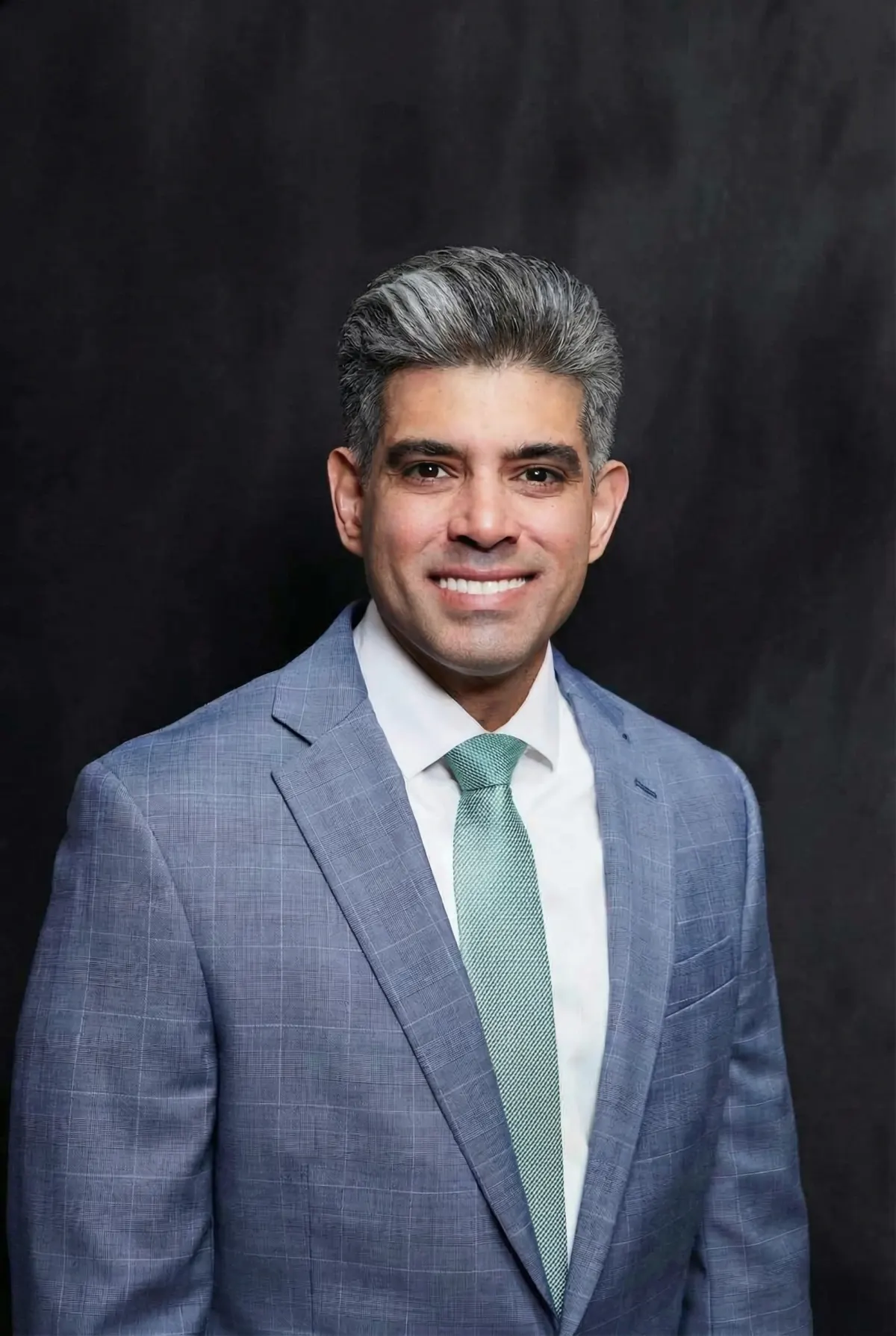
Legally reviewed by Tonmiel Rodriguez · Last reviewed July 2026
Tonmiel Rodriguez is a criminal defense attorney in Bartow, Florida, and is Board Certified in Criminal Trial Law by The Florida Bar. If you have a pending case in Polk County and want to know whether one of these decisions affects it, call The Rodriguez Law Office at (863) 774-4556.