
Adult Drug Court — Polk County Felony & Misdemeanor Programs
The charges on paper are a drug offense, a theft, a possession — but the real story is addiction. If substance abuse is what drove the criminal conduct, Adult Drug Court exists to address that reality instead of just warehousing it. The 10th Judicial Circuit operates both a felony and a misdemeanor Adult Drug Court program, and the difference between those two tracks matters significantly for where you stand when you graduate.
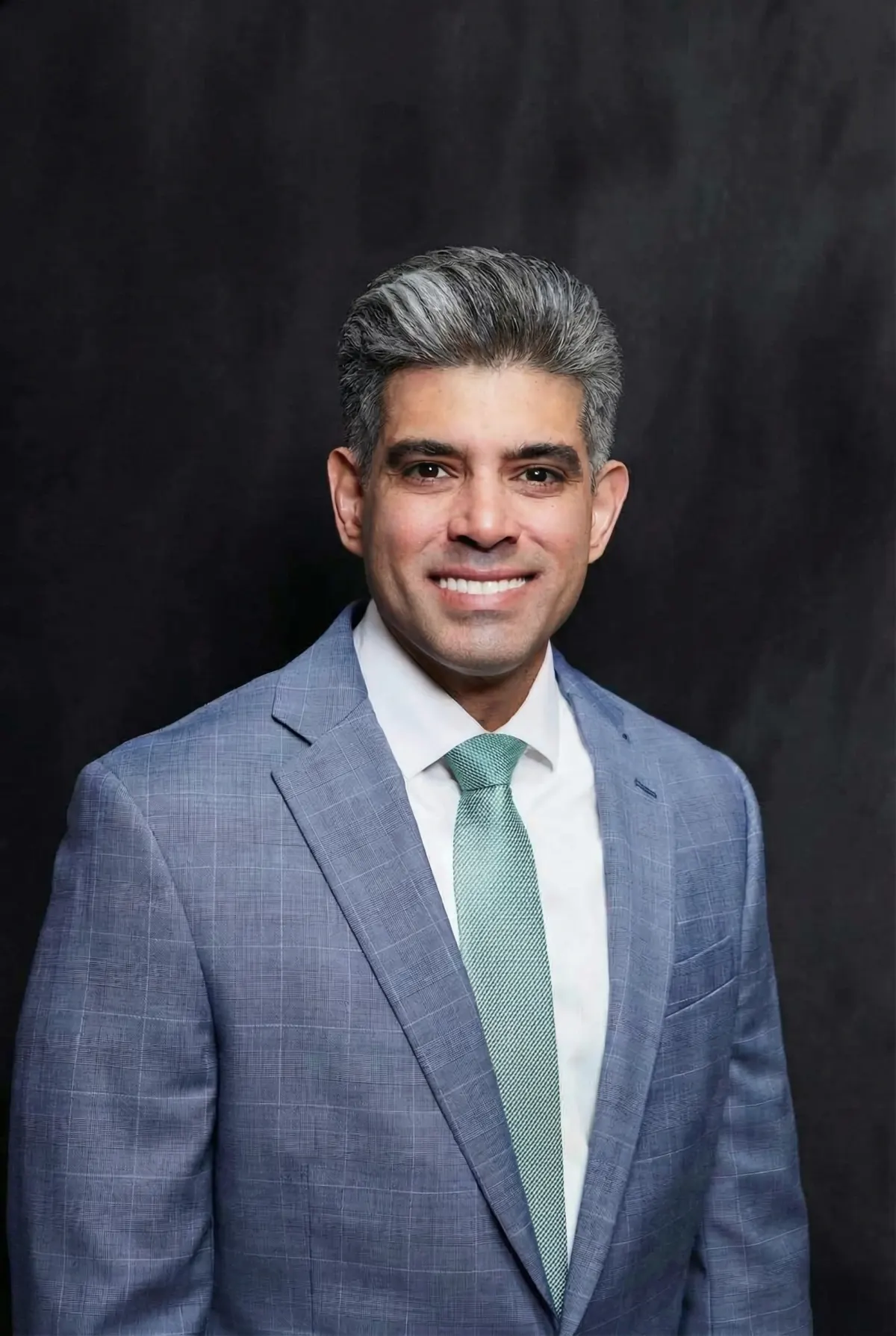
Legally reviewed by Tonmiel Rodriguez, Board Certified Criminal Trial Lawyer — last reviewed June 2026.
I’m Tonmiel Rodriguez, a Board Certified Criminal Trial Lawyer serving Polk, Highlands, and Hardee Counties. Here is a complete breakdown of both programs.
Two Programs, One Goal
The 10th Judicial Circuit’s Adult Drug Court has two tracks:
Felony Adult Drug Court
For defendants facing felony charges where substance abuse is the documented driving force behind the criminal behavior. This is a post-adjudication program — you have been convicted of a felony, or you are entering a plea to a felony, and the court is offering supervised treatment as an alternative to straight incarceration or probation.
What graduation can mean: Upon successful completion, the felony charge is typically reduced to a misdemeanor or dismissed entirely, depending on the specific program agreement. Carrying a felony for the rest of your life when a treatment program could have changed the outcome is not an acceptable result. If you qualify, this path is worth understanding.
Misdemeanor Adult Drug Court
For defendants with misdemeanor charges — typically drug possession or related offenses — where substance abuse is the documented issue. The treatment model, multi-disciplinary team structure, and daily color hotline testing are the same as the felony track. The charge level is lower, but the program demands are real.
What graduation can mean: Misdemeanor charges may be dismissed upon successful completion. A dismissed misdemeanor has a materially different impact on your record, employment, and housing applications than a conviction.
This Is a Post-Adjudication Program
Adult Drug Court in Polk County is a post-adjudication program — you have already been convicted or entered a plea before entering the program. It is not a pre-trial diversion program that intercepts the charge before conviction. If you are looking for a pre-conviction option, see Pretrial Intervention (PTI).
Post-adjudication means: the conviction already exists, or it is about to be entered as part of the program agreement. What the program does is modify the consequence of that conviction upon successful graduation. That timing affects your rights, your record, and your options if you fail to complete the program.
Florida Statute § 397.334 authorizes treatment-based drug court programs, including Adult Drug Court. The statute provides the legal framework for courts to offer supervised treatment as an alternative to traditional sentencing.
Who Qualifies
General eligibility criteria for Adult Drug Court (felony and misdemeanor) in the 10th Circuit:
- Nonviolent felony or misdemeanor charge where substance abuse is a documented contributing factor
- Documented substance abuse disorder — clinical assessment required
- No disqualifying violent criminal history (specific exclusions depend on the program)
- Willingness to participate voluntarily
- Residency in the 10th Judicial Circuit service area (Polk, Highlands, or Hardee County)
- No current drug trafficking charges (typically disqualifying)
Admission is not automatic. The State Attorney’s Office reviews the application and can oppose admission. Your defense attorney, probation, and the treatment team all make recommendations. The judge makes the final determination. Having an attorney who advocates effectively at this stage matters.
Program Structure and Phases
Both the felony and misdemeanor drug courts operate in structured phases, typically 12 to 18 months total. Each phase has defined requirements for advancement.
Phase 1 — Assessment and Stabilization
Intensive entry phase. Weekly court appearances before the drug court judge. Daily color hotline calls to (863) 534-5828 for random testing. Clinical assessment establishes your treatment plan. Treatment begins — whether outpatient, intensive outpatient, or residential depending on your clinical level of care. You must demonstrate stable housing, employment or program enrollment, and active treatment participation to advance.
Phase 2 — Treatment and Skill Building
Court appearances shift to bi-weekly. Testing continues. Treatment deepens — cognitive behavioral therapy, relapse prevention, life skills programming. Employment stability or educational enrollment becomes a requirement. The color hotline remains daily. Phase 2 is where you build the habits and skills that make Phase 3 possible.
Phase 3 — Maintenance and Transition
Monthly court appearances. Color hotline continues — random testing does not stop. Treatment shifts to maintenance and aftercare planning. Vocational and employment development often emphasized. You are building toward graduation and demonstrating that the change is sustainable without intensive supervision. Phase 3 graduates move to the graduation ceremony and the legal outcome specified in their program agreement.
Random Drug Testing — The Color Hotline
Every Adult Drug Court participant — felony and misdemeanor alike — calls (863) 534-5828 every day. Each participant has an assigned color. When your color is called, you report for a drug test the same day. No advance notice. No exceptions. A positive test or missed test is a program violation.
Consequences for violations escalate: increased testing frequency, additional community service, brief jail sanctions, or — after repeated violations — termination from the program. The testing structure is non-negotiable and it is designed that way. It is the accountability backbone of the program.
Treatment Components
Treatment is individualized based on clinical assessment. Common components include:
- Substance abuse counseling — individual and group therapy
- Intensive Outpatient Programming (IOP) — structured multiple-times-per-week programming for moderate to severe substance use disorders
- Residential treatment — for participants who require a higher level of care
- Medication-Assisted Treatment (MAT) — clinically indicated medications (Suboxone, Vivitrol, etc.) where appropriate
- Peer support and 12-step programming — often required or strongly encouraged as a supplement to clinical treatment
- Co-occurring mental health treatment — dual-diagnosis programming for participants with both substance abuse and mental health conditions
- Life skills, employment, and education support — vocational programming and financial literacy components
Regular Court Appearances
Drug court appearances are unlike regular criminal court. The judge knows your name, knows your file, and addresses you directly. Before you walk in, the multi-disciplinary team has already reviewed your compliance — testing results, treatment attendance, employment status. If you are doing well, the judge acknowledges it. If you are struggling, the team responds with either support or sanctions depending on what’s needed.
These are non-adversarial proceedings. Everyone in that room — the prosecutor, your attorney, the probation officer, the treatment providers — is nominally working toward your success. But your attorney is still your advocate. They represent your interests when the team reviews sanctions, program modifications, or termination decisions.
What Happens at Graduation
Successful completion of Adult Drug Court results in the outcome specified in your program agreement:
- Felony program: Felony charge typically reduced to misdemeanor or dismissed upon graduation
- Misdemeanor program: Charge may be dismissed upon graduation
- Completion documentation that can support future legal matters, employment applications, and professional licensing proceedings
The specific outcome depends entirely on what was agreed to before enrollment. This is another reason why having a criminal defense attorney negotiate the terms of your program entry — not just your admission — is critical. The graduation benefit is written into the agreement upfront. You cannot negotiate it after the fact.
What Happens If You Don’t Complete
Termination from Adult Drug Court means the case proceeds through traditional channels. The underlying conviction — which already exists or was entered as part of the program agreement — stands. Sentencing proceeds on the original charges without the benefit that graduation would have provided. Depending on your specific agreement and how termination occurred, the consequences can be significant.
This is not a path to enter casually. If you are not ready to commit to the full program requirements, the honest answer is to talk to your attorney about other options before enrolling. Failing out of drug court is typically worse than negotiating a straight plea.
Frequently Asked Questions
What is the difference between felony and misdemeanor drug court in Polk County?
Both are post-adjudication programs for defendants with substance abuse issues driving their charges. The felony track handles felony-level cases — graduation can reduce the felony to a misdemeanor or dismiss it. The misdemeanor track handles misdemeanor cases — graduation may result in dismissal. Same program structure, different starting charge level and potential outcome.
Is Adult Drug Court pre-trial or post-conviction?
Post-adjudication — you have already been convicted or entered a plea before entering the program. If you want a pre-trial option, see Pretrial Intervention (PTI).
What charges qualify for Adult Drug Court?
Generally nonviolent felony or misdemeanor charges with documented substance abuse as a contributing factor. Drug trafficking and violent offenses are typically disqualifying. Your attorney can review your specific charge and advise on eligibility.
How long does Adult Drug Court take?
Typically 12 to 18 months. Program duration depends on phase progress and treatment compliance. Some participants take longer based on clinical needs or phase holds from violations.
What law authorizes Adult Drug Court in Florida?
Florida Statute § 397.334 authorizes treatment-based drug court programs and provides the framework for courts to offer supervised treatment as a sentencing alternative.
Related pages: Drug Crime Defense | Drug Possession | Pretrial Intervention | All Problem-Solving Courts
How Does the Felony Adult Drug Court Plea Agreement Work?
The legal mechanics of entering the Polk County Adult Drug Court require careful attention because the plea you enter at admission is the foundation of everything that follows. Understanding what you are agreeing to — and what happens at every possible outcome — is essential before you sign anything.
For the Felony Adult Drug Court, admission requires entering a guilty or no-contest plea to the felony charge. This plea is held in abeyance while you complete the program — the plea is entered on the record, but sentencing is deferred to the end of the program. At graduation, if all program requirements have been met, the judge enters the agreed-upon outcome: typically a reduction to a misdemeanor, a withhold of adjudication, or in some cases a dismissal. If you fail the program before graduation, the deferred plea is activated and you are sentenced on the felony charge without the graduation benefit.
Under § 397.334, Florida Statutes, the plea agreement for drug court participation must clearly specify: the charge being pled to, the deferred sentencing structure, the graduation benefit, and the consequences of program failure. Your attorney must review every provision of this agreement before you sign it. The agreement is a binding legal contract, and its terms are enforced by the court.
Adult Drug Court can change a felony to a misdemeanor — but the terms matter.
The plea agreement you sign when entering Adult Drug Court determines your outcome at every stage. Get a Board Certified Criminal Trial Lawyer to review it before you commit.
Board Certified in Criminal Trial Law by The Florida Bar · Reach Us 24/7 · Hablamos Español
What Happens to Employment and Professional Licenses During Adult Drug Court?
Adult Drug Court participants face real-world collateral consequences from the underlying charge that do not pause while they complete the program. Employment and professional licensing are two of the most immediate concerns.
The plea entered at Drug Court admission — a guilty or no-contest plea to the underlying charge — may trigger background check disclosures in employment applications depending on the employer’s policies and the nature of the charge. For healthcare workers, educators, contractors requiring background checks, and others in licensed professions, the Drug Court plea may be discoverable and must be disclosed. The graduation benefit — a reduced or dismissed charge — does not retroactively eliminate the disclosure obligation during the program period.
For professional license holders, a guilty plea to certain drug charges can trigger licensing board notifications and disciplinary proceedings independent of the criminal case. Florida’s Department of Health, Department of Business and Professional Regulation, and the Florida Bar all have reporting requirements that interact with criminal proceedings. Your attorney should advise on professional licensing implications before you enter the Drug Court plea — this is a frequently overlooked but significant collateral consequence that varies significantly by profession and charge.
What Community Service Is Required in Adult Drug Court?
Community service hours are a standard component of Adult Drug Court in the 10th Circuit. The specific hour requirement varies by program track and by individual agreement, but typical requirements range from 50 to 150 hours across the program duration. Community service is tracked, and completion of required hours is a graduation prerequisite.
Community service in the context of Drug Court is not punitive — it is a programmatic requirement intended to build community connection, structured activity, and responsibility outside of treatment. Many participants find meaningful placements at food banks, community gardens, churches, nonprofit organizations, and other venues that align with their interests and schedule. Your attorney or case manager can advise on approved community service locations and how to document completion properly.
Can I keep my job while in Adult Drug Court?
Yes — and employment is expected. Phase 2 of Adult Drug Court requires stable employment or active enrollment in education or vocational training. The program is designed around your continuing to function in the world, not around removing you from it. Phase 1 demands are heavier, but treatment scheduling is typically available in morning or evening slots. Weekly court appearances in Phase 1 occur during business hours and require flexibility — some participants use FMLA or medical leave for the initial intensive phase. Your attorney can advise on how to structure employment obligations around program requirements.
Does Adult Drug Court affect immigration status?
This is a critical question for non-citizen defendants. A guilty or no-contest plea to a drug charge — even one entered as part of a Drug Court program agreement — can trigger immigration consequences including deportability, inadmissibility, and mandatory removal proceedings under federal immigration law. Drug Court graduation and charge reduction under Florida state law does not undo the immigration consequences of the underlying plea for immigration purposes. Non-citizen defendants must have immigration consequences thoroughly analyzed by their defense attorney before entering any Drug Court plea. The intersection of Florida criminal law and federal immigration law is complex and the stakes are severe.
Drug Charges in Polk County? Let’s Talk About Your Options.
Adult Drug Court can turn a felony into a misdemeanor — or no conviction at all. But you have to qualify, get admitted, and complete the program. I’ll walk you through whether this path makes sense for your case and fight for your admission if it does.
Board Certified · Reach Us 24/7 · Hablamos Español