

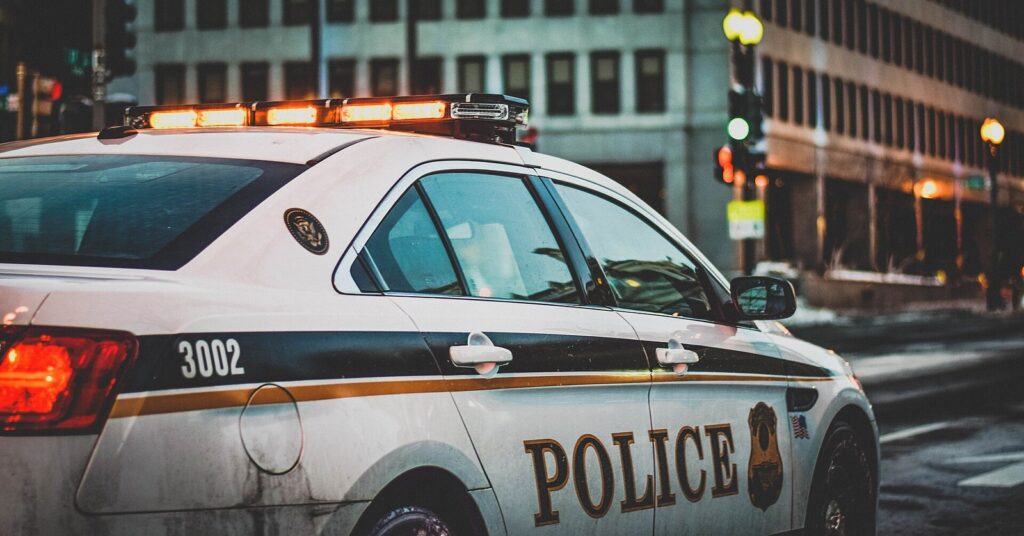
A traffic stop can turn into a criminal case in about ninety seconds — a broken taillight becomes a DUI arrest, a rolling stop becomes a drug charge. Whether the stop that started it all was legal often decides the whole case.
What has to happen before an officer can legally stop your car?
Florida law does not require an officer to witness a crime before pulling you over. It requires reasonable suspicion — specific, articulable facts that would lead a reasonable officer to believe a traffic infraction or a crime has occurred, is occurring, or is about to occur. This standard comes from Florida’s Stop and Frisk Law, codified at section 901.151, Florida Statutes, which authorizes a temporary detention “whenever any law enforcement officer of this state encounters any person under circumstances which reasonably indicate” that the person has committed, is committing, or is about to commit a crime.
Reasonable suspicion is a low bar, but it is not zero. An officer cannot pull you over on a hunch, a feeling, or because of what you look like. The officer needs to point to something specific: a taillight that is out, a tag that comes back expired, a driver weaving over the center line, a car matching a BOLO description. If the officer cannot articulate specific facts after the fact, in a deposition or on the stand, the stop did not meet the legal standard, and everything that flowed from it is in play.
This is important because most traffic stops are not based on serious crimes. They are based on ordinary traffic infractions — an equipment violation under section 316.610, an expired registration, a seatbelt violation. Under section 316.614, Florida Statutes, Florida is a primary-enforcement seatbelt state, meaning an officer who simply observes an unbuckled driver can stop the car for that violation alone — no other infraction is needed. The infraction does not have to be significant. It only has to be real.
Does it matter if the officer had another reason for stopping you?
No, and this surprises a lot of people. Under Whren v. United States, 517 U.S. 806 (1996), the United States Supreme Court held that an officer’s subjective motive for a stop is irrelevant to the Fourth Amendment analysis as long as an objective legal basis for the stop existed. If the officer had probable cause to believe a traffic infraction occurred, the stop is valid even if the officer’s real interest was investigating something else entirely, like suspected drug activity.
Florida’s Supreme Court applied the same rule in Holland v. State, 696 So. 2d 757 (Fla. 1997), rejecting the “reasonable officer” test that had asked whether a typical officer would have made the stop for the stated traffic violation alone. After Holland, Florida courts apply a strict objective test: did probable cause for the traffic infraction exist? If yes, the stop stands regardless of what the officer was actually hoping to find. This is so because the Fourth Amendment protects against stops made without legal justification, not stops made for the “wrong” reason when a legal justification exists.
What this means practically is that a defense built on “the officer really just wanted to search my car” will not win a motion to suppress by itself. The fight has to be over whether the stated traffic violation actually happened and whether the officer can prove it.
What about DUI checkpoints — are those different?
Checkpoints operate under a separate framework because no individualized suspicion exists at all — every car (or every car selected by a neutral formula) gets stopped. The Florida Supreme Court addressed this in State v. Jones, 483 So. 2d 433 (Fla. 1986), holding that sobriety checkpoints do not violate the Florida or federal constitutions, but only if the agency running the checkpoint follows a written operational plan set by supervisory personnel before the checkpoint begins. That plan has to fix, in advance, which vehicles get stopped, using a neutral formula (every third car, every car, and so on) so field officers have no discretion to pick and choose. Agencies are also expected to give advance public notice of checkpoints and to minimize the intrusion on motorists who are stopped.
When a checkpoint deviates from its own written plan, or when no written plan existed in the first place, that deviation is a real issue for a motion to suppress. This is a document-heavy fight — it requires obtaining the agency’s checkpoint plan and comparing what was authorized against what officers actually did that night.
What happens if the police stop you without reasonable suspicion?
A stop made without reasonable suspicion violates the Fourth Amendment. When that happens, the remedy is a motion to suppress under Florida Rule of Criminal Procedure 3.190(h), asking the court to exclude any evidence discovered because of the illegal stop — the open container, the odor of cannabis, the field sobriety exercises, the statements made on the roadside. If the stop was illegal, the evidence that came from it is generally excluded as fruit of the poisonous tree, and in many cases that means the State cannot prove its case at all.
The motion has to state clearly what evidence is being challenged, the specific facts supporting suppression, and the legal grounds. At the hearing, the State carries the burden of establishing that the stop was legally justified — usually through the arresting officer’s testimony, supported (or undermined) by dash-cam and body-cam footage. Recordings matter enormously here, because they preserve exactly what the officer observed and said in the moments before the stop, before memories and reports get polished for court.
What should you do if you think you were pulled over illegally?
Do not argue the legality of the stop on the roadside. Comply with the officer’s lawful instructions, provide your license, registration, and proof of insurance, and save the legal argument for court, where it can actually help you. Anything said roadside becomes part of the record the State will use, and arguing with an officer on the shoulder of the highway has never once caused a citation or charge to disappear.
Once you have counsel, the analysis starts with the stop itself: what did the officer claim as the basis for the stop, is that claim supported by the video, and does it meet the reasonable-suspicion standard under section 901.151. If the stop does not hold up, a motion to suppress becomes the vehicle for excluding whatever the officer found afterward. Given how much a criminal case can turn on the legality of the initial stop, this is usually the first thing worth having reviewed.
- Section 901.151, Florida Statutes — Florida’s Stop and Frisk Law (reasonable suspicion to detain)
- Section 316.614, Florida Statutes — Florida Safety Belt Usage Law (primary enforcement)
- Florida Rule of Criminal Procedure 3.190(h) — Motion to Suppress Evidence
- Whren v. United States, 517 U.S. 806 (1996)
- Holland v. State, 696 So. 2d 757 (Fla. 1997)
- State v. Jones, 483 So. 2d 433 (Fla. 1986) — sobriety checkpoint requirements
- Practice Areas
Legally reviewed by Tonmiel Rodriguez · Last reviewed July 2026
Tonmiel Rodriguez is Board Certified in Criminal Trial Law by The Florida Bar and represents clients throughout Polk, Highlands, Hardee, Osceola, and Hillsborough Counties. If you believe you were stopped without a legal basis, call The Rodriguez Law Office at (863) 774-4556 to have the stop reviewed.