
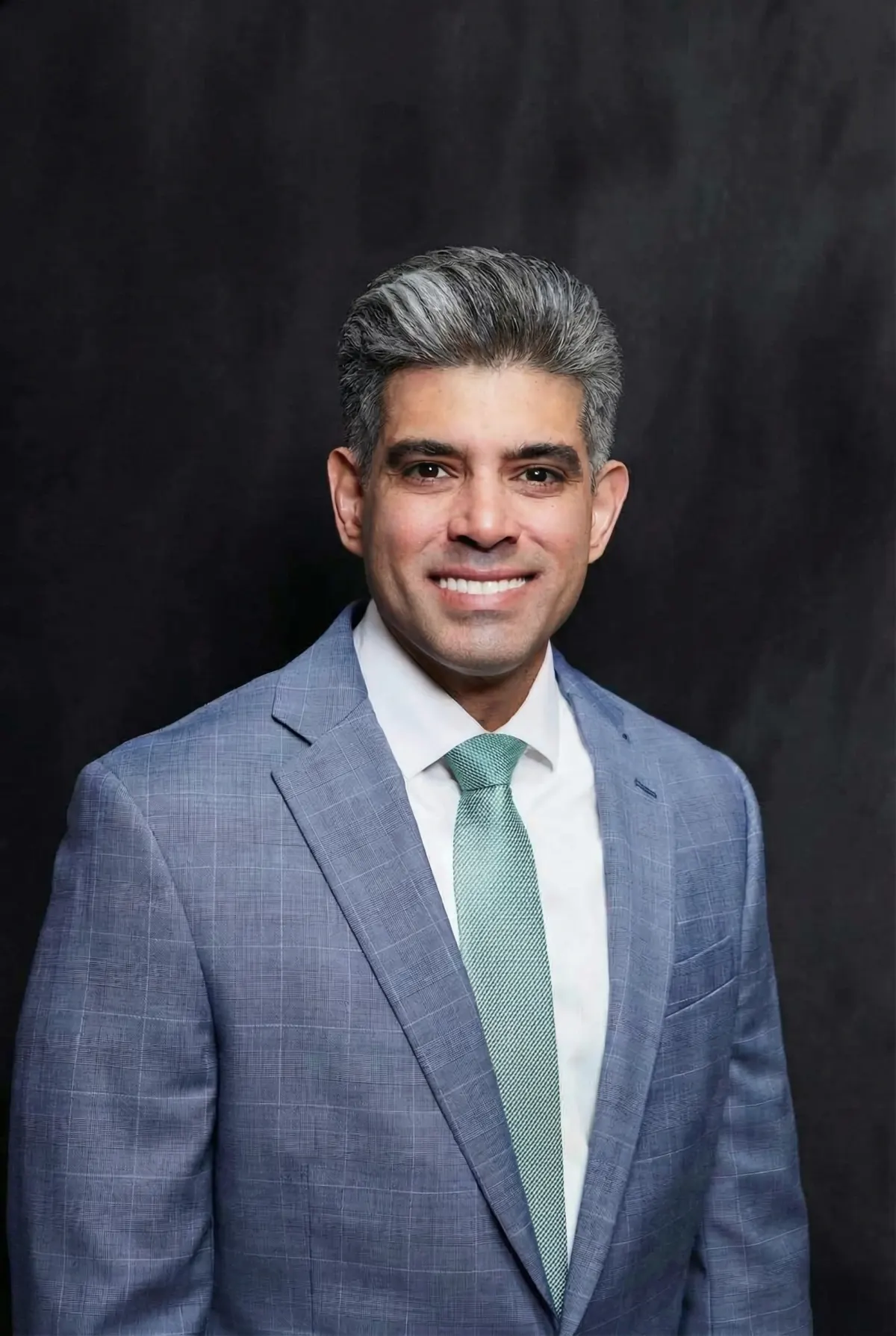
These are the questions I hear most often from clients calling from the Polk County Jail, from family members standing outside the courthouse in Bartow, and from people who got a notice in the mail and have no idea what it means. Straight answers. No fluff. If your question isn’t here, call me directly at (863) 774-4556. I’m Tonmiel Rodriguez — Board Certified Criminal Trial Lawyer, 10th Judicial Circuit, and I’ve been answering these questions for years. Hablamos Español.
What happens after I’m arrested in Polk County?
You are transported to the Polk County Jail, booked, fingerprinted, and photographed. A probable cause affidavit is filed. Within 24 hours, you appear before a judge (via video link from the jail) for first appearance — this is where initial bond is set. If you can post bond, you’re released pending future court dates. If not, you remain in custody until bond is paid or reduced.
After first appearance, the State Attorney’s Office reviews the arrest report and decides whether to file formal charges. For felonies, they have up to 175 days. For misdemeanors, the window is shorter. If charges are filed, you will receive an arraignment notice — your official first court appearance where you enter a plea. After arraignment, the case proceeds through pretrial conferences toward a plea or trial. Read the full walkthrough on our Florida Criminal Process page.
How do bonds work in Polk County?
Polk County uses a bond schedule — a chart that assigns a standard bond amount to each type of charge. When you’re booked, the jail sets bond based on that schedule for most charges. You can post a cash bond (full amount deposited with the jail), use a bondsman who posts a surety bond for a non-refundable premium (typically 10% of the bond amount), or — for lower-risk defendants — the judge may release you on your own recognizance (ROR) with no money required.
At first appearance, a judge can deviate from the bond schedule — up or down. The factors a judge considers are listed in § 903.046 and include: the nature of the charge, prior record, ties to the community, employment, family, length of residency, and risk of flight. An attorney who shows up at first appearance prepared with those arguments can often secure a lower bond than the schedule amount. For violent or non-bondable offenses, a separate Arthur hearing under § 907.041 is required before the judge can hold you without bond. More detail on our Bond & Bail Hearings page.
What are my Miranda rights and when do they apply?
Miranda rights — the right to remain silent and the right to an attorney — apply when you are in custody AND being interrogated. “In custody” means you are not free to leave. “Interrogation” means police are asking questions designed to elicit incriminating responses. If both conditions are met and police fail to give Miranda warnings before questioning, any statements you made after that point may be suppressed — meaning the prosecution cannot use them against you.
Miranda does not apply to everything you say at the scene of an arrest. If you volunteer statements before being formally interrogated, those are generally admissible. If you are stopped on the street and police ask questions during a brief investigatory detention (not a custodial arrest), Miranda may not apply. The lines here are nuanced and fact-specific. If you made statements after an arrest that you’re concerned about, call me immediately — the timeline of when warnings were (or weren’t) given matters enormously.
Should I talk to the police?
No. This is the clearest piece of legal advice any lawyer can give. Do not make statements to law enforcement without speaking to a lawyer first. You have the right to remain silent under the Fifth Amendment and Article I, Section 9 of the Florida Constitution. Exercise it. Politely say: “I am invoking my right to remain silent and I want to speak with an attorney.” Then stop talking.
Here’s why this matters: people who are completely innocent still make statements that hurt their cases. You don’t know which facts the police already have. You don’t know which witnesses said what. You don’t know what the officer is actually looking for. When you talk without knowing those things, you give the police the ability to use your own words against you in ways you didn’t anticipate. Silence cannot be used as evidence of guilt. Statements can. Call a lawyer before you say anything beyond your name.
What is withhold of adjudication in Florida?
Withhold of adjudication (WAJ) means the judge accepts your guilty or no-contest plea but does not formally enter a conviction. You are placed on probation or a supervisory sentence, and if you complete it successfully, you are not technically “convicted” under Florida law. This distinction is critical for several reasons.
First, a WAJ preserves your eligibility to seal your criminal record under § 943.059 — a formal conviction eliminates that option. Second, a WAJ on a felony does not result in the loss of civil rights that a formal conviction triggers (such as the right to vote or possess a firearm, though for firearms the restrictions are more complex and you should not assume they don’t apply). Third, in some licensing contexts, a WAJ is treated differently than a conviction. The WAJ distinction is one of the most valuable outcomes I fight for in plea negotiations — the downstream consequences of adjudication vs. withhold follow a person for decades.
What is PTI and do I qualify?
Pretrial Intervention (PTI) is a diversion program authorized by § 948.08, Florida Statutes. If you qualify and are accepted, you complete a supervision period (typically 6-18 months in Polk County), satisfy conditions like drug testing, community service, and counseling if applicable, and the charges are dismissed upon successful completion. No plea, no conviction, no adjudication — the case is gone.
General eligibility: no prior felony convictions, the charge must be a first or second-degree misdemeanor or a third-degree felony, and the offense must not be on the excluded list (violent crimes, certain drug trafficking offenses, etc.). The 10th Circuit SAO has discretion over who gets accepted, and prosecution consent is required. I negotiate PTI acceptance for clients early — ideally before formal charges are filed, when leverage is highest. More detail on our PTI page.
Can I get my record sealed or expunged in Florida?
Possibly. If your case was dismissed or no charges were filed, you may qualify to expunge under § 943.0585. If your case resulted in a withhold of adjudication and you completed all conditions, you may qualify to seal under § 943.059. Both processes require a Certificate of Eligibility from FDLE before a court petition is filed. The once-in-a-lifetime limit applies to both — one sealing or expunction total.
Some offenses are permanently ineligible for sealing or expunction regardless of how the case resolved — these include domestic violence offenses as defined in § 741.28, sexual battery, child abuse, stalking, carjacking, and several others. The FDLE application process takes 10-14 weeks and can be denied for errors in paperwork or undisclosed prior history. Full explanation on our Seal & Expunge page.
What is the difference between a misdemeanor and a felony in Florida?
Florida divides criminal offenses into misdemeanors (less serious) and felonies (more serious), with subdivisions within each category. Misdemeanors are divided into first-degree (up to 1 year in county jail, $1,000 fine) and second-degree (up to 60 days, $500 fine). Felonies are divided into third-degree (up to 5 years state prison), second-degree (up to 15 years), and first-degree (up to 30 years or life). Capital felonies carry life imprisonment or death. There are also “life felonies” — a specific category carrying a mandatory minimum of life for certain offenses.
The category of the offense determines the potential sentence, the court that hears the case (county court for misdemeanors, circuit court for felonies), and the long-term consequences. A felony conviction triggers loss of voting rights (restorable after sentence completion in Florida), ineligibility for many professional licenses, disqualification from public housing, and permanent consequences under federal firearms law (18 U.S.C. § 922(g)). The “it’s just a misdemeanor” attitude is dangerous — misdemeanor convictions have their own significant consequences, including impacts on professional licenses and immigration status.
How much does a criminal defense lawyer cost in Polk County?
Criminal defense fees vary based on the complexity of the case, the level of the charge, and the amount of work required. Misdemeanor cases start lower; serious felonies requiring extensive investigation, depositions, motions hearings, and trial preparation cost more. Flat fees are common for most criminal cases — you pay one amount, the attorney handles the case through resolution without billing by the hour. Some cases involving unusual complexity or guaranteed trial work may involve additional fee arrangements.
What is a VOP (Violation of Probation)?
A Violation of Probation (VOP) occurs when a defendant on probation fails to comply with one or more conditions of the probationary sentence — missing check-ins with the probation officer, failing a drug test, picking up a new arrest, failing to pay fines or costs, not completing community service hours, or violating any other specific condition the judge ordered. A VOP is handled in a separate proceeding from any new criminal charge that triggered it.
VOP hearings in Florida are different from criminal trials. There is no right to a jury — the judge alone decides. The standard of proof is much lower: the State only needs to show a “willful and substantial” violation by a preponderance of the evidence, not beyond a reasonable doubt. This makes VOP hearings particularly dangerous. If the judge finds a willful violation, the original suspended sentence can be imposed in full — meaning someone who was originally looking at 5 years and got probation instead can now be sentenced to those 5 years on a VOP.
Can domestic violence charges be dropped?
Yes, but not just because the alleged victim asks. Florida law allows the State Attorney’s Office to prosecute domestic violence cases even without the cooperation or consent of the alleged victim. “The victim doesn’t want to press charges” does not mean the charges go away — the State can call the victim as a witness, use prior recorded statements, rely on physical evidence, and proceed to trial over the victim’s objection. In practice, victim cooperation (or lack of it) does affect prosecution decisions, but it is not determinative.
Domestic violence charges can be dismissed when: the State’s evidence is too weak without the victim’s testimony, the alleged victim recants and the recantation is believable, self-defense or defense of others applies, or the underlying facts don’t support the legal definition of a domestic violence offense. A domestic violence conviction — even a misdemeanor — results in a permanent federal firearms disability under 18 U.S.C. § 922(g)(9) and cannot be later sealed or expunged in Florida. The stakes are high. I defend these cases aggressively from day one.
What is Drug Court in Polk County?
Drug Court is a specialized court program authorized by § 397.334 that offers substance abuse treatment as an alternative to traditional prosecution and incarceration for defendants whose criminal conduct stems from drug or alcohol dependency. Polk County operates a Drug Court program through the 10th Judicial Circuit. Participants must be assessed as having a substance abuse problem, plead to the charge, and participate in a highly structured multi-phase treatment program involving regular court appearances, random drug testing, treatment, and graduated requirements. Graduation typically results in reduced charges or dismissal. Drug Court and PTI are not the same — PTI doesn’t require a substance abuse assessment and is generally for first-time offenders without dependency issues. More detail on our Drug Court page.
What happens at arraignment?
Arraignment is a court hearing where the formal charges are read and the defendant enters a plea — almost always “not guilty” at this stage. It is not a trial, not an evidentiary hearing, and not a sentencing. It is the official opening of the adversarial proceeding before the assigned division judge. In Polk County, arraignments are held at the courthouse in Bartow and are typically brief. If you have retained private counsel, arraignment is often waived — your attorney files a written not-guilty plea so you don’t need to appear. This is standard practice in private representation and saves you a trip to court.
How long does a criminal case take in Polk County?
Misdemeanor cases typically resolve in 3-6 months from arrest. Felony cases range from 6 months (simple, likely-to-plea cases) to 18-24 months or longer (complex cases, cases going to trial, cases with extensive discovery). Florida’s speedy trial rule (Rule 3.191, Fla. R. Crim. P.) gives the State 90 days to bring a misdemeanor defendant to trial and 175 days for a felony. The defense can waive speedy trial (most do, to have time to prepare), or can invoke it to force the case to trial within a strict timeline. Docket congestion in Polk County’s felony divisions affects actual timelines. I give every client a realistic timeline estimate at the first consultation and update it as the case develops.
Do I need a lawyer for a misdemeanor?
Yes. A misdemeanor conviction is a permanent criminal record. It can cost you a professional license (teaching, nursing, real estate, contracting), affect immigration status, complicate background checks for housing and employment, and — if it’s a domestic violence misdemeanor — permanently prohibit firearm ownership under federal law. A misdemeanor plea taken without counsel can cost you a license you spent years earning. Misdemeanor cases also present PTI eligibility, withhold of adjudication options, and sealing opportunities that disappear if you go in without counsel and take a bad deal.
I handle misdemeanor cases throughout Polk, Highlands, Hardee, Osceola, and Hillsborough Counties. The fee for misdemeanor representation is significantly lower than felony work, and the return on investment — keeping a conviction off your record — is enormous. Call me before your arraignment, not after.
Contact a Board Certified Criminal Defense Lawyer
Still have questions? Call Attorney Tonmiel Rodriguez for a free consultation. Straight answers, no runaround.
Board Certified in Criminal Trial Law by The Florida Bar · Reach Us 24/7 · Hablamos Español